
Japanese gas turbine manufacturer Mitsubishi Heavy Industries (MHI) has announced an overhaul of its gas production turbine production process to drive output and cut manufacturing time to meet demand from the AI data center sector.

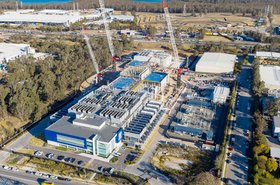
The Innovative Total Optimization project will be led by the company’s president, Eisaku Ito, and will take place at the company’s Takasago Machinery Works in western Japan, where the firm has reviewed more than 1,000 processes across procurement, assembly, testing, and design.
According to the company, the initiative seeks to improve efficiency in gas turbine combined-cycle systems and reduce the growing order backlog. Orders for MHI’s energy system unit have climbed by approximately 40 percent over the past year to 3.6 trillion yen ($23 billion).
The streamlining effort has seen the company separate its assembly lines for different turbine models and reduce machinery changeovers, which it claims could support roughly 30 percent higher production levels with limited additional investment. The manufacturing giant has already committed to invest around 50 billion yen ($320m) in turbine capacity, which falls below expansion plans from its competitors GE Vernova and Siemens Energy.
The company announced last September that it plans to double its gas turbine production capacity over the next two years in response to surging demand, particularly from the data center market. Despite the boost, Ito said at the time that the growth in production capacity would not be enough to meet growing demand.
Demand has increased significantly due to the growth of the data center market, with both utilities and data center developers seeking natural gas turbines to increase dispatchable capacity. This growth in demand led to warnings of a turbine supply shortage, with reports that manufacturers were facing delivery backlogs that stretched into the 2030s.
To alleviate this pressure, it was reported that major turbine manufacturers had began limiting investments to protect their margins and avoid overexposure if the expected growth in data center capacity failed to materialize.
Despite the pullback, data center firms, both small and large, are still looking towards natural gas as the quickest solution to their power needs. This is reflected in recent moves by major hyperscalers, which have increasingly looked towards natural gas firms to meet the growing energy needs of AI. For example, in April, Microsoft signed a deal with Chevron and Engine No. 1 that could see the hyperscaler receive up to 2.5GW of natural gas power to use for a new data center.





Comments