
Microsoft has signed a deal with reforestation firm Rainforest Builder for up to 1.8 million carbon credits generated by a project in Sierra Leone.
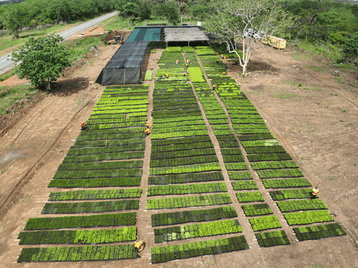
The credits, generated by a large-scale reforestation project called Project Buffalo, are expected to be delivered over 15 years. The project aims to restore the Upper Guinean Forest, a biodiversity hotspot that has lost approximately 90 per cent of its original area. The project commenced in 2023 and has involved planting more than 1.8 million trees and creating around 1,200 direct jobs in Sierra Leone. The company claims that the project has laid the groundwork to scale the reforestation effort to more than 15,000 hectares, including the planting of around 10 million trees.
The project will also involve creating a new protected habitat to support the region's biodiversity, which Rainforest Builder claims is home to a range of endemic species.
“West Africa has experienced extreme levels of forest degradation, but the region has been slower than some others to attract the focus of global carbon markets. This landmark agreement with Microsoft is a catalyst not only for Rainforest Builder, but also for the crucial role that Africa – and Sierra Leone specifically – can play in global carbon markets and combating climate change,” said Edward Stephenson, co-CEO of Rainforest Builder.
“This agreement helps accelerate reforestation work, and carbon removal growth writ large, in West Africa. Project Buffalo is grounded in scientific rigor and supporting local communities, two priorities for Microsoft in our journey to be carbon negative by 2030,” added Phillip Goodman, director, Carbon Removal at Microsoft.
Rainforest Builder was founded in 2022 and has operations across Sierra Leone, Ghana, and Guinea. The company is currently working on four active projects that aim to restore 370,000 hectares as part of the company’s long-term goal of restoring one million hectares by 2040.
Microsoft is the world's biggest buyer of carbon removal credits. It has backed several reforestation and afforestation projects. Most recently, it secured two million carbon credits from Rubicon Carbon generated by a reforestation project in Uganda. It has also inked multi-million carbon credit deals with Chestnut Carbon, Anew Climate, and EFM.







Comments