
Microsoft has signed a carbon-removal deal with Indian biochar firm Varaha for more than 100,000 tons of carbon-removal credits over three years.
The credits will be generated by 18 industrial gasification reactors expected to operate for 15 years, which are projected to remove more than two million tons of CO2 over the project's lifetime.
"This offtake agreement broadens the diversity of Microsoft's carbon removal portfolio with Varaha's biochar project design that is both scalable and durable. It represents a step forward in scaling biochar CDR growth in Asia and advancing co-benefits for farmers - improved soils, cleaner air, and shared economic opportunity," said Phil Goodman, program director, CDR at Microsoft.
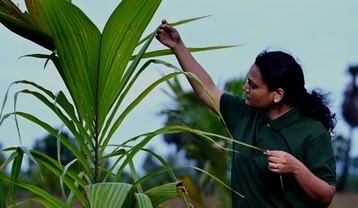
The project will use cotton stalks sourced from smallholder farms in Maharashtra as feedstock. According to Varaha, the stalks are typically treated as waste and often burned in the open, contributing to regional air pollution. Instead, Varaha’s system converts biomass into biochar, which it claims can lock biogenic carbon in a stable form that remains sequestered for centuries.
The first reactor is slated for deployment at Varaha’s cotton research farm in Maharashtra, where the company works directly with farmers to test soil application of biochar and other regenerative practices. Additional reactors are expected to be rolled out across India’s cotton belt as part of the Microsoft-backed program.
"This agreement demonstrates that high-integrity carbon removal can drive transformative co-benefits for communities and ecosystems," said Madhur Jain, Varaha CEO. "We're not just removing carbon - we're creating economic incentives for farmers to mitigate open burning of crop residues."
In addition to supporting carbon removal, the project is expected to reduce particulate air pollution by providing an alternative to residue burning, while offering farmers additional income streams through biomass supply and participation in soil improvement programs. Varaha asserts that the approach also supports soil health and water retention by applying biochar to farmland.
The deal is Varaha’s second with a major hyperscaler. Last January, the company signed a deal with Google, under which the search giant will purchase 100,000 tons of carbon removal credits, with delivery expected in 2030.
The agreement is Microsoft's third carbon removal agreement to be announced this week alone, following deals with egenerative agriculture firm Indigo Carbon to purchase 2.85 million soil carbon removal credits, and Rubicon Carbon for two million nature-based carbon removal credits generated from a Ugandan afforestation and reforestation project.



Comments