
Microsoft has signed a carbon removal deal with low-carbon fuel firm Beaver Lake Renewable Energy for 3.6 million tons of carbon removal units (CRU) over a 12-year period.
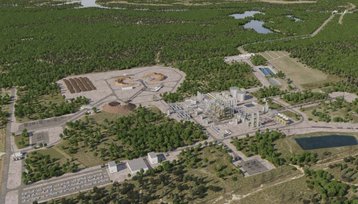
The carbon removal units will be delivered from the company’s Beaver Lake biomethanol plant near Pineville, Louisiana, which is located on the site of a former paper mill. The facility converts forestry residues into bio-methanol and captures the biogenic CO2 produced during the conversion process. The company claims that the project will produce more than 500,000 tons of biomethanol annually and capture and store one million tons of CO2 annually.
The project represents a total investment of approximately $2.5 billion. It is currently in the engineering and development phase, with construction expected to start in the second half of 2026, and operations slated to begin in 2029. Beaver Lake Renewable Energy is a subsidiary of green methanol firm C2X.
“The Beaver Lake project combines the benefits of bio-methanol production for customers in hard-to-abate sectors with permanent carbon removals,” said Brian Davis, CEO of C2X. “We appreciate the leadership of Microsoft in the engineered carbon removal market and their collaboration to finalize this agreement. We look forward to working with other companies seeking to access biogenic carbon for sequestration as we deliver this project and scale up our portfolio globally.”
Under the terms of the deal, Beaver Lake will deliver CRUs, which each represent one ton of CO2. The company claims that all associated lifecycle emissions will be accounted for and subtracted to ensure net carbon removal. In addition, carbon benefits will be allocated between bio-methanol and CRUs to avoid double-counting.
“The BLRE project provides a unique opportunity for large-scale carbon removal, while driving broader decarbonization initiatives through green methanol production,” stated Phillip Goodman, director of carbon removal portfolio at Microsoft. “We value the technical and commercial expertise of the C2X team, which has demonstrated commitment to sustainable biomass sourcing, rigorous carbon accounting, and thoughtful engagement of the project’s surrounding community.”
The project has been registered on an ICROA (International Carbon Reduction and Offset Alliance) endorsed registry, which includes verification by an independent third party.
The deal is the latest in a long line of carbon removal agreements signed by Microsoft. Most recently, the company signed a 300,000 ton removal deal with Arca, an industrial mineralization company, over a ten-year period. In the same month, it inked a deal with enhanced rock weathering firm Undo for 28,900 tons of carbon removal credits. It has also signed deals to purchase 2.95 million tons of removal credits from a CCS project in Denmark, a 2.6 million credit deal with sustainable farming group Agoro Carbon Alliance, and a 44,000 credit deal with biochar firm Carba.




Comments