
Microsoft has expanded its partnership with solar cell manufacturer Qcells.
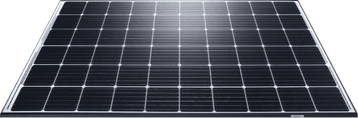
The expanded partnership will see Qcells develop new-generation and flexible energy resources to support Microsoft’s growing data center footprint across the US.
The deployments will be completed under a “Bring Your Own Capacity” (BYOC) model. Under the model, Qcells will develop and build new energy capacity that could be delivered either directly to Microsoft or to the local utility serving the surrounding community.
Microsoft will fund the generation capacity required for its operations, ensuring its new data center demand is matched with new energy resources.
The companies are also looking to develop virtual power plants (VPP), which would combine thousands of residential and commercial batteries into a single flexible energy resource. According to the companies, VPPs would be deployed during periods of peak demand and would provide power to the grid when utilities need it most.
Qcell said it will prioritize participation from income-qualified households, helping ensure that the economic benefits of AI infrastructure extend to the communities where it is built. Microsoft will deploy its Fabric and Azure services to enable the secure coordination of the distributed energy resources (DERs) at scale.
“As AI transforms the economy, we have an opportunity to rethink how the energy infrastructure supporting it is built,” said Andy Park, global CEO of Qcells. “Our relationship with Microsoft began with American-made solar manufacturing and construction. Now we’re exploring how we can build the energy capacity needed for AI while creating lasting value for the communities that share the grid.”
Qcells first partnered with Microsoft in 2023, when the hyperscaler contracted 2.5GW of solar modules alongside engineering, procurement, and construction (EPC) services. In 2024, the companies expanded that alliance to 12GW, which was the largest solar supply and EPC agreement to date in the market.
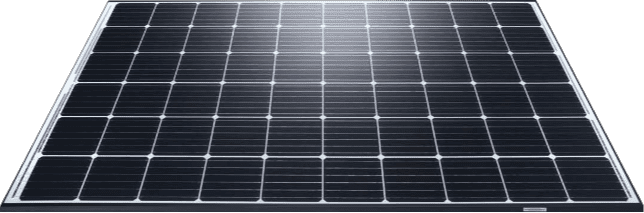
Qcells is the largest silicon-based solar manufacturer in the US market. It was founded in Germany and now operates out of South Korea. It has a global manufacturing network spanning the US, Malaysia, and South Korea.


Comments