
Microsoft hopes to one day use mainly its own AI data center chips, according to CTO Kevin Scott.
During a fireside chat at Italian Tech Week, Scott told the audience that they plan to focus in-house in the future, as per reports from CNBC.

Currently, Microsoft uses a variety of chips for its AI workloads, primarily from Nvidia, as well as AMD and its self-developed chips.
Discussing the company's current strategy, Scott explained: "We’re not religious about what the chips are. And... that has meant the best price-performance solution has been Nvidia for years and years now. We will literally entertain anything in order to ensure that we’ve got enough capacity to meet this demand.”
He added that the plan was "absolutely" to have mainly Microsoft chips in the future, noting that they already use a lot of their self-developed silicon.
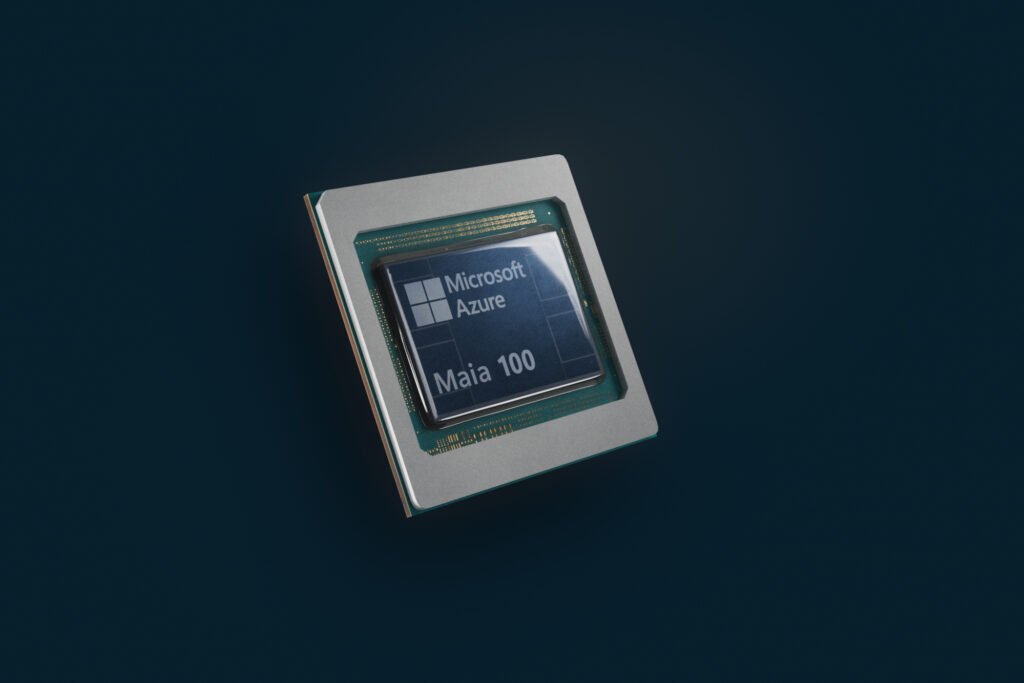
Microsoft announced its Azure Cobalt 100 and Azure Maia 100 chips in November 2023 - the former being a CPU, and the latter an "AI accelerator."
The Maia accelerator is built on TSMC’s 5nm node and has 105 billion transistors on a monolithic die. The company claims a performance of 1,600 teraflops of MXInt8 and 3,200 teraflops of MXFP4.
Microsoft also announced plans for the Maia 200 - but in June 2025, reports emerged that it was pushing back mass production until 2026.
Scott said that the chips are part of a wider strategy to eventually design the entire system. "It’s the networks and the cooling, and you want to be able to have the freedom to make the decisions that you need to make in order to really optimize your compute to the workload," he said.
Earlier this month, Microsoft partnered with Corintis for bio-inspired in-chip microfluidic cooling, which it claimed can remove heat up to three times better than traditional cold plates.
Dealing with the capacity crunch
In addition to sharing the company's chip strategy, Scott addressed the data center capacity crunch. In recent earnings calls, the company has repeatedly stated that it is operating within capacity constraints despite massive investment in new infrastructure.
Scott told the audience: "Massive crunch is probably an understatement. I think we have been in a mode where it’s been almost impossible to build capacity fast enough since ChatGPT... launched.”
He added: "Even our most ambitious forecasts are just turning out to be insufficient on a regular basis. And so... we deployed an incredible amount of capacity over the past year, and it will be even more over the coming handful of years.”
In the past 12 months alone, Microsoft "stood up" more than 2GW of data center capacity.
This experience is being shared across the board by the cloud providers. Oracle, which was awarded a massive $300bn contract from ChatGPT maker OpenAI earlier this year, has since sold a series of bonds to raise $18bn to fund the buildout needed.
KeyBanc analysts have estimated that the company may need to source as much as $100 billion in debt funding over the next four years to fund its contract with OpenAI.




Comments