
Meta has announced the results of its nuclear request-for-proposal (RFP) process, announced back in December 2024.
The RFP sought developers who could help accelerate the availability of new nuclear generators, prioritizing those who permit, design, engineer, finance, construct, and operate the plants.
Facebook's parent company announced three new partnerships following the RFP, two with small modular reactor developers, TerraPower and Oklo, and one with retail electricity giant Vistra. Combined, the deals could provide access to up to 6.6GW of nuclear power from a mix of advanced SMRs and existing large-scale reactors.
Small and modular
The first deal was with TerraPower and will see Meta provide funding for the development of two of its Natrium SMR reactors. The Natrium reactor is an under-development 345MW sodium fast reactor integrated with a molten salt energy storage system, which the company claims provides built-in gigawatt-scale energy storage.
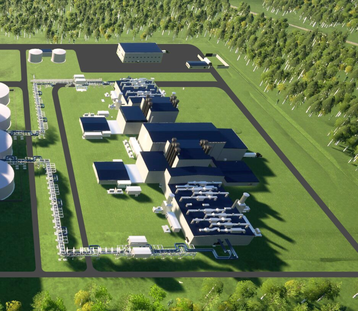
Delivery of the units, which combined will be capable of delivering up to 690MW of firm power, is expected as early as 2032. In addition, Meta has acquired rights to energy from up to six other units, with delivery targeted for 2035. Combined, the companies claim that the units could supply up to 2.8GW of energy generation and 1.2GW of built-in storage.
“To successfully address growing energy demand, we must deploy gigawatts of advanced nuclear energy in the 2030s. This agreement with Meta is designed to support the rapid deployment of our Natrium technology that provides the reliable, flexible, and carbon-free power our country needs,” said Chris Levesque, TerraPower president and CEO.
TerraPower broke ground on its first plant in 2024 and expects to receive regulatory approval from the Nuclear Regulatory Commission (NRC) sometime this year. It has also gained the backing of Nvidia’s venture capital arm, NVentures, which participated in its latest $650 million funding round.
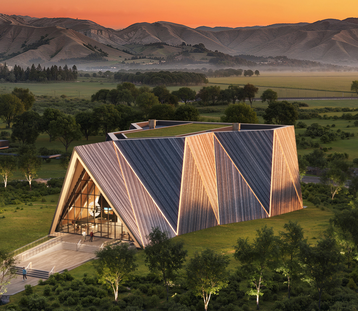
Meta’s second SMR partnership was with Oklo. Together, the companies plan to develop an ‘advanced technology campus’ with a capacity of up to 1.2GW, located in Pike County, Ohio. The campus would be powered by multiple of Oklo’s Aurora Powerhouse reactors, and, according to the companies, could come online as soon as 2030.
“Meta’s funding commitment in support of early procurement and development activity is a major step in moving advanced nuclear forward,” said Jacob DeWitte, Oklo’s co-founder and CEO. “Two years ago, Oklo shared its vision to build a new generation of advanced nuclear powerhouses in Ohio. Today, that vision is becoming a reality through the support of a multi-year effort with Meta; to deliver clean energy and create long-term, high-quality jobs in Ohio.”
Oklo’s Aurora Powerhouse is a fast fission reactor with a planned capacity of 75MW. Originally planned as a 50MW reactor, the company increased its capacity to better suit the needs of the data center market. One of the most bullish developers in the market, Oklo, has said that it expects to deliver its first reactor by 2027, well ahead of most estimates.
It has already signed numerous deals across the data center sector, with a customer pipeline exceeding 14GW of mostly non-binding capacity.
Notable deals include a non-binding master power agreement signed last December with US data center developer Switch to supply up to 12GW of power through 2044.
Last April, it inked a 500MW agreement with Equinix. In May, it signed a non-binding letter of intent outlining plans for a PPA with Prometheus Hyperscale to provide 100MW of power through one or more SMRs. Finally, it partnered with two undisclosed data center providers to deliver up to 750MW of power.
Expanding traditional nuclear
The final agreement struck by Meta was with retail electricity and power generation firm Vistra. The two companies signed a series of Power Purchase Agreements (PPA) for 2,609MW of power from three nuclear plants across Ohio and Pennsylvania.
The PPAs include 2,176MW of power from the already operational 894MW David-Besse Nuclear Power Plant in Oak Harbor, Ohio, and the 1,205MW Perry Nuclear Power Plant in North Perry, Ohio. The remaining 433MW will be provided through uprates at the Perry and David-Besse plants, as well as the Beaver Valley nuclear power station near Shippingport, Pennsylvania. Beaver Valley is comprised of two nuclear reactors, each with a capacity of 980MW.
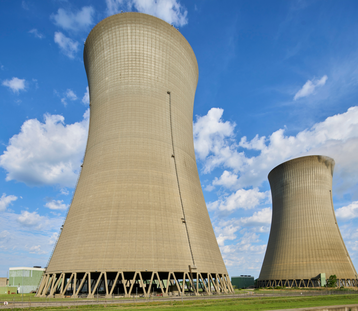
According to Meta, the uprates are the largest supported by a corporate customer within the US market, and are expected to come online in the early 2030s. All three plants have obtained license renewals from the NRC, with Beaver Valley Unit 1 licensed through 2036, Davis-Besse through 2037, Perry through 2046, and Beaver Valley Unit 2 through 2047.
"At Meta, we are investing in nuclear energy because it provides clean, reliable power that is essential for advancing our AI ambitions and strengthening American leadership in energy innovation. By supporting nuclear power, we ensure that our operations – and the communities we serve – benefit from energy solutions that drive both technological progress and economic growth," said Urvi Parekh, head of global energy at Meta.
Vistra acquired all three plants in 2024 from FirstEnergy Nuclear in 2024. Prior to the acquisition, the David-Besse and Perry plants had been the source of controversy.
The Davis-Besse plant has been the site of several major safety incidents during its operating life. According to the NRC, the plant has been responsible for two of the top five most dangerous nuclear events in the US since 1979.
Ultimately, due to these issues, FirstEnergy filed for bankruptcy in 2018 and announced plans to shut down all three plants. However, in 2019, Ohio lawmakers passed House Bill 6, providing subsidies to keep Davis–Besse and the Perry nuclear plant online, prompting FirstEnergy to reverse its closure plans.
The bill later became the center of a major scandal after revelations that FirstEnergy secretly paid $61m to political operatives and state officials to secure its passage and block its repeal. The case led to criminal convictions, including a 20-year prison sentence for former Ohio House Speaker Larry Householder.
Nuclear fortunes
Together, the agreements represent one of the largest procurements of nuclear energy to date within the data center market.
Meta’s first attempt to gain a nuclear foothold was scuppered by the discovery of a rare species of bee back in November 2024. Since then, the company has pledged alongside Amazon and Google to help at least triple global nuclear capacity by 2050. It also signed its first PPA within the nuclear energy sector, inking a 1.1GW deal with Constellation Energy for the entire output of the 1.121GW Clinton Clean Energy Center.
“Our agreements with Vistra, TerraPower, Oklo, and Constellation make Meta one of the most significant corporate purchasers of nuclear energy in American history. State-of-the-art data centers and AI infrastructure are essential to securing America’s position as a global leader in AI,” said Joel Kaplan, chief global affairs officer, Meta
The agreements add to a sense of a nuclear renaissance, driven primarily by the data center sector. All of the major hyperscalers, and several colocation firms, have committed to offtake power from both traditional reactors and experimental advanced nuclear reactors.
Notable recent deals include Google’s PPA with NextEra Energy to offtake 615MW of power from the Duane Arnold Energy Center in Palo, Iowa, and Equinix’s deals with three SMR firms for more than 750MW of power in August.
DCD did a deep dive into the Equinix deal, and the broader SMR market in our latest magazine. Read for free here.





Comments