
Mavenir reworked a precarious financial position that will see the open radio access network (RAN) pioneer shift to a more software-focused approach to the market and, of course, add some artificial intelligence (AI) into the mix.
The financial reworking has long-time investor Siris recapitalizing Mavenir to the tune of $300 million in new investments and, more importantly, Mavenir eliminating more than $1.3 billion in existing debt. Siris will maintain its controlling interest in Mavenir once the deal closes, which is expected to happen over the next several weeks.
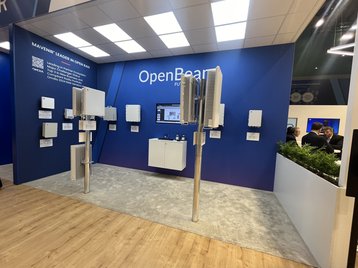
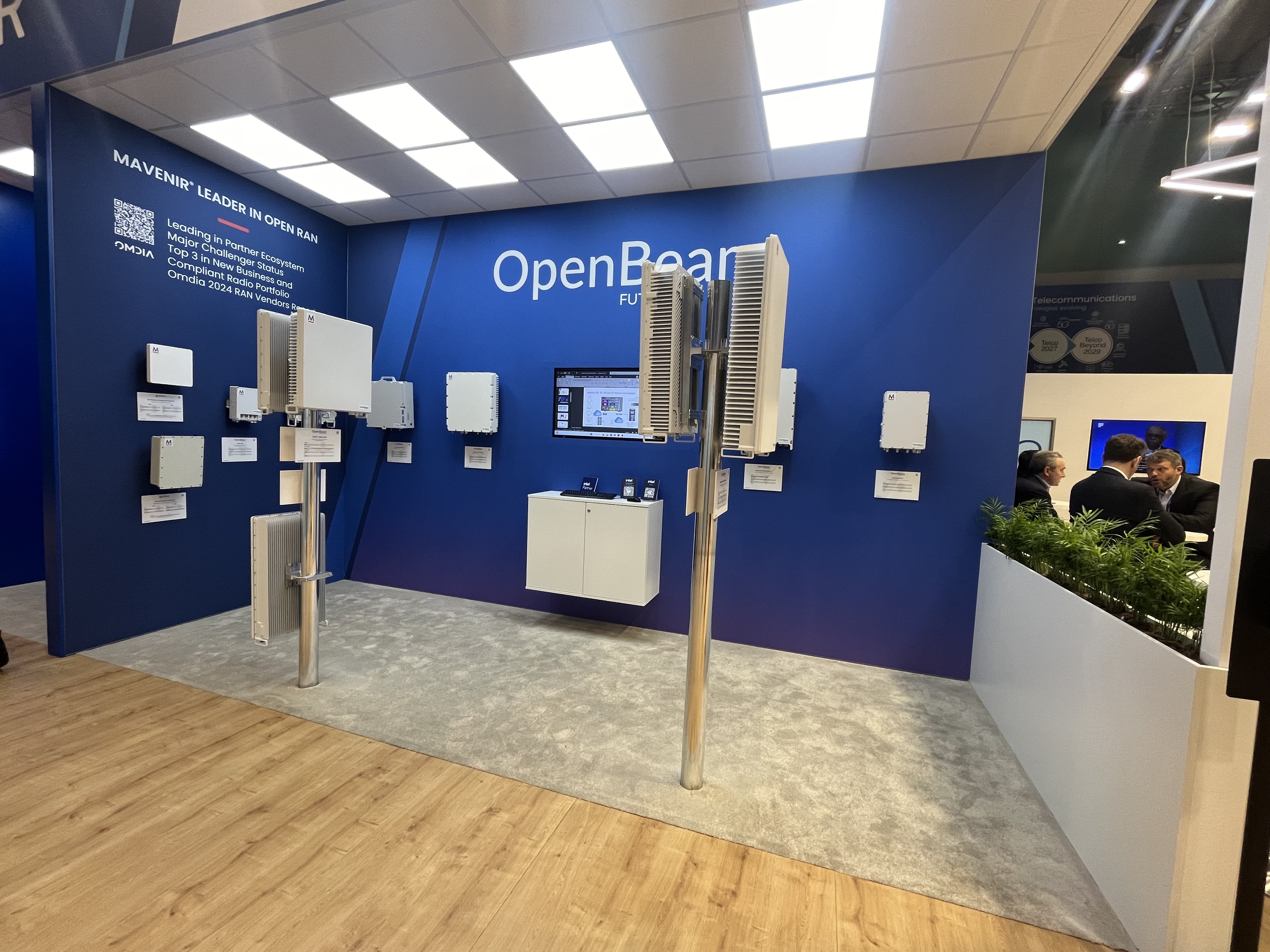
Mavenir plans to use the new funds to “double down on its profitable Core segment,” which includes software tied to voice, messaging, video, and data services. It will then be “refining its open RAN investments to prioritize software in 4G and 5G deployments,” and “maintain” its current open RAN hardware IP to continue supporting its existing customer base.
Mavenir’s open RAN refinement and maintenance should help assuage its many telecom operator customers that have deployed or are planning to deploy the vendor’s open RAN radios. Mavenir counts established operators like AT&T, Boost Mobile, and Virgin Media O2 as customers.
Open RAN has also been a focal point for Western governments in attempting to provide a technology alternative to China-based telecom vendors.
Diane Rinaldo, executive director of the Open RAN Policy Coalition, stated during a House Committee meeting early last year that the Chinese government continued to back vendors like Huawei and ZTE and is using government initiatives to deploy equipment into developing countries. That backing in some cases outweighs the potential benefits of open RAN.
“The CCP [Chinese Communist Party] and their national champions are competing with the full financial backing of China in the strategic intent of vendor lock-in,” Rinaldo said. “Open RAN reduces costs of hardware and software and creates the possibility to break vendor lock-in. These heavy foreign investments tip the scales more than the cost savings that open RAN produces.”
Mavenir will also use the new capital to boost AI capabilities in its systems. This includes the greater ability for controlling network assets and driving new revenue streams from those deployments.
“Now we are on to a new journey of creating true AI-native telco stack,” Mavenir CEO Pardeep Kohli noted in a LinkedIn post tied to the new funding and focus. “My [belief] is that with AI, traditional mobile network operators will see significant changes.”
That AI focus aligns with the growing move to include AI in RAN deployments. Analysts have pointed to the benefits AI can bring to the deployment and management of cloud-based open RAN networks, which are more complex orchestration challenges due to the disaggregated multivendor ecosystem. The use of AI could help close performance gaps for open RAN architectures compared with legacy RAN models.
Mavenir’s operational challenges
The new funding continues what has been a rollercoaster existence for Mavenir.
The company launched in 2005, went public in 2013, and then was purchased by Mitel in 2015. Mitel then turned around and sold Mavenir’s assets to Siris Capital Group, which merged those assets with Xura, which itself had acquired Ranzure Networks in 2017. Siris then divested Xura’s non-core enterprise messaging business, which resulted in a new Mavenir dedicated to creating a software-based RAN.
Mavenir has since made several acquisitions to further boost its technology portfolio, including Brocade’s virtual evolved packet core (vEPC) product line and IP portfolio in 2017, the purchase of small cell vendor ip.access in 2020, and communication platform-as-a-service (CPaaS) provider Telestax in 2021.
Mavenir filed plans for an initial public offering (IPO) in late 2020, which was targeted at raising more than $300 million. However, it quickly scuttled those efforts less than a month later.
Mavenir has since run through various funding rounds, which ultimately failed to stabilize operations. One ratings firm late last year slashed Mavenir’s outlook, with a warning on future funding needs.
“Weak operating performance is straining cash flow and liquidity,” S&P Global noted in late October. “We attribute Mavenir's underperformance to weakness in its key customer revenue and high research and development expenses in the mobile access [and] edge (also known as open RAN) business, which we expect will continue in the near term. Despite its cost-saving initiatives, Mavenir must maintain high R&D spending to avoid harming its competitive position. While the company raised $100 million of equity capital last year, we believe it will need an additional $120 million to cover its cash outflow over the next six months and the upcoming maturity in January 2025.”
That warning was followed by published reports that Saudi Arabia’s Aramco Digital was looking at a potential $1 billion investment in Mavenir.
Analysts view Mavenir’s stability as an important vector for the broader open RAN market.
“Our belief is that open RAN’s success and future prospects hinge on the survival of Mavenir,” Michael Thelander, president and founder of Signals Research Group, noted in a recent report.
ABI Research ranked Mavenir alongside rivals NEC and Nokia as leading open RAN vendors based on innovation and implementation metrics, however Dell'Oro Group notably left Mavenir out of its ranking of open RAN vendors that was based on revenues generated through the first nine months of 2024.



Comments