
The US government’s Lawrence Livermore National Laboratory (LLNL) in Livermore, California, has deployed a new supercomputer.
The 952-node Lynx cluster, featuring Dell PowerEdge servers, Intel Xeon processors, and the Cornelis CN5000 Omni-Path fabric, is part of the National Nuclear Security Administration’s (NNSA) Commodity Technology Systems (CTS-2) program.
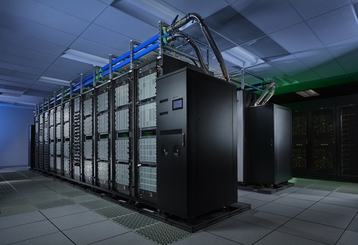
First announced last year, the new cluster will support production modeling, simulation, and analysis for national security.
“We are excited to see the Cornelis CN5000 400G network come to life at Lawrence Livermore National Laboratory,” said Matt Leininger, senior principal HPC Strategist at LLNL.
“The collaboration between NNSA’s ASC program and Cornelis has been rooted in a shared commitment to advancing high-performance computing. Lynx reflects the results of that public-private R&D investment and will support the modeling, simulation, and analysis capabilities that underpin the modern NNSA complex.”
“Lynx represents an important milestone in NNSA’s work to evaluate and deploy next-generation high-performance computing technologies for mission use,” said Stephen Rinehart, Assistant Deputy Administrator for the NNSA’s Office of Advanced Simulation and Computing.
“The system builds on NNSA’s Next-Generation High Performance Computing Network effort and strengthens the computing ecosystem supporting future ASC workloads.”
Founded in 1952, LLNL has hosted HPC systems for more than 70 years, launching with a Remington-Rand Univac I. Today, the lab is home to some 20 HPC clusters in total, including El Capitan, the world’s most powerful supercomputer.
Established in 2000, NNSA is a semi-autonomous agency within the US Department of Energy that manages the US nuclear stockpile.
The CTS-2 contract is funded primarily by NNSA’s ASC program and will provide at least $70 million for more than 70 petaflops of computing capacity to the NNSA Tri-Labs (LLNL, LANL, and SNL).






Comments