
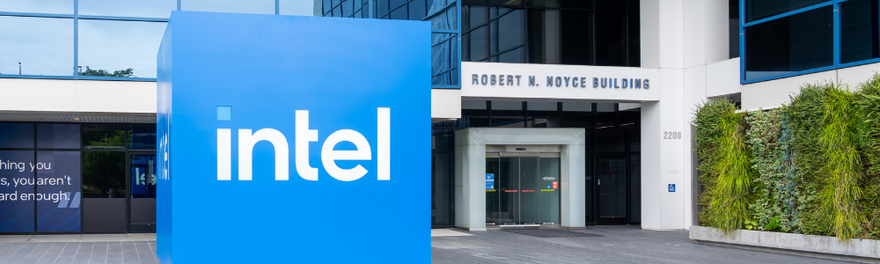

Intel continues to drift away from networking, with the semiconductor firm dismantling its Network and Edge Group (NEX) and slashing thousands of more jobs.
CEO Lip-Bu Tan told investors that Intel was “laser-focused on strengthening our core product portfolio,” though it appears increasingly unlikely that networking will be a part of that.
Intel has already shifted its Edge business into its Client Computing Group (CCG), while its NEX unit was dismantled, with its networking elements integrated into both CCG and Data Center and Artificial Intelligence group (DCAI). The NEX unit had previously been floated as a potential divestiture.
Tan penned a message to staff boldly titled "Steps in the Right Direction," that was focused on priority areas like the firm’s foundry business, a revised AI roadmap, and “clean and simple architectures” for its data center and client segments.
Tan went so far as to confirm that “every major chip design” will be reviewed by him before being taped out.
“The future of Intel is ours to build, but we have no time to waste,” the CEO wrote. “We must continue acting with urgency, discipline, and focus in everything we do.”
The embattled chipmaker said it had completed a majority of its recently announced plans to cut 15 percent of its workforce in a reduction that will see its global workforce slashed from approximately 116,500 employees in mid-2024 to around 75,000 employees later this year.
Strong data center growth and Edge upsides
Despite shifting its Edge business into its CCG unit, that didn’t stop Intel from reporting a three percent year-on-year revenue drop to $7.9 billion. CCG revenues did increase three percent quarter-over-quarter, which CFO David Zinsner linked to increased demand for AI PCs as well as an “upside in Edge deployments.”
Intel’s DCAI unit beat expectations, posting a four percent year-over-year increase in revenues that totaled $3.9 billion.
Zinsner told investors that its strong data center growth was attributed to customers purchasing hardware to mitigate tariff uncertainty, “although it continues to be difficult to quantify,” he added.
Intel reported total net revenue of $12.9 billion, which were flat compared to this time last year, but a welcome positive for a company that’s faced considerable gloom in recent years.
The company forecast upbeat Q3 revenues of between $12.6 billion to $13.6 billion.
“While we believe the underlying fundamentals of our core markets support growth, we feel it prudent to continue to plan for a below seasonal second half of 2025,” Zinsner added.
Yet more cutbacks
Intel’s shift away from networking comes amid wider divestments, exits, and cuts, with its latest earnings report confirming the firm has shuttered plans for new manufacturing facilities in Poland and Germany.
The $32 billion site in Magdeburg, Germany, and a similar site in Wrocław, Poland, were put on ice last September as part of the firm's cost-cutting measures.
The company also confirmed plans to consolidate its assembly and test operations in Costa Rica, bringing them into its facilities in Vietnam and Malaysia.
Meanwhile, its $28 billion Edge chip factories in Ohio will see construction slowed to “ensure spending is aligned with market demand.”
The sites, unveiled back in January 2022, were due to start construction in 2025, but the project has been routinely set back, going from 2026 to 2031.
In addition to reworking factory plans, Intel also recently ousted its marketing team and scrapped its automotive business.
Comments