
Following the successful launch of the first of two new ViaSat-3 geostationary satellites, Inmarsat Maritime has confirmed connection with its new NexusWave service and announced plans for a new VS60 maritime terminal built with Intellian and Viasat radio technology.
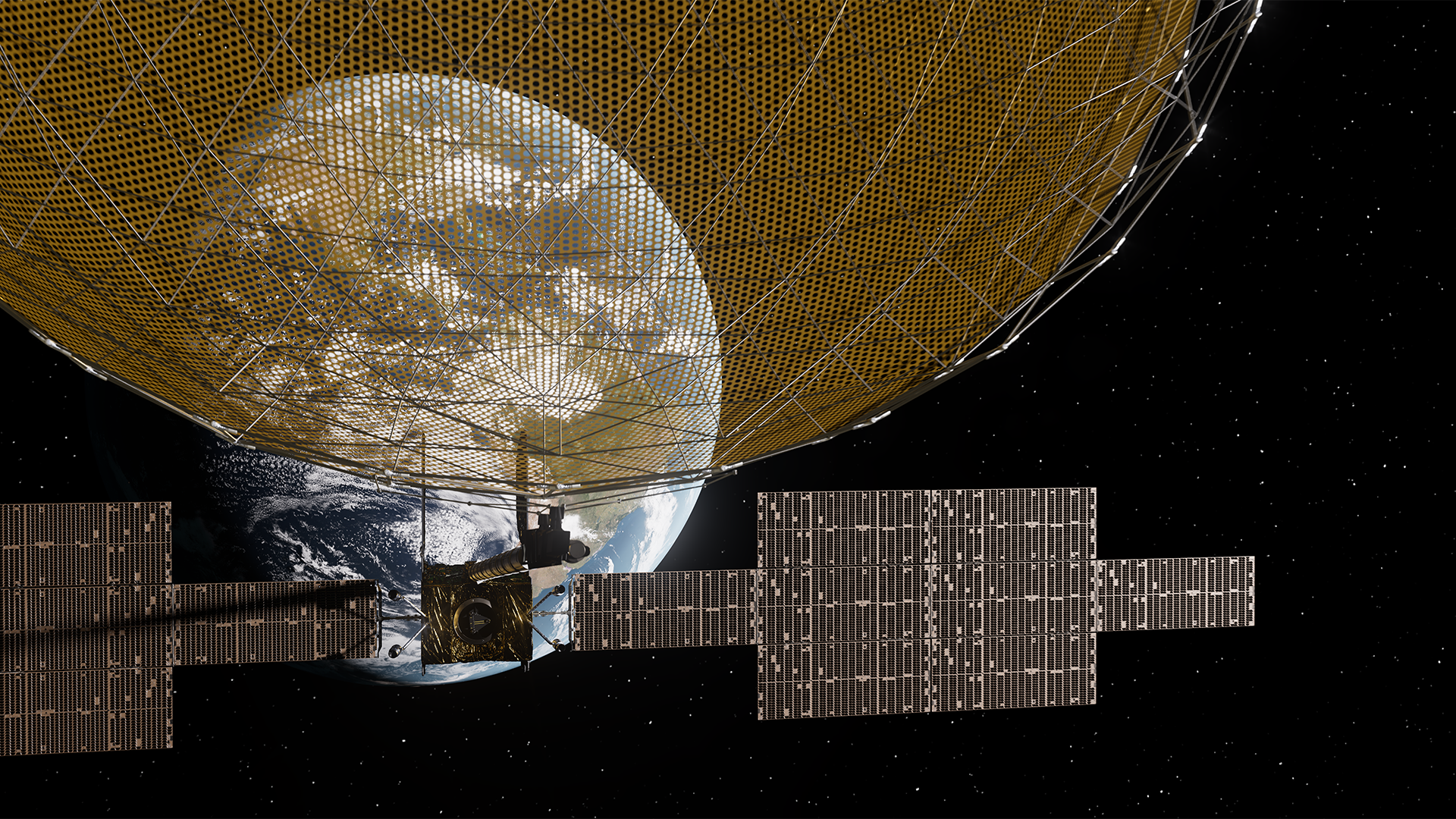
The two new ViaSat-3 satellites, referred to as Flight 2 and 3, are due to enter service in 2026 over the Americas, adding high capacity, more than 1,000 steerable beams, and dynamic bandwidth across major shipping lanes.
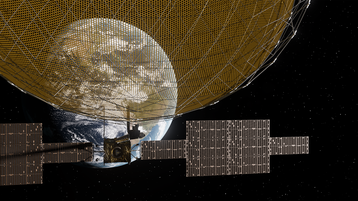
The two satellites will cover for the impaired service of the first ViaSat-3 satellite. The machine faltered shortly after it launched in May 2023 when its antenna failed to deploy, resulting in Viasat’s biggest day-one loss in its share price history, and triggering a $420 million insurance claim.
A space insurance underwriter speaking on background to CNBC at the time called it a “market-changing event” for the sector, compelling some insurers considering satellite coverage to flee the market. The addled satellite entered service, offering reduced capacity last year.
Viasat’s Flight 2 satellites will be followed by a ViaSat-3 F3 tranche in the future, which will cover the Asia-Pacific region.
These satellites will support the performance of Inmarsat’s NexusWave fully-managed connectivity service, combining GEO Ka-Band, LEO, LTE, and L-Band networks, enabling faster, more consistent speeds and flexibility for data-heavy applications.
Viasat announced the closure of its acquisition of Inmarsat in May 2023.
“As ViaSat-3 capacity becomes available, we’re taking another big step forward for our customers and partners by bringing more bandwidth, better flexibility, and a forward-thinking upgrade path to ensure connected confidence for the future,” said Ben Palmer, president, Viasat Commercial, in a statement.
Inmarsat’s new VS60 terminal has been optimized for ViaSat-3, with which it has delivered download speeds exceeding 250 megabits per second in sea trials. The terminal is designed to support enterprise networking, video, and mission-critical traffic, with multi-layer cyber protections.
“The combination of NexusWave’s bonded, multi-orbit architecture, and the new ViaSat-3-ready terminal developed with Intellian puts us in a strong position to support the operational priorities of global fleets,” said Gert-Jan Panken, vice president, Inmarsat Maritime, in the same statement. “It reinforces our long-term commitment to reliability, security, and customer experience at sea, and enables fleets to scale seamlessly with future capacity as the network expands.”



Comments