
Anthony P. Hinojosa, a resident of Troy, Illinois, was arrested last week after he posted threatening messages about a proposed data center development on Facebook.
According to the Troy Police Department, on February 4, Hinojosa allegedly threatened to use a firearm to kill City of Troy officials or contractors who were involved with a data center proposal put forth by Cloverleaf Infrastructure.

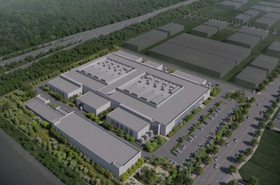
The proposal seeks permission for Cloverleaf to build a two-phase, 250 to 300 acre data center that would offer 500MW of capacity at completion.
Hinojosa is also said to have made a false report to the police, claiming that a firearm-related offense would be committed despite knowing that there was “no reasonable ground” that this would occur.
Although opposition to Cloverleaf’s proposal has been fierce – hundreds of local residents attended a public information session about the proposal last night to protest the developer’s plan, according to a local report – Hinojosa’s arrest shows how the data center development process can spiral out of control.
Last December, a councilor in New Carlisle, Indiana, claimed that her family had been ‘swatted’ whilst she was attending a meeting about a data center that eventually failed to get planning permission.
In the same month, three anti-data center advocates in Port Washington, Wisconsin, were arrested by local law enforcement after authorities claimed they had disrupted the meeting.
These incidents have become more common as data center developers look to capitalize on the opportunity provided by the AI boom.
Training and inference workloads require the construction of data centers that are larger and more energy-intensive than those used for traditional cloud and colocation functions, forcing developers to turn their attention towards areas with power and land that have little to no existing data center presence.
This often sparks concern among local residents about rising electricity prices, the impact on the environment, and more.
Authorities amenable towards data centers argue that they can bring in much-needed property taxes and jobs, even if they turn out to be temporary.
But concerns that a developer may leave if they encounter too much resistance – as well as the developer’s own preference for speed – can draw the ire of citizens worried about the impact on proper procedure.
Calls for data center moratoriums are beginning to reach the state-level, and at the time of writing, there are six states – New York, Michigan, Oklahoma, Virginia, Maryland, and Georgia – currently considering legislation that would impose a state-wide data center moratorium.




Comments