
Councilwoman Amy Drake of the St. Joseph County Council in New Carlisle, Indiana, has claimed her family was ‘swatted’ in a data center meeting that saw the $12 billion facility fail to acquire planning permission.
Swatting refers to the practice of making a false report to law enforcement authorities in order to trigger an armed response to a specific address. This is a criminal act in the US and can often be fatal.
Drake, who voted against the proposal, said in a Facebook post that the Department of Child Services and several officers came to her home to do a “so-called welfare check” on her husband and children at 2am on Wednesday “while [she] was still hearing public testimony on the data center project.”
According to the South Bend Tribune, the meeting did not end until 4am after lasting more than ten hours.
Drake has been vocally opposed to the data center project, and the councilwoman attributed the incident to “bad actors who wanted to harass my family and intimidate me and my vote.”
DCD has reached out to the St. Joseph County Sheriff’s Department for comment.
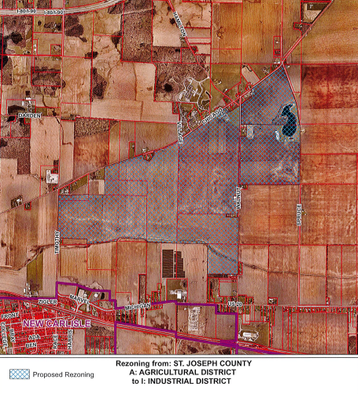
The proposal concerning a 1,057-acre land parcel at 52505 Spruce Road has attracted a great deal of controversy. The council was set to decide whether to grant the rezoning application in September, but they voted to postpone their decision, stating that developers needed more time to speak with the local community.
Citizens have also expressed anger about the data center’s potential end-user's anonymous identity. A local official stated in September that this would be Meta, but the hyperscaler has since denied affiliation with the facility.
Little is also known about the land purchaser, a company called New Carlisle 25 Developer LLC. The South Bend Tribune has previously reported that its address is the same as an operator building a facility in Pennsylvania.
If Drake’s accusations turn out to be true, this would constitute a potentially violent escalation of tensions that have swept the US amid a data center buildout that shows no signs of stopping.
Just last week, three anti-data center advocates in Port Washington, Wisconsin, were arrested by local police after authorities claimed they had disrupted the meeting.
Friction between developers, local authorities, and residents has been increasing as data center operators rush to meet the computational demands of the AI boom.
AI workloads require larger and more energy-intensive data centers, forcing developers to turn their attention towards areas with cheap and fast power that have little to no existing data center presence.
In areas with cash-strapped local authorities and lacklustre economic growth, data centers can bring in much-needed property taxes and jobs, even if they turn out to be temporary.
But some residents and councilpeople have expressed concerns about the potential impact on the environment, rising utility costs, as well as procedural and governance issues – like the signing of NDAs – related to the approval of a given project.






Comments