
Former cryptomining-turned-AI-hardware-startup Velaura AI has raised $110 million in a Series A financing round, bringing its total valuation to more than $1 billion.
Announced by the company last month, the round was led by Seligman Ventures, with participation from new investor Capricorn Investment Group and existing investors Mayfield, Maverick Silicon, MARA, Premji Invest, Samsung Catalyst Fund, and StepStone Group.
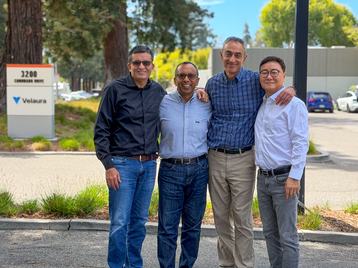
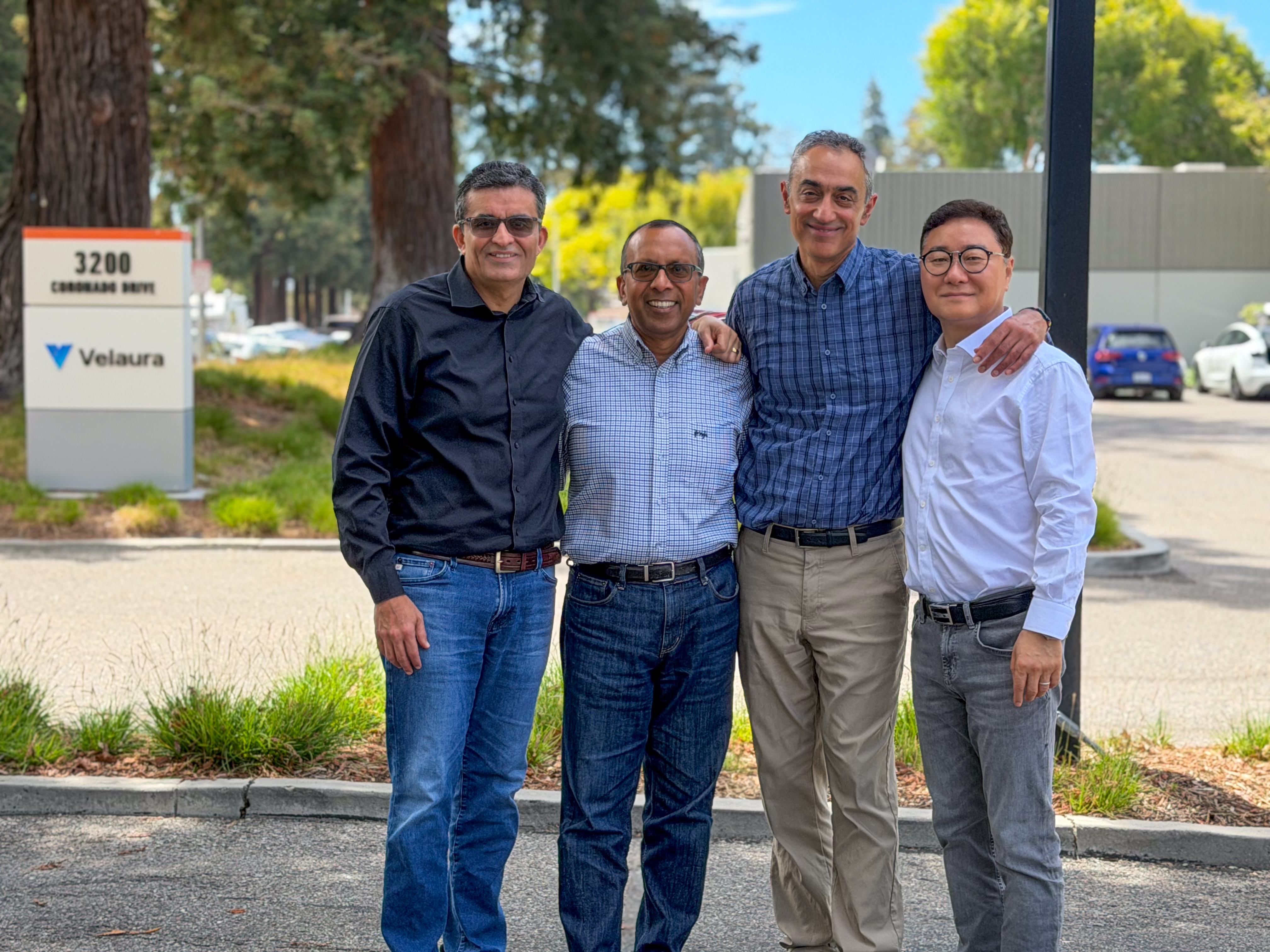
Silicon Valley-based Velaura said it would use the funds to accelerate the development and commercialization of its ultra-low-power silicon and software portfolio, which includes its Titan Core silicon IP and design platform. Launched by the company in March 2026, Velaura claims the offering enables up to 2x lower overall chip power for AI accelerators, delivering up to 500W of power savings on a typical 1,000W GPU or XPU.
“Every advance in AI, from reasoning models to embodied intelligence, creates demand for more compute, and ultimately more power,” said Rajiv Khemani, co-founder and CEO of Velaura AI. “The next era of AI will be defined not only by better models, but also by fundamentally better compute economics. Velaura is building the ultra-low-power silicon and software foundation needed to scale AI from hyperscale data centers to intelligent machines operating in the physical world.”
Founded in 2022 as Auradine, the company rebranded to Velaura AI in March 2026 and announced it was pivoting its focus to ultra-low-power AI compute and energy-efficient silicon solutions.
As Auradine, the company sold servers specially designed for Bitcoin mining and had a hardware portfolio comprised of offerings that used air, water, and immersion cooling technology. In April 2025, Auradine raised $153 million in a Series C funding round.
Prior to starting Auradine, Khemani founded and led networking startup Innovium, having previously held the role of COO at Cavium, a fabless semiconductor company that was acquired by Marvell in 2018. In January 2025, Auradine announced that Lip-Bu Tan was joining its board of directors. In March of that same year, Tan was appointed CEO of Intel.





Comments