
Fermi America has signed a non-binding Memorandum of Understanding (MoU) with power-cooling firm MVM EGI Zrt. to develop cooling systems for its planned up to 11GW data center and energy campus in Amarillo, Texas.
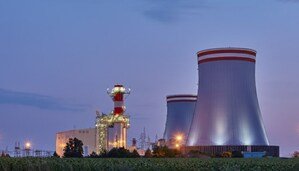
Under the terms of the MoU, the companies will partner on preliminary engineering and feasibility studies for a series of indirect hybrid cooling towers that will support the project's potential 6GW of natural gas generation infrastructure, and its planned four AP1000 nuclear reactors.
As part of the studies, the companies will define cooling requirements, evaluate tower configurations, assess site and height constraints, and model the water-saving performance that hybrid cooling can deliver at scale.
"MVM EGI has been on the cutting-edge of power cooling for more than half a century, maintaining the heritage of our founders, Professor László Heller and Professor László Forgó whom the high-capacity water-saving dry cooling systems are named after worldwide," added MVM EGI P.L.C. CEO Péter Kárpáti. "
The MoU outlines several milestones, including requirements definition, concept validation, and feasibility assessment. Construction on the first cooling tower is expected to commence in January of 2026, with the entire system built out by 2034 to match the build-out of the energy campus.
The companies claim that by relying primarily on air cooling and circulating water through closed-loop systems, the design sharply reduces evaporative loss, and conserves water resources. In addition, the partners aim to evaluate the use of recycled and reclaimed water, as well as underground reservoirs and solar-covered retention ponds.
"Fermi isn't some out-of-town operation parachuting in. Our leadership is from West Texas — we grew up on this dirt, and we care about the land and its resources," stated Fermi America Co-Founder and CEO Toby Neugebauer.
"As promised, we're working with global innovators like MVM to ensure Project Matador complements the long-term water needs of the region, building something big, but doing it the right way."
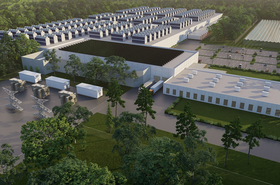
Fermi’s Project Matador is one of the most ambitious data center campuses planned anywhere in the world. The project is being developed in partnership with the Texas Tech University system, on whose land the data center will be sited.
If realized, the project will span 18 million sq ft (1.67 million sqm) and have a capacity of up to 11GW. To power the campus, Fermi intends to utilize a combination of on-site energy sources, including natural gas, solar, wind energy, and nuclear energy.
The company has already signed several deals to acquire natural gas turbines to power the installation in the short- to medium-term.
In October, the company signed a deal with US midstream gas firm Energy Transfer to connect with its pipeline infrastructure located just south of the planned campus. The pipeline interconnection is slated for completion in Q1 2026.
Fermi intends to use the pipeline to power several natural gas turbines located at the site. In September, the company signed a non-binding Letter of Intent with Siemens for up to 1.1GW of gas turbine capacity to power the site. This followed a deal in July that saw the company purchase more than 600MW of natural gas generation capacity through two separate transactions. Through this, Fermi aims to deliver at least 1.1GW of power to the site by 2026.
In addition to natural gas generation, Fermi aims to deploy four Westinghouse AP1000 reactors on the campus. Each AP1000 is a Generation III+ pressurized water reactor with an output capacity of roughly 1,100–1,117MWe. Fermi is collaborating with Westinghouse to finalize a Combined Operating License Application to expedite the approval process.
While the campus remains in the very early stages of development, having yet to build anything and secure any customers, it has already mobilized significant capital.
In October, the company made its stock market debut, launching an initial public offering (IPO). The launch exceeded expectations, with shares of the company opening 19 percent higher than expected, with the data center investment trust valued at $14.8 billion.
Before this, the company secured $100 million as part of a Series C equity funding round led by Macquarie Group, as well as a $250m senior loan facility, funded solely by Macquarie’s commodities and global markets business.
Despite the massive investment, concerns remain over whether the campus will be able to successfully get off the ground, with the first two phases alone expected to cost more than $2bn.
In addition, the long lead time of the Westinghouse reactor has led some to argue that it is unlikely to reach its 11GW goal unless significant work is done to expedite the construction and installation of the nuclear reactors.





Comments