
The Federal Communications Commission (FCC) has told EchoStar that it plans to investigate EchoStar's use of 5G spectrum as the company continues its 5G build-out across the US.
In a letter to EchoStar, FCC Chair Brendan Carr stated that the agency will review EchoStar's compliance with its spectrum licenses, as reported by the Wall Street Journal earlier this week.

"I have directed agency staff to begin a review of EchoStar’s compliance with its federal obligations to provide 5G service throughout the United States per the terms of its federal spectrum licenses," wrote Carr to EchoStar.
"As you know, buildout obligations are one way that the FCC can ensure that Americans, including those living in rural communities, have a fair shot at next-generation connectivity. After all, failure to meet buildout obligations leaves these communities behind."
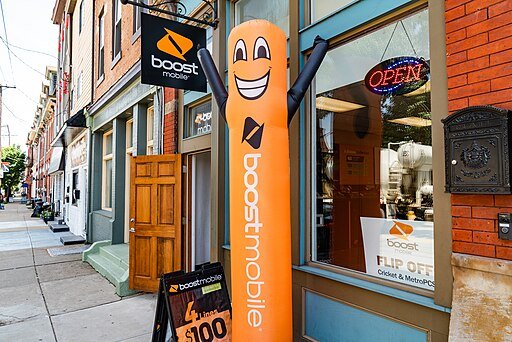
EchoStar acquired its Boost Mobile business as part of Dish Network’s role in the T-Mobile/Sprint merger, completed in 2021.
In 2023, Dish Network merged with EchoStar, leading to Boost Mobile becoming the brand name of the company's mobile network.
EchoStar was spun out from Dish back in 2008, as Dish held onto the TV business while shedding the satellite infrastructure that beamed content into them.
A re-merger between the two combined Dish's Pay-TV business and its 5G wireless network with EchoStar's satellite communications solutions.
Carr: EchoStar has kicked the can down the road
In 2019, the US government set construction milestones for Dish to maintain cellular licenses worth billions of dollars.
At the time, Dish agreed to meet specific buildout obligations, while the FCC relaxed some of EchoStar’s then-existing buildout obligations in exchange for EchoStar’s commitment to put its licensed spectrum to work deploying a nationwide 5G broadband network.
As part of the rollout agreement, Carr wrote that EchoStar said its network would cover at least 70 percent of the population within each of its licensed geographic areas for its AWS-4 and 700 MHz licenses, and at least 75 percent of the population within each of its licensed geographic areas for its H Block and 600 MHz license by June 14, 2025.
Carr noted that EchoStar repeatedly negotiated with the previous Biden Administration to extend dates for buildout obligations. Last year, the FCC approved an extension request to EchoStar for the rollout of its 5G network.
"Under the terms of that bureau-level decision, EchoStar would no longer have to meet the June 2025 buildout obligations—meaning, its commitment to provide 5G to a broad swath of America," Carr wrote. "Nor would EchoStar have to face the agreed-upon consequences for failing to do so. Instead, EchoStar would generally kick the can down the road while agreeing to buildout milestones for some major-market licenses by December 2024, along with other commitments."
He added that the number of Boost Mobile subscribers has decreased since EchoStar acquired the company five years ago.
Carr referred to other occasions where EchoStar has sought extensions or missed deadlines for its buildout, notably in 2017 when the company informed the FCC that it would not meet its interim coverage and service milestones for its AWS-4 and Lower 700 MHz E Block licenses.
"The terms of the deal were clear. The FCC structured the buildout obligations to prevent spectrum warehousing and to ensure that Americans would gain broader access to high-speed 2 wireless services, including in underserved and rural areas," wrote Carr.
EchoStar hits back
The letter has prompted EchoStar chairman Charlie Ergen to hit back, defending the company's position.
"We have worked collaboratively with FCC leaders," said Ergen. "We are proud to have invested tens of billions to deploy the world's largest 5G open RAN network – primarily using American vendors – across 24,000 5G sites, to offer broadband service to over 268 million people nationwide."
On top of that, Ergen said that EchoStar's network creates jobs for Americans and plays a role in the Trump Administration's plans to deploy Open RAN networks free from Chinese network vendors.
Last week, EchoStar announced Boost Mobile added 150,000 for the first quarter of this year.
The company's president of technology and COO, John Swieringa, also stated that Boost Mobile now provides 5G to more than 80 percent of the country's population, meeting the June 14 target mentioned by Carr.
SpaceX watches on
Usage of satellite spectrum has also been called into question, following on from recent concerns raised by Elon Musk's SpaceX.
Musk is a key ally of President Trump, who appointed Carr as FCC Chair as soon as he entered the White House for a second time.
Carr said he has asked the FCC to also look into EchoStar's usage of the 2GHz spectrum.
In a filing of its own, SpaceX stated that EchoStar’s spectrum in the 2 gigahertz band “remains ripe for sharing among next-generation satellite systems.”
The satellite company wants the FCC to open up that particular spectrum band to EchoStar's competitors.
The company said it used one of its satellites to scan the Dish’s cellular signals on the ground, claiming that "Dish's use of the band is de minimis at best."
EchoStar's network uses spectrum bands including the AWS-4 band, which sits in 2GHz (specifically, 2000-2020MHz and 2180-2200MHz). This band is authorized for Mobile Satellite Services (MSS) communications.






Comments