
Ericsson is working with Forschungszentrum Jülich (FZJ) – the research institute housing Europe’s fastest supercomputer – on AI and high-performance computing (HPC) solutions for 5G and future 6G networks.
A Memorandum of Understanding signed earlier this week will see the pair use the Jupiter supercomputer to power research areas, including training “large-scale” AI models. The research lab will also help Ericsson to look at “energy-efficient computing” for inference workloads spanning radio and edge deployments, such as neuromorphic computing (a brain-inspired approach to hardware design), to speed up device optimization.
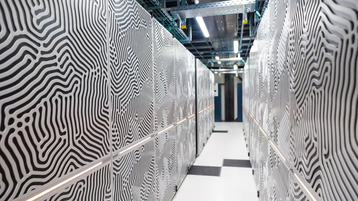
Ericsson said the partnership will help it enhance its core network, network management, and radio access network (RAN) offerings.
“The future of mobile networks is deeply intertwined with AI and the need for unparalleled energy efficiency,” Nicole Dinion, head of architecture and technology, cloud software, and services at Ericsson, noted. “Our collaboration with Forschungszentrum Jülich, for years a global leader in supercomputing and applied physics, combines their research and computing power with our expertise in all domains of telecoms technology.”
Jupiter is the world’s fourth fastest supercomputer and the fastest on the continent per the latest Top500 list. Powered by hardware from Nvidia and Eviden’s BullSequana, it became Europe’s first system to break the exascale barrier, joining El Capitan, Frontier, and Aurora.
The collaboration will provide insights into the feasibility of cloud strategies based on concepts from the EuroHPC ecosystem, which is establishing a supercomputing infrastructure with European centers such as the Forschungszentrum Jülich.
Ericsson’s work with FZJ will also provide insights into cloud strategies based on concepts from EuroHPC – a joint initiative between the European Union (EU), 35 European countries, and private partners to develop a continental supercomputing ecosystem.
“This collaboration has the potential to make a significant contribution to a more sustainable digital future,” Laurens Kuipers, a member of Forschungszentrum Jülich's executive board, explained. “By combining our excellence in high-performance computing and our research into novel, neuro-inspired computing approaches with Ericsson’s expertise in telecommunications, we aim to develop more energy-efficient network solutions and strengthen a sovereign European digital infrastructure.”




Comments