
Cisco has introduced a prototype quantum switch designed to route and convert quantum information between systems built on different encoding approaches, a step toward more interoperable quantum networks.
Most quantum systems can only communicate with others that use the same encoding modality. The “Universal Quantum Switch” aims to address this longstanding limitation. According to Cisco, its prototype can accept quantum signals in one format, convert them, and transmit them in another while preserving the underlying quantum state.
In proof-of-concept experiments, the company reported less than four percent degradation in quantum state fidelity and entanglement during conversion. Cisco researchers plan to publish the results in a forthcoming paper on ArXiv.
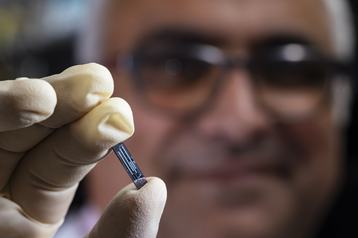
The switch is designed to support multiple encoding modalities, including polarization, time-bin, frequency-bin, and path encoding, though Cisco said only polarization has been experimentally validated so far.
The ability to translate between these formats could help address fragmentation across quantum hardware platforms, where different vendors use different approaches to encode and transmit quantum information. Without a way to bridge those differences, building larger-scale or multivendor quantum networks remains difficult.
Cisco said the switch operates at room temperature and can run over standard telecom fiber, avoiding the need for specialized infrastructure. It also demonstrated sub-nanosecond switching speeds and power consumption below 1 milliwatt in lab conditions.
The company positions the technology as part of a broader push toward distributed quantum computing, where multiple quantum systems are networked together rather than operating as isolated machines.
However, the work remains at an early stage. The prototype has only been tested using Cisco’s own entanglement source and detection systems, and support for additional encoding modalities has yet to be validated experimentally. As with much of quantum networking research, moving from lab demonstrations to real-world deployment will depend on improvements in reliability, standardization, and integration across the stack.
Interoperability remains a recurring challenge in the field. Several companies and research groups are working on ways to connect disparate quantum systems, but most current approaches are limited to specific encoding schemes or tightly controlled environments.
Cisco’s approach, if it proves scalable, would enable quantum devices from different vendors to exchange information without requiring a common encoding layer. That could reduce vendor lock-in and enable more flexible quantum network architectures.
The announcement is part of Cisco’s broader quantum networking effort, which includes work on entanglement sources and software for orchestrating distributed quantum workloads. The company has also established partnerships with organizations, including IBM, Qunnect, and Atom Computing, as it develops a full-stack approach to quantum networking.





Comments