
TikTok owner ByteDance is pushing to gain market share in China's cloud computing sector.
As reported by the Financial Times, citing sources including company employees, customers, and competitors, the social media giant has been expanding its "Volcano Engine" corporate cloud offering in recent months.

In practice, this has seen Volcano Engine hiring more people for its sales team and undercutting rivals on pricing for its platform. The company is leaning on its data reserves, existing compute infrastructure, and AI offerings to help challenge established cloud providers in China, including Alibaba Cloud, Tencent, and Huawei.
According to IDC, Volcano Engine is now the second largest AI cloud provider in China behind Alibaba, with 13 percent, though its share of the cloud market in general is much smaller at just three percent.
ByteDance did not respond to the FT's request for comment.
“ByteDance’s growth trajectory and AI-led strategy suggest it could become one of the dominant players as demand for AI accelerates,” said Charlie Dai, vice-president and principal analyst at Forrester. “It has leveraged its wealth of data and large GPU infrastructure to develop AI tools for customers, combined with aggressive pricing and deep integration with its consumer ecosystem.”
The FT notes that ByteDance is one of the biggest buyers of AI hardware and was Nvidia's largest customer in China in 2024. In January 2025, the company said it would spend $7 billion on Nvidia chips outside of China throughout 2025. Whether it has been able to do so is unclear.
At the start of this year, the US House of Representatives passed the Remote Access Security Act in an effort to further limit China’s access to US technology, such as AI chips, including renting GPUs from US cloud providers.
AI cloud providers in China have been challenged of late by a lack of access to GPUs.
A report from Frost & Sullivan earlier this month noted that the market was facing constraints covering “hardware performance, software ecosystems, system integration and commercial operations,” thus, "few players have large-scale deployment."
This has been noted in the most recent earnings calls of a few Chinese cloud providers. In November, Tencent said that its capex was falling due to “a change in terms of AI chip availability” and “supply chain constraints sourcing GPUs.”
The company's quarterly capex was just RMB13.0 billion ($1.83bn), down 24 percent Year-on-Year and less than Q2's $2.49bn. It expects this to further fall in 2026. Alibaba, similarly, said during its earnings call that it was struggling to deploy servers fast enough to meet AI demand and was having to strategically ration access. Just one month prior, Alibaba claimed it could reduce GPU use by 82 percent with its "pooling" system.
Frost & Sullivan's report found that Baidu and Huawei topped the "GPU cloud market" in China, but only considered those controlling the full chip-to-cloud value chain, thus isolating ByteDance's Volcano Engine.
Volcano Engine was launched in June 2021, with ByteDance positioning it as a proprietary algorithm used to power TikTok - its "secret sauce." Plans to expand into offering cloud computing were revealed at launch, and made available in December 2021.
ByteDance operates data centers around the world, including in Brazil, Thailand, Finland, Malaysia, China, and Norway, and is a known customer of Oracle in the US. In December 2025, the company signed over operations of TikTok to a group of investors led by Oracle. The company is also seeking to develop a data center in Australia.
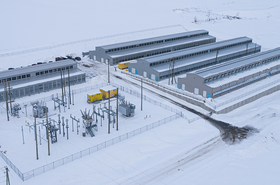
In January 2025, ByteDance revealed it would invest 4.5 billion yuan (approximately US$614 million) in a new computing center in Datong, Shanxi Province, China.




Comments