
AST SpaceMobile has submitted a filing this week with the Federal Communications Commission (FCC) to commercially deploy direct-to-device (D2D) satellite connectivity for first responders.
The filing comes after AT&T also asked the regulator to allow a commercial deployment of the satellite service with AST SpaceMobile using Band 14 spectrum.
FirstNet operates a network for first responders that is supported by AT&T.
The first responder network already uses satellite technology for its deployable assets, such as SatCOLTs — satellite cell on light trucks, which are vehicles equipped with mobile cell sites that connect via satellite when networks go down during natural disasters.
At present, FirstNet uses the 700MHz frequency band, also known as Band 14, to provide first responders with connectivity. The band is seen as a good fit for satellite services because it's deployed nationwide.
The D2D service aims to expand coverage to hard-to-reach rural parts of the US, or in locations impacted by natural disasters, where the network can be knocked offline.
In April, AT&T and AST SpaceMobile were given the go-ahead by the FCC to carry out D2D connectivity trials with emergency services this year.
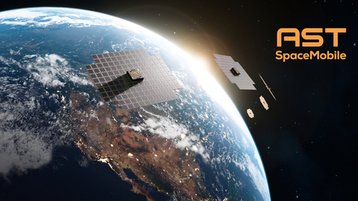
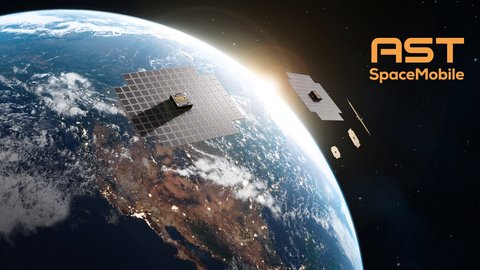
As part of that, AT&T will test direct-to-cellular connectivity via AST's BlueBird satellites orbiting Earth. AST's BlueBird satellites launched in September 2024.
Earlier this year, AT&T carried out D2D video calls with AST SpaceMobile.
Founded in 2017, AST's first test satellite, Bluewalker 1, was launched in 2019; Bluewalker 2 was canceled. Its latest test satellite, Bluewalker 3, launched in 2022.
AST was planning a constellation of almost 170 satellites; the first 20 were originally due to enter operation by 2023, with another 90 deployed through 2024. According to more recent press releases, it seems to have revised its constellation plans down to 100.
Verizon and AT&T, along with Vodafone, are all investors in AST SpaceMobile, rivaling Elon Musk's SpaceX Starlink.




Comments