
US power systems firm Arbor Energy has signed an agreement with energy optimization platform GridMarket to deliver up to 5GW of power to the data center sector, with supply expected to begin in 2029.

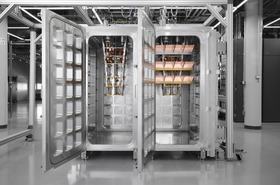
The deal will target data center operators and other industrial customers, offering a shorter deployment cycle than other power alternatives. To shorten timelines, Arbor has adopted a modular approach to power generation through its 25MW Halycon turbine. The turbines are adapted from rocket turbomachinery and can run on fuels ranging from natural gas to biomass-derived syngas.
The turbines are also modular by design and come as a pre-assembled unit, using 3D printing to reduce manufacturing complexity. Systems can be deployed individually or combined into larger installations, depending on demand.
“Power availability is quickly becoming the gating factor for data center and industrial development,” said Nick Davis, CEO of GridMarket. “Our customers are increasingly looking for ways to secure new capacity faster than traditional generation timelines allow. Arbor’s system adds a new option for bringing baseload power online as demand continues to grow.”
Alongside the agreement, Arbor announced the appointment of Nishad Pai as chief commercial officer. He previously led business development and partnerships at Heirloom, and has held roles at Google, Amazon, YouTube, and Adobe.
“I’ve spent much of my career helping bring new technologies to market, from large-scale software platforms to emerging energy solutions,” said Pai. “What drew me to Arbor is the opportunity to apply that experience to one of the biggest challenges ahead: building more power infrastructure faster. I’m excited to help bring new capacity online at the scale and speed the market demands.”
Arbor plans to scale production over the coming decade, targeting more than 100 turbines shipped annually by 2030, equivalent to over 1GW of new capacity each year. The additional generation is expected to support data centers, manufacturers, and utilities seeking additional baseload supply and improved grid resilience.





Comments