
As AI adoption continues to surge across major industries, so too does global demand for efficient, large-scale, secure data centers. As of 2025, 88 percent of organizations claimed to use AI to enhance at least one business function, up from 78 percent compared to the previous year.
To provide innovators with the computational power required to foster AI growth, vast networks of powerful, intelligently designed data centers must be built. In the US alone, as many as 5,427 such facilities are currently in operation, totalling 45 percent of all sites worldwide.
However, with increased demand often comes increased risk, with malicious actors looking to leverage sophisticated tools to infiltrate facilities and disrupt operations. Given the growing importance of data centers to the global economy, efforts to protect sites must be prioritized.

This is why using video intelligence to protect data centers is becoming a vital best practice.
An increasingly complex threat landscape
To best illustrate the importance of video intelligence in data center security, it’s wise to examine the specific types of threats currently impacting facilities worldwide.
Of course, a layered approach to physical security is always advantageous when safeguarding high-risk sites, but, from the beneficial technologies that stakeholders can deploy, it’s often video security systems that provide the most practical insights to inform responses.
Analyzing the data center security threat landscape highlights some concerning information:
- Physical breach attempts on data centers have risen by almost 50 percent in recent years.
- As many as 10 percent of all malicious breaches stem from physical security compromises.
- Human error, including factors such as credential misuse, is involved in 95 percent of breaches.
- Cyberattacks on Operational Technology (OT) infrastructure increased by almost 90 percent in 2024.
- Server downtime costs large-scale businesses $9,000 per minute on average in 2024.
Modern data centers are facing growing risks across both physical and virtual environments, with large-scale threats commonly impacting both OT and IT infrastructure. To reliably protect data centers from sophisticated attacks, integrated, visual, cybersecure systems are needed.
Gaining more visibility into security events
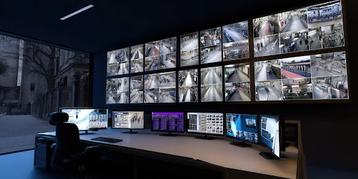
To build future-proof data center security systems, operations managers and security leaders must find a way to gain more visibility into physical and digital infrastructure. The faster and more reliably teams can verify potential threats, the more efficient and effective responses can be.
By developing a solution that combines key systems, such as access control and network security infrastructure, with intelligent, analytics-driven video security devices, operators can be made aware of emerging risks in real time and use video intelligence to plan an informed response.
The benefits of intelligent security integration
Should a data center security system merge access control and video security infrastructure, for example, operators will be able to view relevant video footage alongside access event alerts, allowing teams to instantly verify identities and initiate swift responses when required.
When paired with high-definition, remote-accessible cameras with AI-powered video analytics, responses can shift from reactive to proactive. AI software can gradually learn expected activities to detect anomalous events, then send video clips to operators.
Modern, AI-powered cameras can be configured to autonomously identify events such as:
- Loitering: Unknown persons waiting around high-risk areas at suspicious times.
- Tailgating: Multiple people passing through an access point under one credential.
- Exfiltration: Objects placed in secure areas that could be used to steal information.
- Theft: The removal of high-value objects from specific areas without authorization.
- Disturbances: Crowds forming in unusual areas and signs of aggressive behavior.
In an integrated security environment, warnings of these threats alongside data from relevant wider systems can be viewed from a single platform. In the event of suspicious activity, teams can access a centralized management portal to instantly review and act on pertinent insights.
Prioritizing cybersecure security technologies
While efforts to enhance visibility via integration help improve threat responses, increased connectivity can lead to cyber vulnerabilities. To help safeguard data center security solutions against sophisticated cyber-attacks, it’s critical to deploy cybersecure technologies.


At Avigilon, we help data center security teams achieve this by leveraging FCC-authorized, FIPS-compliant technologies within our data center security systems, enabling on and off-site personnel to benefit from intelligent, proactive solutions built to remain reliably cybersecure.
This, integrated with wider organizational policies and digital access control measures, can help security leaders safeguard sensitive data while remaining informed of emerging threats with real-time video intelligence, helping ensure even the most subtle anomalies are addressed.
The future of data center security
Intelligent, integrated, AI-powered data center security solutions provide an ideal foundation from which to combat increasingly complex threats. By empowering security professionals to act on real-time data, leaders can address subtle anomalies before greater impacts are felt.
Video intelligence lies at the heart of these solutions, enabling operators to investigate risks identified across wide-ranging technologies swiftly and effectively. As AI-powered analytics software becomes more advanced, these systems will be able to detect increasingly specific threats, providing operators the ability to create custom visual alerts for site-specific events.
By moving towards such workflows and building data center security systems around real-time intelligence, decision-makers can help ensure critical events are never missed.
Comments