
Here's a number that should make you uncomfortable: 3,000 watts. That's where single-chip power consumption is heading. Not in some distant roadmap slide buried in a conference appendix – in the next generation of silicon shipping to hyperscalers.
And here's the thing nobody wants to say out loud. Most of the infrastructure being built today can't handle it.
For twenty years, this industry measured itself in megawatts provisioned, racks deployed, servers shipped. Perfectly reasonable metrics – when workloads were polite and power envelopes were modest. But AI doesn't do polite. AI eats watts for breakfast, generates heat like a steel foundry, and demands bandwidth that copper physically cannot deliver. The old scorecard is broken.
So what replaces it?
Follow the watt
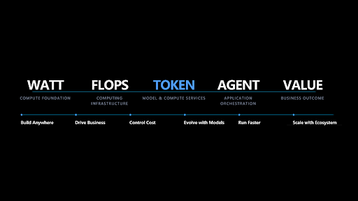
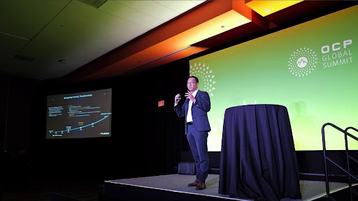
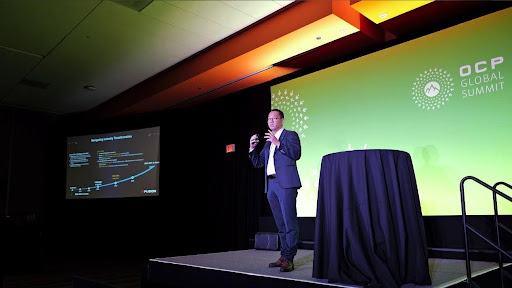
At xFusion, the framing has shifted – and it's a case the company made on stage at the 2026 OCP Global Summit in San Jose last week. Think of a data center not as a building full of servers but as an energy conversion pipeline.
Electricity enters the facility. It gets converted into floating-point operations. Those operations produce tokens. Tokens power agents. Agents – if everything works – deliver business value: Watt > flops > token > agent > value.
Every stage introduces loss. The losses compound. A facility that converts watts to flops brilliantly but chokes on thermal throttling halfway through an inference job is not high-performance. It's expensive.
"In the agentic era, competitiveness is not about how many chips you have," as Arthur Wang, product director of FusionServer at xFusion put it during his keynote, ‘Next-generation power & cooling solutions’. "It is about how much real business value you can extract from every watt and every joule of heat."
This reframing sounds abstract. It isn't. It changes what you buy, how you design, and where you place your bets. Because once you follow the watt from grid to chip, you collide – hard – with three constraints that are all hitting at once. All three were on display at xFusion's OCP booth (A33). All three deserve a closer look.
Air is done
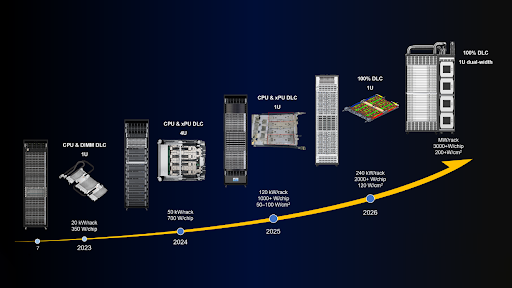
Not "air cooling is becoming less optimal." It's over. At 1,500 watts per device, convection cannot keep up. No clever plenum design, no heroic fan wall, no amount of hot-aisle containment will change the physics. Direct liquid cooling is no longer the future. It's the present tense.
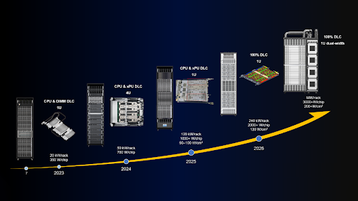
But here's where it gets interesting. The silicon roadmap doesn't wait for your cooling roadmap. A cold plate engineered for today's 1,000-watt accelerator will be a bottleneck in 18 months.
Materials science has to run ahead of Moore's Law – or whatever we're calling it now – so much so that Moore himself might not recognize it. That's why xFusion's cold plate design uses diamond-copper composite materials, pushing single-chip cooling capacity past 4,000 watts. Not because anyone needs that headroom today. Because the next GPU absolutely will.
Deployment speed matters just as much as cooling headroom. Operators don't have three years to rip out mechanical plants and start over. xFusion's FusionPod for AI V8 – a 42U modular liquid-cooled rack rated at up to 155 kW – ships with a distributed CDU that requires zero secondary piping modifications. Retrofit a live facility, drop it into a containerized edge deployment. No jackhammers. That's the difference between being ready in Q2 and being ready in 2029.
54 volts won't cut it
Cooling and power get separate line items on procurement spreadsheets. In reality, they're the same problem wearing different hats. Every watt you push to a chip has to leave as heat. And the path that watt travels – from utility transformer to voltage regulator – bleeds energy the entire way.
At 54 volts, delivering a megawatt to a single rack means pushing absurd amounts of current through copper. The conductor diameters alone become impractical. Resistive losses balloon. The math is merciless.
Raise the bus to 800 volts and current drops by roughly 15 times. Cable sizes shrink. I²R losses fall off a cliff. xFusion has built this conviction into hardware: the 800V HVDC sidecar, a next-generation power supply prototype engineered for 300kW to 1.2MW per rack, is designed to make megawatt-class delivery not just feasible but field-deployable.
Will every site flip to 800V DC overnight? Of course not. Brownfield facilities will run hybrid topologies for years. But anyone breaking ground on a new AI campus and designing around legacy 54-volt distribution is embedding regret into concrete. That's an expensive mistake to pour.
Copper has a speed limit
This one gets less airtime, but it shouldn't. Electrical signaling at 224 gigabits per second per lane is already pushing signal integrity to the edge. Beyond that, copper doesn't bend – it breaks. The path forward is optical: co-packaged optics placing photonic engines directly on switch silicon, collapsing the distance penalty and unlocking the bandwidth density that thousand-GPU clusters demand.
For AI training at scale, interconnect isn't plumbing. It's architecture. It determines how large a job can scale, how efficiently inference distributes, and how many useful tokens the cluster actually produces per watt consumed. Lock into one vendor's proprietary fabric and you've traded a bandwidth problem for a dependency problem.
xFusion's Super Node was built with exactly this in mind – an open-architecture liquid-cooled system delivering up to 240kW per rack, 128 XPU per cabinet, 256 XPU across dual cabinets, with multi-vendor processor compatibility baked in. No single-chip lock-in. That's not idealism, that's risk management.
The compound effect
Here's what keeps infrastructure teams up at night. None of these three walls – cooling, electrical, optical – respects the others' timeline. They're all arriving in the same design cycle. And they interact.

Sponsored Cracking the AI infrastructure paradox
With AI’s explosive growth literally pushing data centers to their limits, the next generation of infrastructure must rethink density, sustainability, and operational readiness
World-class liquid cooling paired with legacy 54-volt power? You'll hit an electrical wall before the coolant even warms up. Perfect 800V DC delivery feeding a cluster with inadequate optical fabric? Stranded GPUs. Beautiful networking behind a thermally throttled front end? Wasted tokens. Wasted money.
At xFusion the term for this is computing-power synergy – optimizing the entire energy chain from grid to chip, treating cooling, power, and interconnect as interdependent variables rather than separate procurement categories. It's not a tagline. It's an engineering discipline.
This is the reason xFusion has joined more than 60 industry organizations – OCP among them – contributed to over 60 open standards, and built an ecosystem of over 30,000 partners worldwide. No single vendor solves this alone. But someone has to integrate the pieces. That's the job.
The AI data center is not a building that houses computers. It's an energy conversion system. And the only metric that matters is not how much goes in, but how much value comes out.
Explore more real cases here, or request a consultation here.
Comments