
Thermal variability and dynamic workloads are rapidly defining AI-driven environments, pushing the data center industry beyond one-time, transactional product purchases and toward long-term lifecycle partnerships.
As AI workloads evolve, operators are under rising pressure to maintain uptime while adapting to increasingly unpredictable thermal demands. This means rethinking critical infrastructure, such as cooling, as a continuously managed system rather than a fixed setup.
Responsive service, secure connectivity, controls, and data visibility are all becoming critical to long-term performance which ultimate impacts equipment lifecycle and ROI.
Against this backdrop, in a recent DCD>Broadcast episode, Trane’s Krista Hubbs, Kevin Dunlap, and Eric Rodgers explore how lifecycle partnerships are reshaping the way data centers prepare for AI-scale operations, and why AI-ready thermal infrastructure now depends on lasting collaboration across design, commissioning, optimization, and predictive maintenance.
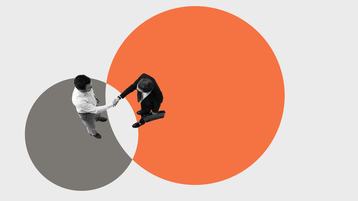

Why now?
Securing long-term operational success now centers around ensuring systems can evolve alongside increasingly dynamic compute environments. Operators are balancing sustainability targets, uptime expectations, changing KPIs, and varied AI workloads that are pushing thermal systems to their limits at speed.
For Rodgers, this reality is forcing operators to look carefully at who they partner with: “How quickly can they respond? How well can they support you in the future? What capabilities do they have from conception to upgrades and expansion?”
“AI loads will continue to change over time,” adds Dunlap. “In response, having a true partnership allows for continuous adaptation and shared accountability.”
This adaptability is becoming mission-critical, particularly in colocation environments, for instance, where facilities are often designed around projected workloads that may look completely different a decade later.
When average rack densities rise exponentially, cooling strategies pivot in response, and hotspots emerge unexpectedly, navigating these shifts in isolation simply won’t meet the mark.
“You can’t predict exactly what heat loads operators are going to roll into the data center ten years into the future,” continues Dunlap. “You need a cooling partner that can help adapt to those changes, whether that’s managing hotspots or transitioning from air cooling to liquid cooling within the same environment.”
The pace of AI adoption has also exposed the risks of treating infrastructure as a collection of isolated components rather than an integrated system. Decisions made quickly to accelerate deployment can create what Hubbs describes as “technical lifecycle debt.”
“When we’re just buying pieces and parts instead of looking at the system as a whole, that creates challenges later,” she says. “It’s about how all those pieces work together over time.”
Customer relationships with a digital edge
For Trane, these crucial partnerships start early – long before facilities go live. Understanding how customer needs are likely to evolve helps shape not only equipment selection, but also controls architecture, monitoring systems, and long-term operational strategy.
“If you look at this from a controls standpoint, we have a lot of tools within that infrastructure to flex sequences of operation and deliver different outcomes for the customer,” explains Hubbs.
Controls are actively becoming the intelligence engine behind resilient thermal systems, helping operators understand equipment health, identify emerging patterns, and optimize operations in real time.
The value lies not only in selecting the right equipment, but also in how systems communicate, respond, and learn over time. This operational visibility gives operators better insight into long-term maintenance needs and system performance trends. Dunlap argues that the relationship must extend across the entire lifecycle:
“It starts in the design and planning stages and continues through every expansion and deployment. It’s about being a trusted partner throughout the whole lifecycle of the data center, not just deploying equipment and walking away.”
Maximizing value via system-level thinking
Data center infrastructure remains a major long-term investment. Even as AI accelerates change across the industry and delivers increasingly volatile thermal requirements, operators still expect cooling systems to deliver value for years.
“It all starts with startup and commissioning,” says Dunlap. “Making sure the equipment is meeting design parameters, matching customer expectations, and setting it up for a long life.”
Commissioning establishes the operational baseline. From there, ongoing service agreements, monitoring, upgrades, and renewal programs help maintain performance as systems age and workloads evolve.
This lifecycle approach is becoming increasingly important as AI workloads push thermal infrastructure into unfamiliar territory. Higher densities, shifting cooling strategies, and unpredictable spikes in demand are fundamentally changing how systems behave.
“Heat densities are increasing rapidly,” adds Dunlap. “Even in facilities designed for these higher densities, the load profiles are changing so quickly that cooling systems need to adapt constantly.”
The challenge is compounded by the very nature of AI workloads. Characterized by dramatic fluctuations, these complex loads create rapid changes in power consumption and thermal demand that traditional infrastructure simply wasn’t designed to handle.
“There’s a certain unpredictability now that maybe didn’t exist before,” says Hubbs. “The system has to continually match those changes.”
More power, heat, and partnerships
This rapid variability is pushing operators to rethink how thermal and power systems communicate. For Hubbs, one of the industry’s top priorities is finding ways to connect power data with cooling infrastructure fast enough to anticipate thermal shifts before they become operational risks:
“How do you use changes in power workloads to better inform the thermal system so it can respond more quickly?” she asks.
In colocation environments, this isn’t always straightforward. Tenants may own rack-level data while facility operators manage cooling infrastructure, creating visibility gaps around real-time thermal demand.
Still, the industry is moving toward tighter integration between systems. The goal is to create environments where cooling infrastructure can anticipate workload changes rather than simply react to them.
Rodgers describes a future where systems continuously learn from operational patterns: “It begins to learn the spikes and anticipate how the whole system should respond.”
This proactive intelligence extends beyond thermal behavior and into analysis of how weather conditions, equipment density, and operational history can all influence the way in which systems adapt over time.
“There’s a lot of data in a data center,” says Hubbs. “The challenge is connecting the right information with the right systems in a secure way.”
Staying connected
Connectivity has become central to this lifecycle strategy. The earlier systems are connected and monitored, the more effectively operators can establish performance baselines and identify deviations over time.
“Time and frequency are the two things you want to see with data,” explains Hubbs. “If you’re not capturing it often enough, you’re going to miss things.”
This visibility supports predictive maintenance strategies designed to reduce unplanned downtime and ensure operations can bounce back from faults smoothly. Rodgers points to component lifecycle modeling as an example:
“If we can evaluate equipment through connectivity, we can model component run hours and likely failure windows. That allows us to recommend spares, maintenance schedules, or planned shutdowns before failures happen.”
The reality, Rodgers adds, is that no infrastructure operates continuously without issues. Rather than modelling for an unrealistic level of faultless operations, the objective is to minimize disruption through proactive planning instead of reactive fixes.
“We all know there will be downtime at some point,” says Dunlap. “The question is how prepared you are when those issues happen.”
For Trane, this crucial preparation comes down to three things: data, technicians, and parts availability. Connected systems help technicians understand what they’re walking into before arriving onsite, while broad service coverage and supply networks help reduce response times.
Always evolving
Commissioning may establish the baseline, but maintaining long-term performance requires continuous visibility.
“Connectivity allows us to see when systems are no longer operating the way they were originally intended,” says Rodgers. “Whether that’s more load, more density, or operational drift over time, we can identify it and troubleshoot faster.”
As AI infrastructure evolves, operators are increasingly looking for partners that can support not just deployment, but continuous optimization.
“This early partnership can’t be understated,” concludes Hubbs. “It’s about specifying and sizing equipment correctly from the start, while also understanding how that equipment will operate long term.”
In today’s high-stakes, fast-moving AI-driven landscape, lifecycle partnerships are quickly becoming a foundational requirement for competitive operational strategies.
To hear more about the value of lifecycle partnerships, watch the full DCD>Broadcast episode, here.
More on Trane
-

Trane acquires liquid cooling solutions provider Stellar Energy Digital
Stellar designs and builds modular cooling equipment for liquid-cooled data centers
-
Trane acquires cooling firm LiquidStack
Full acquisition follows initial investment in 2023
-

Trane launches latest chillers in Sintesis eXcellent GVAF line
Takes cooling capacity to up to 2.5MW
Comments