
AI-driven densification is transforming thermal management from a relatively straightforward engineering challenge into a complex system-wide optimization exercise. As operators deploy increasingly dense infrastructure, cooling is no longer simply a question of removing heat. Instead, every decision across the thermal chain has implications for efficiency, flexibility and future scalability.
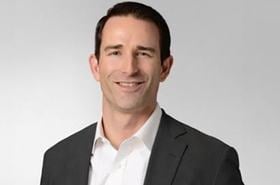
In this DCD>Talks episode, Maurizio Frizziero, vice president of chilled water solutions at Vertiv, explains why AI is forcing operators to rethink how cooling infrastructure is designed, operated and optimized.
From deployment to optimization
For many years, cooling strategies were built around relatively stable rack densities. Operators could select and deploy cooling infrastructure based on environmental conditions, redundancy requirements and expected workloads.
According to Frizziero, AI has fundamentally changed that equation.
“Before AI and densification, everybody who was working in the data center business was considering a similar density per rack,” he says. “With AI, densities are moving from 10, 15 kilowatts to 100, 200 kilowatts and toward one megawatt per data center.”
The result is a dramatic increase in complexity. Rather than selecting cooling systems based on a limited number of variables, operators must now balance density, liquid cooling requirements, operating temperatures, efficiency targets and future growth plans.
This shift means thermal infrastructure can no longer be viewed as a standalone component. Instead, cooling has become part of a broader optimization challenge in which every watt of power saved can potentially be redirected toward supporting higher-density compute.
As Frizziero explains, “The more we can optimize the heat rejection unit, the more we can leave on the table in terms of power for the density.”
Optimizing the thermal chain
For Frizziero, the most significant change is the growing importance of the thermal chain, the interconnected systems responsible for moving heat from the chip to the outside environment.
Historically, individual cooling components could be optimized in isolation. Today, that approach is no longer sufficient.
“It is an integrated design, not only on the chiller or on the heat rejection, on the full thermal chain,” he says.
That chain extends beyond heat rejection units and chillers to include coolant distribution units (CDUs), air handling equipment, controls and operational management. Rather than focusing on the efficiency of individual devices, operators must consider how each part of the system interacts with the others.
“The manufacturer should not design only the heat rejection unit,” says Frizziero. “It should optimize the heat rejection unit together with the CDU and the air side of the cooling system.”
This integrated approach also extends beyond design. Cooling systems must continue to operate as a coordinated whole throughout the life of the facility, requiring controls and management systems capable of balancing performance across multiple layers of infrastructure.
Integrated design, full thermal chain ownership and system-level control are no longer optional enhancements. They are becoming essential elements of modern thermal management.
Flexibility becomes essential
Complicating matters further is the different pace of change between IT infrastructure and mechanical systems.
Servers, GPUs and cooling requirements continue to evolve rapidly, while mechanical infrastructure is typically designed to remain in place for years. As a result, cooling systems must be able to accommodate future changes without requiring operators to redesign facilities from scratch.
“The real challenge is that electronics and servers evolve at a completely different speed than mechanical infrastructure,” Frizziero explains.
Some operators prioritize maximum efficiency today, while others favor flexibility that allows them to adapt to future density increases. According to Frizziero, neither approach is inherently right or wrong. The challenge is designing infrastructure that aligns with long-term business objectives while remaining adaptable to future requirements.
“If the flexibility to optimize the set point and the operation in five years from now is a must, we have a solution,” he says.
This flexibility increasingly influences everything from cooling architecture and operating temperatures to equipment selection and control strategies.
No single solution
As AI infrastructure evolves, the idea of a universal cooling strategy is becoming increasingly difficult to sustain.
Frizziero argues that more heat does not automatically translate into more cooling. Instead, the optimal approach depends on a combination of factors including server design, liquid cooling temperatures, location, energy costs and water availability.
Different conditions may favor dry coolers, adiabatic systems, evaporative cooling or mechanical chillers. The challenge is identifying the right balance for a particular deployment.
“We are no longer designing for a global world where every single location is supposed to be identical to others,” he says.
Regional regulatory requirements add another layer of complexity. Water preservation, refrigerant requirements and environmental standards vary around the world, requiring operators to adapt thermal strategies to local conditions.
For Frizziero, responsible resource management extends beyond compliance alone.
“Our approach to the responsible use of water goes beyond simply complying with regulations and standards,” he says. “It is also about developing new best practices.”
Driving the future
Given the pace of change, predicting future cooling requirements remains one of the industry's biggest challenges.
Frizziero believes the answer lies in closer collaboration throughout the data center ecosystem. This includes not only cooperation between operators, consultants and infrastructure providers, but also closer relationships with server and GPU manufacturers.
For him, that means extending cooperation both upstream and downstream across the thermal chain. As AI continues to reshape data center infrastructure, successful thermal strategies will increasingly depend on collaboration, flexibility and a system-wide approach to optimization.
Watch the full DCD>Talks episode with Vertiv’s Maurizio Frizziero here.
More from Vertiv
-

Vertiv's acquisition of ThermoKey closes
Expands cooling tech with Italian deal
-

Vertiv launches 'Extreme' rack for AI and HPC data centers
Vendor takes extreme measures to meet demands of AI servers
-
Sponsored Silicon diversification: How a growing choice of chips is reshaping data center infrastructure
Why data center operators should evaluate power and cooling infrastructure in the context of an expanding range of chips designed to support AI workloads
Comments