
In the evolving landscape of energy efficiency and environmental responsibility, innovation in air conditioning management is driving a new era of intelligent control. Exemplifying this transformation, HiRef’s advanced control and supervision systems are redefining how industries monitor, optimize, and secure their cooling infrastructure.
While HiRef’s solutions are applied across diverse industrial and commercial environments, their impact is particularly pronounced in data centers – the beating heart of the digital economy. Here, Chiller and CRAH units are managed by systems that continuously measure critical parameters such as temperature, humidity, and both electrical and thermal energy, to ensure stability and efficiency under demanding conditions.
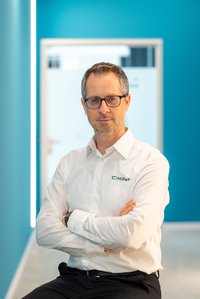
As Andrea Boaretto, electrical and software department manager at HiRef, highlights, the company’s technology integrates seamlessly with the latest communication protocols, enabling real-time data transfer to external cloud platforms. The purpose of this is not only to enhance monitoring and programmed maintenance capabilities, but also to support a more sustainable, data-driven approach to energy management.
By fusing innovation, sustainability, and digitalization, companies like HiRef are setting new standards for the intelligent supervision of air-conditioning systems, empowering industries to achieve optimal performance while minimizing environmental impact.
What sets these integrated control systems apart
As digital communication needs become more sophisticated and more complex, integral control systems become ever more critical. At the core of HiRef’s innovation lies HiNode, an integrated control and supervision system developed to manage the core components of air-conditioning and process cooling operations.
Boaretto explains that HiNode distinguishes itself through its exceptional flexibility and customizability, adapting seamlessly to the specific needs of each installation:
“The intelligence of HiNode is driven by programmable microcontrollers that coordinate communication between the unit’s internal components – handling processing, data exchange, and signal management – and a network of external devices such as sensors and valves. This shared data connection ensures a precise and harmonized operation across all elements of the system.”
Beyond its advanced internal architecture, HiNode was also designed to emphasize usability and accessibility. In this way, operators are encouraged to interact with the system locally through a touchscreen display or remotely via a web server. According to the experts at HiRef, this web interface offers a graphical synoptic view – a detailed, real-time visualization of the site layout and operational status of each unit – enabling users to monitor performance at a glance.
This level of supervision means that data center operators remain fully informed about facility operations, fostering proactive decisions and smarter management of critical cooling systems – driving efficiency, reliability, and sustainability for the greater good.
Optimizing existing data center resources
In today’s data centers, efficiency is no longer measured solely by capacity or uptime, but by the ability to adapt intelligently to constantly shifting thermal and operational demands. Advanced control logic now plays a pivotal role in this transformation.
Building on its advanced supervision capabilities, HiRef’s technology takes this a step further by enabling the optimization of existing data center resources.
Through advanced software logic, the control algorithm intelligently identifies and activates the most efficient components in real time, continuously calculating the optimal operating set points for generation systems based on thermal load and its distribution. This approach not only promotes operation at partial loads but also enables the recovery of energy that would otherwise go unused.
Andrea Boaretto emphasizes the importance of redundancy management:
“HiRef incorporates redundancy management through rotation logic, balancing the operating hours of main devices to distribute wear evenly and extend equipment life. The result is a system designed not only for efficiency but also for long-term dependability.”
“Thanks to intelligent management, cost reduction becomes a direct outcome of lower energy consumption and fewer breakdowns or service interventions. The system enables real-time monitoring of all key parameters and visualizes their performance trends through intuitive graphs. In addition, the integration of power and energy measurement tools allows for continuous calculation and verification of the plant’s overall performance.”
Ultimately, the goal is not simply to lower costs or improve uptime, but to redefine how cooling infrastructure contributes to smarter, more sustainable digital ecosystems.



HiRef as a technology partner
“At HiRef, our goal is to be more than a supplier – we aim to be an all-round knowledge partner,” says Nicola Disarò, R&D engineer and CFD specialist, adding:
“Our focus extends beyond developing innovative technologies; we also prioritize the sustainability of our units and the customer-centric design process that ensures every system meets client needs both before and after installation.”
This philosophy shapes HiRef’s entire approach to project collaboration. From the earliest design stages, Disarò explains that the company supports its clients with preliminary analyses and simulation studies that inform key engineering decisions long before construction begins. By integrating computational fluid dynamics (CFD) analysis into the pre-sale phase, HiRef helps visualize and test multiple configurations of a data center layout, ensuring each space is optimized for airflow, energy efficiency, and reliability.
“Through CFD, we can resolve the Navier–Stokes equations to obtain a complete distribution of temperature, pressure, and velocity for every point in the room. It allows us to understand the behavior of the system in real operational conditions,” Disarò explains.
This collaboration extends across departments, as the R&D team works closely with HiRef’s electrical and software division, led by Boaretto, to translate control logic into CFD simulations: integrating the data center CFD analysis logic into the HiNode capabilities gives HiRef the possibility to switch from “static” simulations to “dynamic” ones.
“It’s like moving from a photograph to a video,” says Disarò. “By introducing time as a variable, we can study transient behaviors – such as load variations or unit start-up and shutdown – and better understand how systems respond under changing conditions.”
These predictive airflow analyses enable optimization even before construction, with short-term simulations and long-term plans to create digital twins of data centers incorporating AI-driven control and optimization.
Air-conditioning unit management for the AI era
As AI reshapes the digital landscape, data center thermal loads are rising at an unprecedented rate. Traditional air-cooling systems typically support racks drawing between 20 and 40 kilowatts, and with Rear-Door technology, that limit can extend to around 60 kilowatts per rack. But the advent of AI workloads is pushing these boundaries dramatically, as Disarò explains:
“Today, we’re already seeing liquid-cooled servers reaching 100 kilowatts per rack, and projections suggest that within a few years, this figure could exceed 200 kilowatts. The situation is evolving very quickly, and our challenge at HiRef is to ensure adequate cooling capacity for all our units – within a reduced footprint and with flexible regulation and management.”
To address this, HiRef has developed a range of CDUs designed specifically for the new generation of AI-driven data centers. These systems are engineered to deliver high-density cooling performance while maintaining adaptability and efficiency across varying load conditions. Disarò notes that hybrid approaches will define the future of thermal management:
“Cooling will remain a fundamental part of the AI data center. Even with liquid cooling technologies, between 15 and 25 percent of the thermal load must still be dissipated through air systems. Our air units work in tandem with our liquid cooling systems – and more broadly, with chillers and dry coolers – all coordinated within a single, intelligent framework managed by our HiNode control system.”
This multi-layered approach ensures balance, efficiency, and reliability, preparing data centers to meet the demands of the AI era.
Shaping the future
As data centers grow in power and complexity, the dual priorities are energy efficiency and system reliability. Intelligent supervision allows operators to balance terminal loads, minimize consumption, and optimize performance, making unit management a cornerstone of next-generation cooling systems.
Innovation in control logic and integration is crucial, as is heat recovery – capturing residual energy from high-density operations to reuse it rather than dissipate it. HiRef’s vision extends beyond cooling: it is about reimagining the data center as an intelligent ecosystem, where every component contributes to both performance and sustainability.
For more information, please visit hiref.com.
More from HiRef
-

Sponsored Sustainability and social responsibility
As AI adoption drives higher density workloads, a shift toward sustainable, hybrid cooling approaches that merge flexibility with performance is essential
-
Sponsored From waste to wealth: Energy sharing for more livable cities
How one man's trash can become another's treasure through heat recovery, turning waste heat into a valuable resource
-
Sponsored Liquid cooling solutions for high-density computing applications
HiRef's CTO, Matteo Faccio, highlights advancements in liquid cooling over the past few years, optimizing efficiency and sustainability
Comments