
Orlando, Florida, may be better known for its sunshine and theme parks, but it is also home to the US headquarters of Siemens Energy, giving the company a front-row seat to North America’s extraordinary data center boom.
For David Blank, director of distributed sales for North America at Siemens Energy, the timing of this surge is particularly significant. Having joined the company as an intern, Blank now leads the team responsible for selling its portfolio of gas turbines up to 100MW. From that vantage point, he is seeing first-hand how the growth of data centers is reshaping the continent’s energy landscape.
Across North America, data centers are being planned and built at a pace that is challenging existing power infrastructure, while operators, utilities, and policymakers confront the question of where all that electricity will come from.
After 15-20 years of relatively little growth, US electricity manufacturing and industrial activity is returning to the US, and data centers are adding a new and particularly energy-intensive layer of demand. As Blank explains:
“It’s bringing together a bunch of different drivers that have coalesced into this phenomenon that we’ve seen. It’s really created this once-in-a-generation boom and the need for electricity within the country.”
The implications are already being felt across the power sector. In response to this industry-wide power strain, Siemens Energy has committed substantial investment across its gas services and grid technologies businesses, while its gas turbine and power generation operations are expanding manufacturing capacity around the world.
For an industry accustomed to thinking in decades, the pace of change is striking. And for Blank, it is a serendipitous moment to be at the heart of it.
When a data center needs a city’s worth of electricity
The data center boom may be most pronounced in the US, but its implications extend far beyond its borders. US data centers could consume as much as 12 percent of the country’s total electricity by 2028 – a dramatic escalation from the 4.4 percent they accounted for in 2023. In Canada, they have been projected to consume up to 14 percent of total power needs by 2030, with demand expected to climb sharply as AI infrastructure expands.
On one hand, that shift is changing the scale of the opportunity for energy technology providers like Siemens Energy, but also the nature of their customer relationships. Traditionally, core customers have been the utilities, cooperatives, and municipalities responsible for serving electricity demand on the grid. Now, a new customer segment is moving into focus, as Blank explains:
“Our traditional customer base is on-grid load-serving entities. That’s our bread and butter. With this boom in demand, new customer segments are coming to the forefront – notably data centers.”
The scale of that new demand cannot be overstated. Hyperscale data centers can require power on the gigawatt scale – an amount of electricity comparable to the consumption of an entire city – yet that demand is being concentrated within a single industrial site. And the supporting power infrastructure must deliver that volume of electricity with exceptional reliability, Blank emphasizes:
“A data center can’t go down. They have obligations to their customers, and if they go down, they lose incredible amounts of money, so the power supporting the data center has to be reliable and backed up.”
This creates a fundamentally different challenge for the power sector. Where data center operators are experts in building and managing the digital infrastructure that underpins their businesses, developing complex, utility-scale power infrastructure is an entirely different proposition. Designing a solution capable of meeting these requirements is, as Blank acknowledges, “difficult to say the least” – requiring careful planning, engineering, and significant capital investment.
This is where Siemens Energy’s role becomes increasingly consultative, helping customers navigate the range of technologies and partners required to bring power online.
“We have customers that have a definable need for power now, and they talk to us now about how they can secure power generation assets, whatever that may be,” Blank says. “We have other customers perhaps coming to us a little earlier, talking to us about broader concepts or projects they have later on in the pipeline.”
The common denominator is urgency – “data centers need power yesterday – they’re looking for power as quickly as possible.”
That urgency comes with very specific requirements. Operators need to know how much electricity their facilities will consume, and critically, the level of reliability that power supply must deliver. According to Blank, meeting those requirements isn’t just a matter of installing a gas turbine; generation is just one component of a much larger, integrated system.
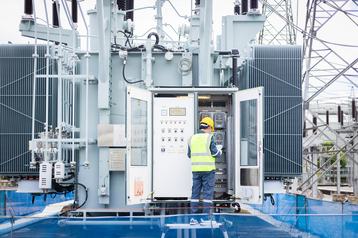
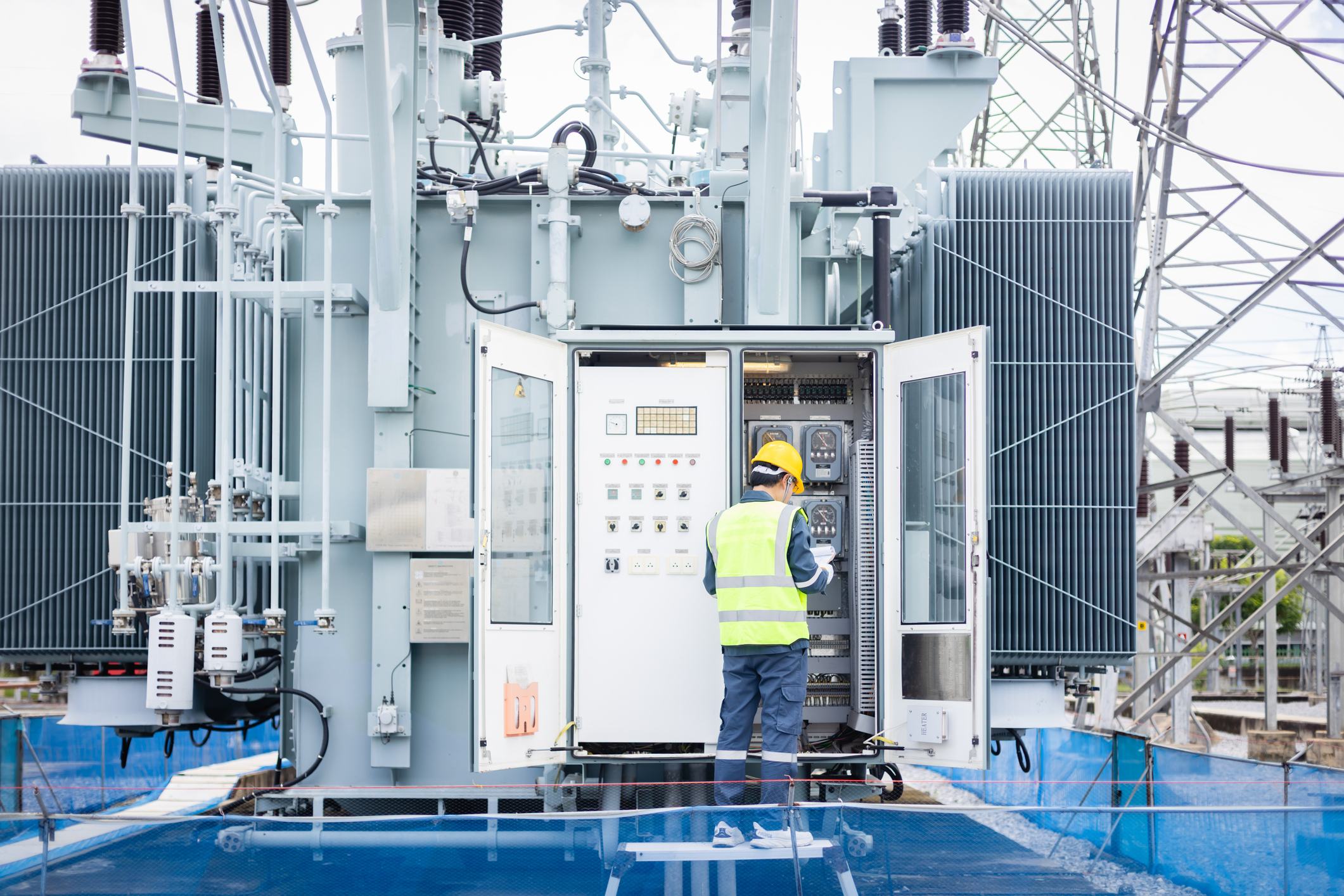
The turbine itself must be capable of responding to the data center’s load fluctuations, while the infrastructure connecting generation to the facility must provide the stability and flexibility required for continuous operation. Blank highlights that everything from transmission assets to transformers, eStatcoms, batteries, breakers, and switchgear all form part of the equation.
Power built for what comes next
For all the urgency surrounding data center development, generating power for modern computing means doing so efficiently, reliably, and with an eye to what comes next. While natural gas remains the primary fuel, Blank points to the efficiency and fuel flexibility of the company’s latest platforms as key advantages for customers facing both immediate power needs and longer-term sustainability ambitions.
“We’re able to help meet their sustainability goals just by nature of that,” he says. “These gas turbines are also set up to be able to burn alternative fuels, depending on what a customer has access to and what their future plans may be.”
Hydrogen is a case in point. The ability to transition toward higher proportions of hydrogen over time is increasingly important as operators look to future-proof their power infrastructure. Siemens Energy’s H-class platforms are designed with this fuel flexibility in mind, with the industry already moving from hydrogen blends toward the longer-term ambition of operating on 100 percent hydrogen.
Greenlighting Alberta’s AI future
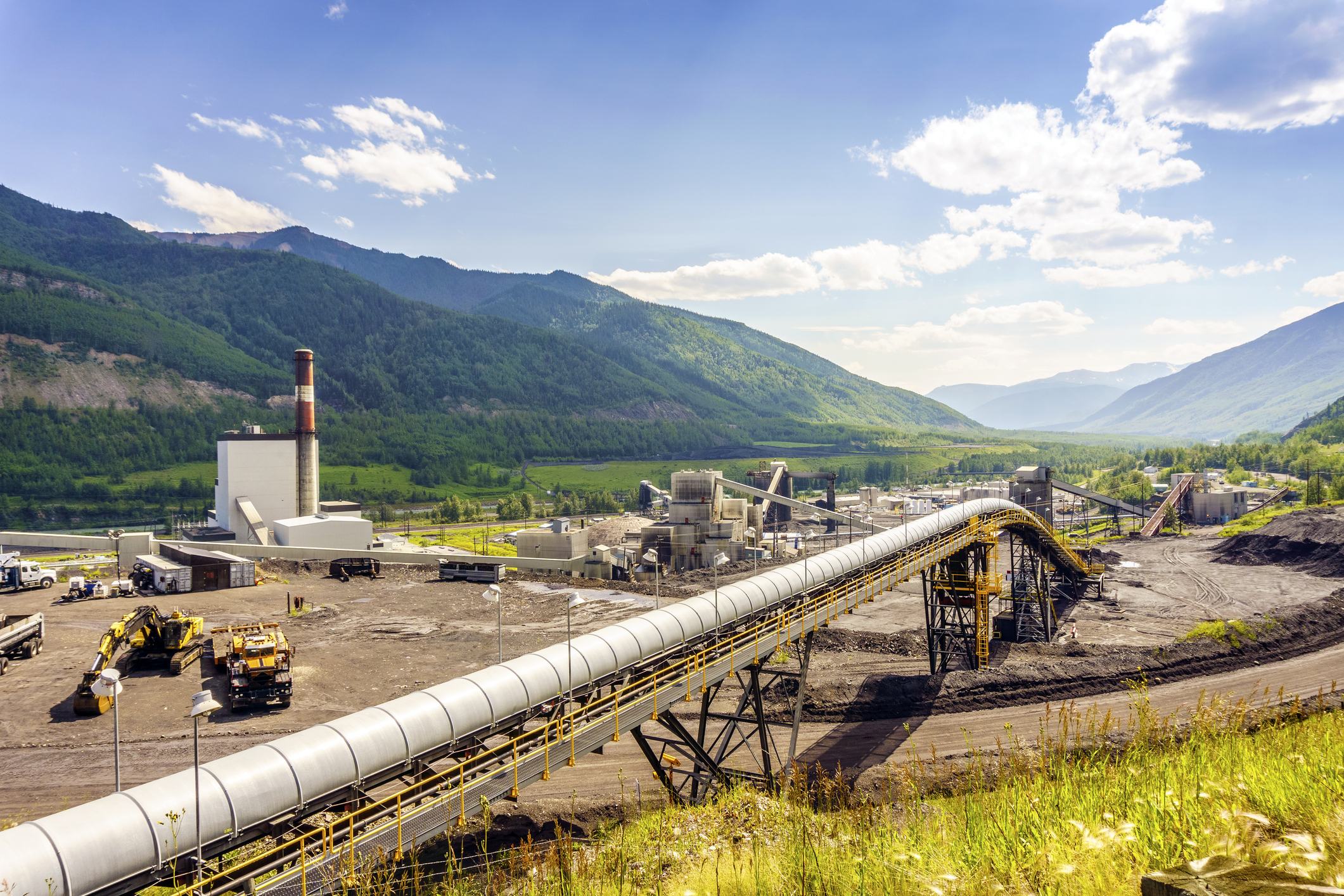
The Greenlight Electricity Centre in Alberta offers a compelling example of what this approach looks like in practice. The 932MW combined-cycle plant – representing roughly eight percent of the province’s current system-wide electricity demand – is being developed to provide dedicated power to Meta’s Sturgeon Data Centre in Alberta. The project is a joint construction by Pembina Pipeline Corporation, Morgan Stanley Infrastructure Partners, and Kineticor Asset Management.
At a time when Alberta is anticipating significant load growth from AI infrastructure, the project demonstrates how dedicated generation can be built alongside new digital infrastructure to meet emerging demand.
“This is a grid-connected, collocated power solution, and the largest project of its kind in Canada,” says Blank.
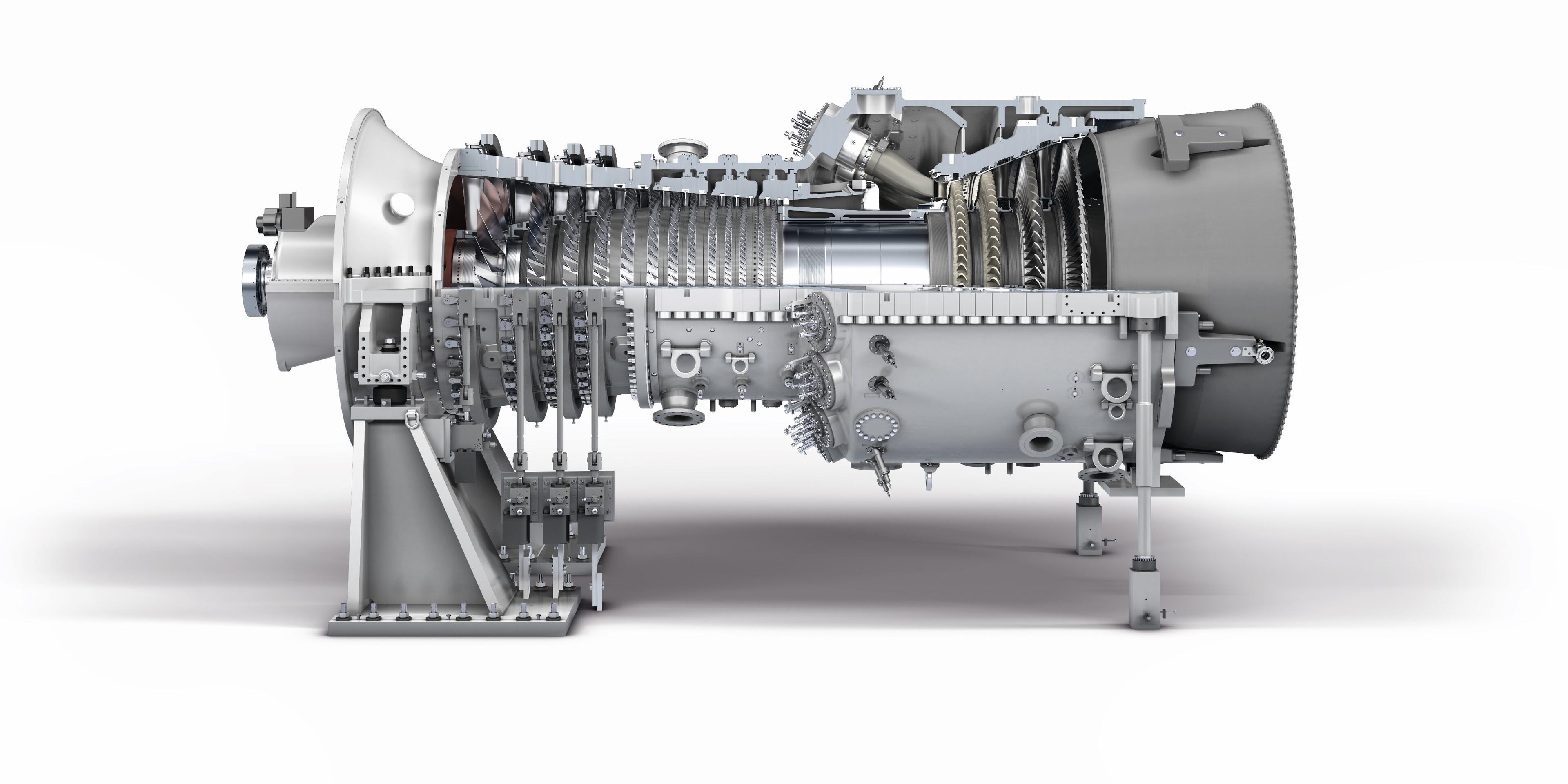
For Siemens Energy, the project also builds on an established relationship with Kineticor. It is the second project between the companies following the successful commissioning of the Cascade project in 2024, and the second major deployment in North Alberta in just a few years of Siemens Energy’s H-class gas turbines, steam turbines, generators, and long-term service capabilities, using the same single-shaft 8000H block configuration.
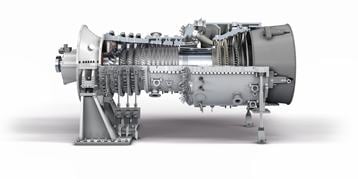
At the heart of Greenlight is the combined-cycle technology itself, which allows substantially more power to be produced from the same amount of fuel. Rather than allowing the heat produced by the gas turbine to escape as water, a combined-cycle plant captures that exhaust heat to produce steam, which then drives a second turbine to generate additional electricity.
According to Blank, the result is an efficiency level exceeding 60 percent under appropriate operating conditions, placing them among the most efficient conventional thermal technologies available today.
“By extracting additional energy from waste heat, they significantly reduce fuel consumption and emissions per megawatt-hour of electricity produced,” Blank explains.
Extending beyond efficiency alone, Greenlight’s grid-connected design and operational flexibility can support the integration of renewables in Alberta while contributing to overall grid stability. There is also potential for the project to incorporate carbon capture and storage in the future, with opportunities to connect into Alberta’s developing carbon transportation and sequestration infrastructure.
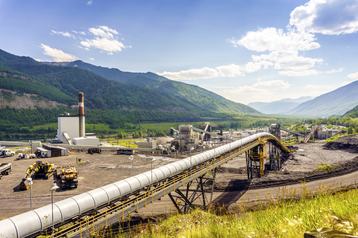
By developing dedicated generation alongside new digital infrastructure, Greenlight can help match rapidly growing electricity demand with new supply, reducing pressure on existing grid capacity while creating a pathway for further industrial and economic growth.
For Siemens Energy, it is a tangible example of how gas generation, grid infrastructure, and emerging technologies can come together to solve one of the defining challenges of the AI era.
North America, to infinity and beyond
In driving major investment in power generation, the data center boom is giving North America’s utilities, ISOs and RTOs an opportunity to rethink how the grid of the future should be redesigned.
For Blank, building flexibility into the system from the outset will be critical. The assets being brought online today could operate for decades, yet no one can predict exactly what the electricity system will look like 20 or 30 years from now.
“The assets that we’re putting into the market are going to be running for decades if needed, so power generation assets are going to have to be flexible because none of us have a crystal ball,” he says, adding:
“It would behoove us all to put products into the market that are flexible to meet the needs of what the future may actually hold.”
As North America races to keep up with AI-driven electricity demand, the real opportunity may be to build not just for the boom, but for whatever comes after it.
For more information on Siemens Energy’s data center offerings, click here.
More from Siemens Energy
-

DCD Studio: Building the technical foundations for onsite power generation with Jim Mozell, Siemens Energy
Emma Strutton speaks with Jim Mozell of Siemens Energy about powering AI data centers, microgrids, integrated power solutions, and strategies for building resilient, scalable power infrastructure.
-

Sponsored EMEA, EMEA, read all about it!
Forward-looking predictions for EMEA’s data center market in 2026
-

Comments