
We’re all thinking about power – whether it’s having enough of it, delivering it where it’s needed, or building the right infrastructure to scale faster, denser, and smarter in the age of artificial intelligence (AI). As power demands grow, so too does the importance of arc flash safety.
Rising rack densities lead to increased incident energy, elevating the risk of arc flash hazards. Proactively addressing these challenges is critical for protecting personnel, reducing downtime, and enabling sustainable scalability.
Starline is at the forefront of this effort, serving as a strategic partner that helps data centers scale safely, efficiently, and intelligently.
Industry trends and challenges
As AI, machine learning, IoT, and cloud computing continue to drive exponential increases in computing demands, data center power requirements are surging. Between 2020 and 2024, total power demand from data centers grew by 12 percent annually – and projections show a staggering 165 percent increase by 2030, largely fueled by AI workloads.
This growth brings with it higher thermal loads, greater strain on infrastructure, and rising capital and operational expenses. To meet these challenges, many operators are transitioning to more efficient three-phase power distribution architectures, enabling them to run more servers with less power.
At the same time, the industry is moving away from legacy floor-mounted PDUs, which obstruct airflow and reduce cooling effectiveness – especially as rack densities rise. Instead, modern facilities are adopting overhead power distribution systems that support higher density and more efficient cooling. Chris Osian, product manager at Starline, a brand of Legrand, states:
“Safety is definitely becoming a bigger focus as more data centers deploy high-density AI infrastructure. When you start increasing the power of these racks upwards of 80 to 100kW per rack, the incident energy levels you’re dealing with also increase, and that changes the risk profile.
“Operators are realizing that the same design and maintenance practices they used even a few years ago are being scrutinized to ensure personnel safety. We’re seeing a transition toward proactive strategies to mitigate arc flash risk and protect uptime.”
Risk awareness and safety
As power densities rise across modern data centers, so too do the safety risks, particularly those associated with arc flash incidents. Legacy power systems, often featuring exposed panels and underfloor wiring, frequently require live work, significantly increasing the likelihood of electrical accidents.
Operators may underestimate the cumulative risks posed by outdated infrastructure, inadequate personal protective equipment (PPE) protocols, or poor electrical coordination. Compounding the danger is the issue of growing spatial constraints within the data center white space, which limits the use of traditional power infrastructure and demands a deeper understanding of arc flash causes and mitigation. According to Osian:
“Arc flash accidents are often triggered by a worker touching a test probe to a live electrical surface, or by a dropped tool, like electricity jumping from an open circuit to the blade of a screwdriver. Other causes include sparks between gaps in insulation, dust or corrosion on a conductor surface, or equipment failure due to improper installation or use of faulty or worn-out equipment.”
On top of that, higher power loads elevate incident energy levels, amplifying the severity of arc flash events. These events occur when a high-amperage fault current arcs from one conductor to another:
This explosion of heat and light instantly releases tremendous amounts of energy, with arc flash temperatures exceeding 35,000°F (19,400°C) – four times the temperature of the surface of the sun, causing potentially fatal burns to anyone in close proximity.
“Debris from an arc blast can travel at speeds up to 700 MPH, which can kill or injure anyone in the blast vicinity,” says Osian.
As the potential magnitude of arc flashes increases, so does the urgency of proactive safety measures. A single over-duty circuit breaker, for example, such as one rated for 14,000 amps in a system where the potential fault current is 20,000 amps, not only fails to contain the fault but also becomes a critical code violation in need of immediate correction.
In this high-energy environment, rigorous risk awareness and mitigation are essential to protecting personnel and ensuring resilient operations.
Mitigation strategies
To ensure safety while maintaining performance and uptime, operators must take a proactive approach to power infrastructure.
In its recent whitepaper, Starline detailed strategies that outline how modern data centers can significantly reduce arc flash hazards and create a safer environment for personnel, including the following:
1. Modernizing power distribution architecture with overhead electrical busways
Replacing legacy remote power panel (RPP) systems with overhead electrical busways eliminates the risk by removing exposed panels and relocating power distribution above the rack level.
Busways feature enclosed plug-in units that must be powered down before installation or removal, effectively eliminating the need for live work. Busways also require minimal maintenance, and can utilize closure strips further reduce exposure to energized components.
“Our flexible track busway enhances safety by eliminating the need for live work in floor-mounted panels and reducing exposure to energized components,” says Osian.
2. Using overcurrent protective devices (OCPDs)
OCPDs, including fuses and circuit breakers, play a crucial role in limiting the damage of fault currents. As power densities increase, many hyperscale operators have returned to using current-limiting fuses within busway plug-in units and rack PDUs.
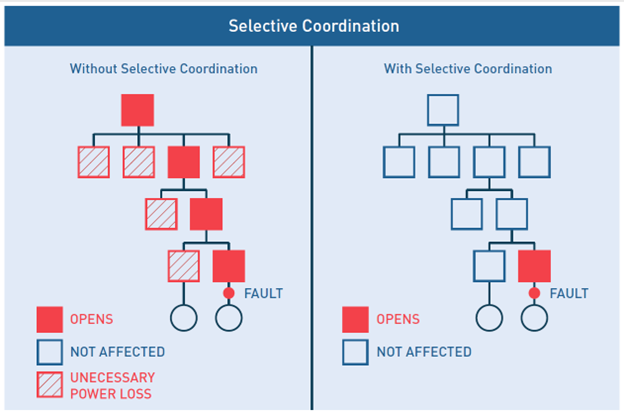
Fuses have a faster clearing time than circuit breakers, minimizing the amount of energy released during a fault event and significantly reducing the likelihood and severity of arc flashes. Additionally, techniques like selective coordination of OCPDs ensure that the device closest to the fault trips first, preventing unnecessary outages by avoiding upstream breaker trips that could shut down large sections – or the entirety – of the data center.

3. Performing regular arc flash hazard studies
A key part of this approach involves partnering with third-party consulting engineering firms to conduct arc flash hazard studies. These independent assessments provide comprehensive, site-specific reports with actionable recommendations for mitigating arc flash risks.
An arc flash hazard study helps data center operators identify zones within their power distribution systems that are at higher risk for incident energy events. Once high-risk areas are identified, operators can implement specific mitigation measures tailored to those zones. According to Osian:
“It is strongly recommended that you perform an arc flash hazard study on your power distribution system at least once every two years, or if any major electrical equipment is added or removed.”
4. Using appropriate personal protective equipment (PPE)
Even with advanced safety systems in place, the use of proper PPE remains essential when working near live electrical systems. According to NFPA 70E, PPE selection can be based on either the incident energy analysis method or the PPE category method.
5. Deploying arc flash risk mitigation technologies
Technologies such as remote plug-in actuators (RPAs), infrared (IR) scanning, and real-time thermal monitoring help reduce the need for direct contact with live components – one of the leading causes of arc flash incidents.
RPAs allow operators to engage or disengage busway plug-in units from outside the arc flash boundary using Bluetooth or fiber optic control. This is especially valuable in high-density, always-on environments where downtime is limited.
“Starline’s RPA is a first-of-its-kind technology that allows operators to safely engage or disengage Starline busway plug-in units from outside the arc flash boundary,” Osian explains.
IR scanning via window ports enables technicians to assess internal busway conditions, identifying hotspots or phase imbalances without removing covers or performing intrusive maintenance.
Last, temperature monitoring allows real-time observation of key thermal points along the busway. Operators can set alert thresholds and integrate with data center infrastructure management (DCIM) or building management systems (BMS) for a proactive approach to fault prevention. Osian says:
“The M70 Critical Power Monitor provides live temperature monitoring at key points along the busway, helping operators detect overheating conditions before they become safety risks.”
Strategic partnerships and collaboration
Ensuring power safety in data centers isn’t just about the right equipment – it’s about education, communication, and trusted collaboration.
Starline complements this process by offering hands-on, onsite training for facility technicians, combining equipment education with safety instruction to support compliance with employer safety programs. This collaborative, knowledge-sharing model empowers data center teams to make informed decisions, ensuring safer operations and long-term resilience. Osian states:
“We provide on-site owner training with technicians that involves equipment education and safety training. This helps comply with employer safety programs.”
Standards, compliance, and real-world applications
As safety regulations evolve, data center operators face increasing pressure to align with rigorous standards around power distribution and arc flash prevention. Compliance with the Occupational Safety and Health Administration (OSHA), NFPA 70E, and other regulatory frameworks is not only a legal and operational requirement – it’s also becoming an insurance imperative.
Many insurers now mandate arc flash hazard studies for mission-critical facilities, and conducting these studies every two years can demonstrate proactive risk management that may help reduce premiums. In the event of an incident, having documented evidence that hazards were assessed and mitigated can also reduce liability exposure.
According to Osian, Starline aims to support this compliance landscape by continuously evolving its solutions to meet or exceed current safety standards. Methods like close collaboration with installers and customers enable Starline to remain attuned to emerging safety challenges and ensure that its technologies are aligned with regulations.
“Our team continuously evaluates and evolves our solutions to proactively address arc flash and other safety risks, ensuring alignment with the latest global and regional standards.”
Conclusion
As AI and high-performance computing drive unprecedented increases in power density, data center operators must make safety a top priority – especially when it comes to protecting personnel and critical infrastructure from the risks of arc flash incidents.
While it’s impossible to eliminate all risk, a proactive approach can significantly reduce it. This includes building a robust and modern power distribution architecture, adhering to industry standards, and conducting regular arc flash hazard studies to identify and address areas of concern.
Fostering a culture of safety doesn’t just protect people, it improves uptime, increases energy efficiency, and extends the lifespan of mission-critical infrastructure. Safety is not just a compliance checkbox; it’s a core responsibility for any business operating high-density computing environments.
To learn more, please visit www.starlinepower.com/safety.
More from Starline/Legrand
-
Sponsored Legrand unveils the Starline next generation critical power monitor
Amid soaring demand for energy monitoring systems, Legrand unveils its next gen critical power monitor
-

Sponsored Navigating the AI revolution
Powering the next generation of data centers
-

Sponsored Navigating AI's growing impact on data center power
Industry experts discuss how generative AI is driving higher power demand in data centers, and how innovative partnerships are tackling infrastructure and power challenges through collaborative solutions
Comments