
This essay was produced as part of an assignment for the Global Digital Infrastructure Certificate at the University of California, Berkeley.
The course is a collaboration between the university, DCD>Academy, the SubOptic Foundation, and iMasons to establish a cutting-edge university curriculum that covers the technical, economic, legal, environmental, and social dimensions of the global Internet’s infrastructure.
As part of this partnership, DCD will be publishing work from some of the students on the course, including this look at Brunei's digital infrastructure revolution.
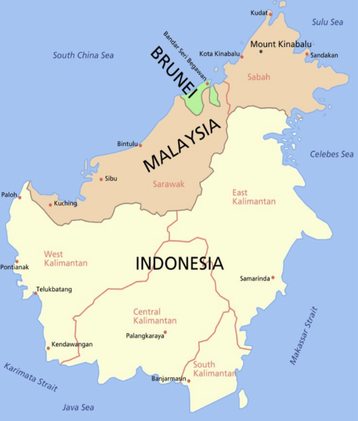
Brunei is a small, sovereign state on the island of Borneo, which is also occupied by parts of Malaysia and Indonesia, and surrounded by the South China Sea. Brunei boasts substantial oil and gas reserves, which account for 90 percent of government revenue and over half of the GDP, making it a considerably wealthy nation. Despite its wealth, however, it has faced significant hurdles in developing its economy due to its disproportionate reliance on a single industry for much of its capital.
Though Brunei’s strategic location, with no history of natural disasters, low power costs, and climate stability, makes it an appealing site for digital infrastructure investment, its digital infrastructure is still in its nascent stages due to its sparse domestic market, sole dependence on government funding for ICT services, and the lack of a digitally literate workforce. In an era when digital infrastructure - subsea cables, data centers, and cloud platforms - have become the backbone of economic growth, social resilience, and geopolitical relevance, the stakes could not be higher. Widespread efforts are now underway to diversify Brunei’s digital economy, and the government has set big ambitions: to become a bandwidth transit hub for Borneo and the wider Brunei Indonesia Malaysia Philippines East Asia Growth Area or BIMP-EAGA region.
With notable advancements in the last few years alone, this is certainly a goal that the small nation is slowly but surely advancing towards. This transformation from digital vulnerability to emerging hub status is not the result of sheer scale or deep pockets, but a story of strategic policy, crisis-driven innovation, and the power of consolidation. The research focus guiding this article is thus to examine the factors that served as the impetus for this growth in digital infrastructure, as well as to address the challenges that remain as Brunei strives to position itself as a regional digital hub.
Smart nation goal and Brunei’s waves of digital evolution
Pre-2019, Brunei’s digital landscape was characterized by fragmented infrastructure, reliance on a handful of submarine cables, and frequent service outages, which threw a wrench in the country’s digital evolution. The primary reason for the weakness is that, while Brunei’s substantial oil and gas revenues have generated national wealth, this economic concentration has resulted in an under-diversified economy where emerging sectors, including the ICT sector, remain less robust.
Recognizing the pitfalls of their over-reliance on a single industry, as well as the need for enhanced digital connectivity and resilience, the Brunei government has launched Wawasan 2035 – a national project with a vision to become a 'Smart Nation' with a vibrant economy and a digitally ready society. This long-term goal is anchored by The Digital Economy Masterplan 2025, the country’s first five-year blueprint emphasizing digital transformation as the driver for socioeconomic growth, improved quality of life, and overall sustainability. Featuring a heavy focus on Industry 4.0 technologies, the government is working to integrate advanced digital tools, including automation, AI, and the Internet of Things (IoT), across Brunei’s economy, especially when it comes to micro, small, and medium enterprises (MSMEs).
Given the technological boom that the world is undergoing, this aims to boost productivity, resilience, and innovation through comprehensive awareness and readiness programs, ensuring even the smaller players in Brunei can remain competitive in the rapidly growing digital economy.
Another flagship initiative includes the implementation of a secure, unified digital ID system for citizens and residents, enabling streamlined access to government and private sector services through single sign-ons. This would not only aid in the modernization of e-government services and cross-border digital trade but also allow for more secure authentication and data sharing across digital platforms.
The establishment of the Brunei Innovation Lab was designed to act as a catalyst for the development and commercialization of homegrown digital solutions. The lab serves as a national platform to nurture local tech talent, foster startups, and accelerate digital entrepreneurship by offering resources, mentorship, and access to cutting-edge technologies for innovators and SMEs, thereby upskilling the country’s human capital to ensure that its workforce can sustain the demands of a rapidly digitizing market. The government pledges equitable access to networks and digital services even in rural areas, ensuring that all citizens benefit from digital progress, regardless of geography or socioeconomic status. Driven by collaboration across government, private sector, academia, and the community, this equitable and resilient vision is operationalized by a whole-of-the-nation approach in line with their tagline “no one is left behind.”
Riding on the strong growth in IP-based traffic, Brunei has lit up 10 Tbps of international capacity, connecting nine global destinations, namely Singapore, Hong Kong, Malaysia, Thailand, Vietnam, Philippines, Japan, China and the United States, through three active – and one upcoming – submarine cables, which landed at two cable landing sites in Brunei, namely the Tungku landing station and the Telisai landing station.
The development of digital infrastructure in Brunei can broadly be categorized into three waves of evolution: From 1999 to 2019, Brunei focused on building basic connectivity and laying the groundwork for digital access. The 2019 to 2020 period was marked by crisis-driven consolidation, leading to rapid digital upgrades. Finally, the latest wave from 2021 to 2026 is defined by strategic expansion and innovation in line with Wawasan 2035.
Digital foundation building (1999–2019)
Brunei’s oldest international cable is the South East Asia Middle-East West Europe 3 (SMW3/SE-ME-WE3) – a 39,000 km (24,333 miles) cable landed in 1999 at its Tungku landing station, connecting to 39 landing points across Southeast Asia, Africa, the Middle East, and Europe. Though it supported a very limited speed of 655 Mbps, and featured an ageing design, it played a historic role in early international connectivity, for it was the country’s only subsea cable for nearly two decades, later declared end of life and retired in 2024.
It wasn’t until 2009 that Brunei truly began to lay its digital foundations with the full landing of the major submarine cable – the Asia-America Gateway (AAG) Cable System at its Tungku landing station on November 10. Nearly 20,000 km (12,500 miles) long, the AAG is a trans-Pacific cable linking Southeast Asia directly to the US via Guam and Hawaii. Owned by a 19-member consortium including Brunei’s Authority for Info-communications Technology Industry (AITI), it was initially managed by Brunei International Gateway (BIG) – a joint venture between the government and two of Brunei’s telecom providers at the time, TelBru and DST Group. This cable was designed to provide up to 2.88 Tbps capacity using dense wavelength-division multiplexing (DWDM) technology, supporting growing demand for voice, video, and data traffic. Four years later, Brunei landed the Southeast Asia-Japan Cable (SJC) at its Telisai landing station on June 27, 2013. Owned by the same consortium as the AAG, and managed by Brunei’s BIG, this 8,900 km (5530 miles) cable became a major pan-Asia system, connecting Japan to Indonesia via China, Hong Kong, the Philippines, Brunei, Thailand, and Singapore. Critical for Brunei’s international connectivity, the SJC featured an initial design capacity of 28 Tbps and was later retrofitted using 100G Submarine Line Terminal Equipment (SLTE) and Optical Add/Drop Multiplexer (OADM) Branching technologies.
The Labuan-Brunei Cable (LBC) is the most recent active cable that was landed at the Tungku landing station in April 2017, featuring a 3.3 Tbps design capacity. Although the LBC’s submarine segment constituted an unrepeated submarine optical fibre stretching a mere 57 km (32 miles), it provided a high-capacity, low-latency link between Brunei and East Malaysia, boosting regional connectivity and redundancy.
In these foundational years, two primary data centers were housing the nation’s digital infrastructure, together supporting Brunei’s governmental and commercial needs. The Level 3 Tungku Submarine Cable Station, operated by Level 3 Communications in Bandar Seri Begawan, functioned as a commercial facility, though it was not carrier-neutral and offered only basic subsea cable landing and data center services. Alongside this was the EGNC Data Centre Colocation managed by the E-Government National Centre, providing secure physical and network access for public IT services. This government facility featured advanced security and reliability measures, including N+1 UPS systems, FM-200 fire suppression, VESDA smoke detection, CCTV surveillance, biometric access, and both private and shared suites for housing equipment, all monitored by a 24/7 network operations center.
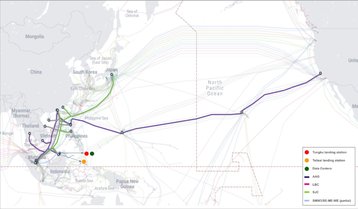
Despite this promising blueprint for digital infrastructure, development remained largely restricted during this wave of evolution, primarily due to limited cable diversity and infrastructure that lacked the scale, neutrality, and flexibility needed to support a rapidly digitizing society. While the AAG was designed to be one of the country’s biggest sources of connectivity, its productivity and reliability were erratic, facing frequent outages in the Vietnam sector that disrupted network resilience in all neighboring regions along the line. In October 2021, the AAG reported its third breakdown in 2021 alone, all three of which majorly disrupted Vietnam’s regional networks, as well as the international network connectivity to others along the line, including Brunei. While these outages were later reported to have been fixed, such issues remained frequent along the AAG (particularly in the Vietnam sector), causing widespread data congestion for individual users and businesses – both private and public.
With a modest infrastructure that was still in its developing stages, such disruptions to major subsea cables that directly landed in Brunei massively disrupted the country’s everyday activities, including online education, business, and media streaming. This underscored the vulnerability of Brunei’s reliance on a handful of major cables, leaving it vulnerable to widespread economic, social, and educational breakdown, even due to single points of failure such as that of the AAG in Vietnam.
The effectiveness of its two data centers at the time was also restricted due to the fragmented nature of Brunei’s last-mile infrastructure. Until 2019, there were four separate national telecommunications providers – Telekom Brunei Berhad (TelBru), Datastream Technology Sdn Bhd (DST) and Progresif Cellular Sdn Bhd (Progresif), and Brunei International Gateway Sdn Bhd (BIG) – each maintaining its own networks, resulting in inconsistent fiber and mobile coverage across the country. This lack of a unified strategy led to duplicated investments and persistent gaps in service, even as most urban areas gained access to Fiber-to-the-Home (FTTH) and mobile broadband. The absence of coordinated planning not only limited the reach and reliability of digital services but also hindered the country’s ability to respond to growing demand for connectivity and cloud-based applications. These inconsistencies highlighted the need for more integrated and resilient technologies, paving the way for later digital policies.
The great consolidation: Strategic -infrastructure nationalism (2019–2020)
In an effort to address the chronic outages and constraints of having multiple independent providers, all mobile and network providers across the nation, including TelBru, DST, Progresif, and BIG, as well as submarine cable assets were consolidated into a single national entity called Unified National Networks (UNN) in 2019.
The consolidation of ownership marks a pivotal turning point in Brunei’s digital evolution, allowing it to achieve better scale and operational efficiency. Citizens benefited from more coordinated upgrades, consistent FTTH coverage, and high-speed connectivity, supporting digital inclusion and economic participation. It also brought with it a strategic trading leverage given that a unified national entity could negotiate more effectively, allowing the UNN to become a global partner in several major international consortia, thus securing better terms and ensuring national interests were prioritized.
Centralized planning also supported the development of diverse, redundant infrastructure throughout the country, reducing the risk of widespread outages. Consolidation thus addressed the service inefficiencies, inconsistent connectivity, and slow digital economy growth that characterized its nascent technological years. Perhaps most importantly, unification allowed Brunei to redirect its capital towards more strategic digital development instead of distributing it across multiple providers – a factor that is especially prudent for small countries like Brunei.
Crisis as a digital accelerator: The impacts of Covid-19
Alongside enhanced connectivity and resilience, this consolidation also ushered in an era of agility in Brunei’s crisis responses, for centralized government control via the UNN allowed for rapid and coordinated responses to emergencies.
This became especially pertinent during the Covid-19 pandemic, which forced rapid digital adoption among businesses and consumers, accelerating infrastructure upgrades and embedding digital resilience as a core pillar of national development. Government-mandated social distancing and quarantine measures compelled Brunei’s small and medium enterprises (SMEs) – especially in the food and beverage sector – to rapidly adopt digital platforms for survival. This sector, representing 11 percent of local enterprises, saw a dramatic shift to online ordering, payments, and delivery services as a direct response to the crisis.
The government rose to the occasion incredibly quickly, working to expand broadband, roll out 5G, and support digital transformation policies for nearly 99 percent of the population. This wave of SME digitalization was fueled by three main pathways: first, technological factors played a significant role, as the pandemic led to increased access to digital platforms and tools, affording even SMEs the necessary infrastructure to adopt e-commerce operations effectively and efficiently.
Second, management and process factors were crucial, with business owners rapidly adapting their strategies to embrace new business models and workflows that supported their pivot to digital operations, allowing them to survive the disruptions caused by the nationwide lockdown, while still maximizing customer engagement.
People factors were equally integral for the ability of SME owners, staff, and customers to learn new skills, adopt unfamiliar technologies, and remain flexible in the face of uncertainty constituted the final piece of this successful transition. Brunei’s data usage price (or digital affordability) in 2020, relative to peers with a comparable per capita income, showed the company ranked comparatively highly on the scale, indicating that its pricing was competitive among high-income peers.
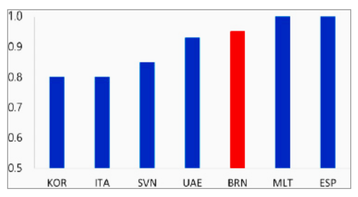
Performing better than several but not yet leading the group suggests that the digital reforms brought about by the pandemic certainly increased digital service affordability in Brunei, although there is room for growth. The improved digital environment during the pandemic enabled significant growth in e-commerce across business-to-consumer (B2C), business-to-business (B2B), and government-to-consumer (G2C) sectors.
Enhanced digital infrastructure and connectivity allowed Bruneian platforms to expand their reach, both domestically and internationally, with the most notable advancements in cloud services for Brunei. It saw the launch of Tech Greencloud, a privately operated, flexible, and scalable cloud center for SMEs and startups offering private cabinets, individual servers, remote hands, and bare metal/public cloud servers.
Recognizing the need for robust multi-cloud connectivity in Asia in order to meet surging regional demands for data, AI, 5G, and IoT services, Hong Kong-based technology company SUNeVision also pioneered the SUNeVision Cloud eXchange (SCX) – a carrier and cloud-neutral platform. Designed in response to Southeast Asia’s growing network and data demands, SCX enabled on-demand, remote switching between major cloud providers via a single portal, improving flexibility, speed, and cost-efficiency.
While the platform isn’t directly based in Brunei, its strong regional hub in Hong Kong, connected to over 10 submarine cables and major network providers, affords reliable multi-cloud access to the emerging markets in Brunei. Boasting operational advantages such as pay-as-you-go pricing, remote management, and simplified migration between providers, the development of the SCX addressed challenges faced by smaller digital economies like Brunei. By offering a scalable, resilient, and efficient cloud connection that could supplement Brunei’s own on-site investments and infrastructure, it enabled Brunei-based SMEs and startups to rise to the growing crisis-driven demands of the digital economy without significant capital outlay.
Ambitious expansion and innovation (2021–2026)
The current wave of digital expansion in Brunei is characterized by a series of expansions in connectivity and resilience, and new hyperscale-ready data centers, all improving latency and peering. Consortium participation has led to Brunei diversifying its cloud networks, as well as regional and international connectivity, while reducing the operational burdens of physical infrastructure.
This has led to the nation launching its first and only international exchange, the Borneo IX. Launched through a partnership between UNN and the DE-CIX Asia interconnection ecosystem, the Borneo-IX is located at the Tungku Submarine Cable Station and provides direct, low-latency access to major global Internet hubs in Asia, Europe, and America, affording Borneo a level of connectivity on par with established hubs like Singapore and Frankfurt.
This Internet exchange point represents yet another win for the Bruneian digital economy that was made possible by its consolidation, for it not only supports local businesses but also attracts foreign investment and creates new opportunities for Bruneian enterprises to expand internationally with minimal capital and enhanced end-user experience.
A new 7,200 km (4,470 miles) submarine cable, the Asia Link Cable (ALC), is also slated to begin operations in early 2026. Developed by a consortium of 19 members, including UNN, the ALC will connect Hong Kong, Singapore, Brunei, the Philippines, and Hainan (China), featuring a minimum of eight fiber pairs and a trunk design capacity of 18 Tbps per fiber pair. With a full landing point at Tungku Cable Landing Station, this will provide much-needed additional hyper-capacity and resiliency for intra-Asia traffic. This not only brings enhanced regional bandwidth, network diversity, and resilience for international traffic, but also directly addresses the vulnerabilities of single-cable dependency that previously restricted Brunei’s connectivity.
The ALC’s open cable system architecture will allow each consortium member, including Brunei, to maintain independent terminal equipment, ensuring flexibility and future-proofing the infrastructure, thus mitigating the impact of single points of failure – like the AAG outages in the Vietnam sector – on Brunei’s resilience.
Brunei’s data center landscape is also undergoing major transformations, with not just reliable multi-cloud access, but also the construction of a brand new Vertiv-designed UNN Prefabricated Data Centre in Kampong Tungku. A whopping 51,000 sq ft (4,738 sqm), this facility can house up to 200 racks and is built to Uptime Institute’s highly reliable Tier IV (electrical) and Tier III (mechanical) standards.
Unlike its previous three data centers, the UNN Prefabricated Data Center integrates both government, enterprise, and SME needs. The prefabricated modular design allows for deployment that is up to 30 percent faster than traditional builds, and incorporates advanced power and thermal management systems to minimize environmental impact. Overall, it is a scalable, flexible, sustainable, and energy efficient – a step closer to Brunei’s roadmap to achieving a robust, inclusive, geo-redundant digital economy.
The road ahead: Brunei as a regional digital hub?
Brunei’s ambitious expansions and innovations between 2021 and 2026 are setting new benchmarks for digital infrastructure in small states, but the road ahead is not without a set of persistent challenges. Though the unification via the UNN has somewhat mitigated this challenge, Brunei remains heavily dependent on regional and international consortia to fund and operate major projects due to its limited domestic market. This could limit its bargaining power in international partnerships, leading to a slower-than-ideal rate of digital growth for Brunei itself.
While the consolidation of Brunei’s digital infrastructure under a single entity (UNN) has emerged as being strategic, pragmatic, and effective for the most part, it does run the risk of over-centralization of control, which can lead to bureaucratic inertia, slower innovation, and deterred foreign investments, potentially undermining the very goals of digital transformation.
Other factors have pointed to ageing infrastructure, capacity constraints, and limited resilience in Brunei; for instance, the last documented upgrade to its existing subsea cables was in 2016 when the SJC received a capacity boost of 6.3 Tbps (bringing its design capacity up to 28 Tbps) using advanced 100 Gbps coherent transmission technology. The upgrade was apparently implemented to accommodate rapidly growing bandwidth demands in the Asia-Pacific region.
While this is reflective of continuous technological advancement in Brunei, it is worth noting that three upgrades were performed in the span of the first three years of this cable’s launch, yet there have been no upgrades reported in the nine years since. This observation likely suggests that Brunei may not entirely be keeping up with the shift in the industry’s priorities to newer, higher-capacity cables despite its investment in newer connections.
Regional competition also poses a challenge for Brunei as neighboring countries, often with more expendable capital, invest aggressively in their own digital economies. For Brunei to avoid obsolescence in the face of rapid evolution of technologies like AI, IoT, and 5G networks, it must continue to remain agile and invest in resilient, sustainable, and modern infrastructure of its own – a target which could prove difficult for a nation as small as Brunei. Overall, it is clear that Brunei’s digital transformation is still ongoing – a testament to the challenges small countries face in establishing their digital infrastructure. But despite these barriers, its digital story serves as a model for other small nations in revealing the power of unification, infrastructure literacy, inclusive policy, and regional cooperation in overcoming scale and capital constraints. Brunei simply can’t afford solo infrastructure investments, but its consolidation model demonstrates how strategic policy can rapidly improve digital positioning and efficiency even for small states.
By strategically aligning itself in global consortia, Brunei has overcome many of its constraints and embarked on an ambitious journey from vulnerability to resilience, with major digital milestones achieved. The next few years will be crucial for this small island nation’s digital journey, and the completion of the ALC will be a game-changer for boosting its capacity and resilience.
This phase of Brunei’s digital journey will depend heavily on continued investment in infrastructure, as well as technological agility, regulatory modernization, and a steadfast commitment to sustainability and equity. Though several obstacles currently restrict its progress towards achieving hub status, as long as these tactical investments deliver, Brunei could one day truly become Borneo’s digital gateway and realize its Smart Nation vision by 2035.
Find out more about the Global Digital Infrastructure Certificate here.


Comments