
DayOne CEO Jamie Khoo’s first experience of data centers was a far cry from the multi-megawatt deployments her company is making today.
“Back in 2002, I was part of the team that set up the data center business at ST Telemedia,” she says, referring to the Singapore telco that she worked at for more than a decade.
“I was on the finance side, working through some of the funding requirements, and that helped me start to build an understanding of what data centers are about. At the same time, ST was an early investor in Equinix, and I was also quite involved in that.
“At that time, we were catering to enterprise customers - you’re talking about 2kW per rack with very simple cooling systems. Then the cloud came in and gave us a spurt of growth, and now we’re looking at AI giving us another spurt of growth.”
Growth is the name of the game for DayOne, which started life as the international arm of Chinese data center operator GDS. Now an independent company based in Singapore, Khoo has been tasked with growing its empire of data centers across the APAC region and beyond.
A new Day
GDS was founded in 2006. Backed by STT GDC and Hillhouse, it operates dozens of data centers across Greater China. The company formed an international unit to handle its overseas data centers in 2022, and the decision to rebrand this as a standalone business, DayOne, was announced in January 2025.
Khoo has been running the show since March 2024, having worked in several other positions within GDS, most recently as group COO. She says it was always the company’s intention to spin off its international operations into an independent entity, and that the new identity is a natural part of this.
“When we decided to go overseas, we planned to diversify our risk out of China,” she says. “With the geopolitical tensions, it was identified from the beginning that the international team would need its own management team and decision-making body.
“We’ve been on that path ever since, but we realized we needed to take things slowly, so we raised Series A and Series B financing, then the deconsolidation from GDS, and finally the rebrand. But from the very beginning, operations and management have been totally separate.”
Given that many of its international clients would probably have reservations about running workloads on Chinese-owned servers, it is no surprise that DayOne is keen to emphasize its independence. According to its most recent financial results, GDS retains a 35.6 percent, non-controlling, stake in DayOne, with other shareholders including SoftBank Vision Fund, Citadel CEO Kenneth Griffin, Coatue Management, and Baupost Group.
On a business level, Khoo says: “We do get leads from our Chinese sales team, but those are arms-length transactions. We have our own sales and go-to market team who will then work with potential customers, both US and non-US companies, to understand their needs and work towards the kind of infrastructure they require in their data centers.”
Building for the future
With $1.9 billion raised across its Series A and B rounds in the last 18 months, DayOne has cash to fund a build-out across its six active markets in APAC: Indonesia, Hong Kong, Japan, Malaysia, Singapore, and Thailand.
Khoo says the company has about 480MW of data center space committed to customers, with more than 500MW under construction. It serves US and Chinese hyperscalers, as well as enterprise clients.

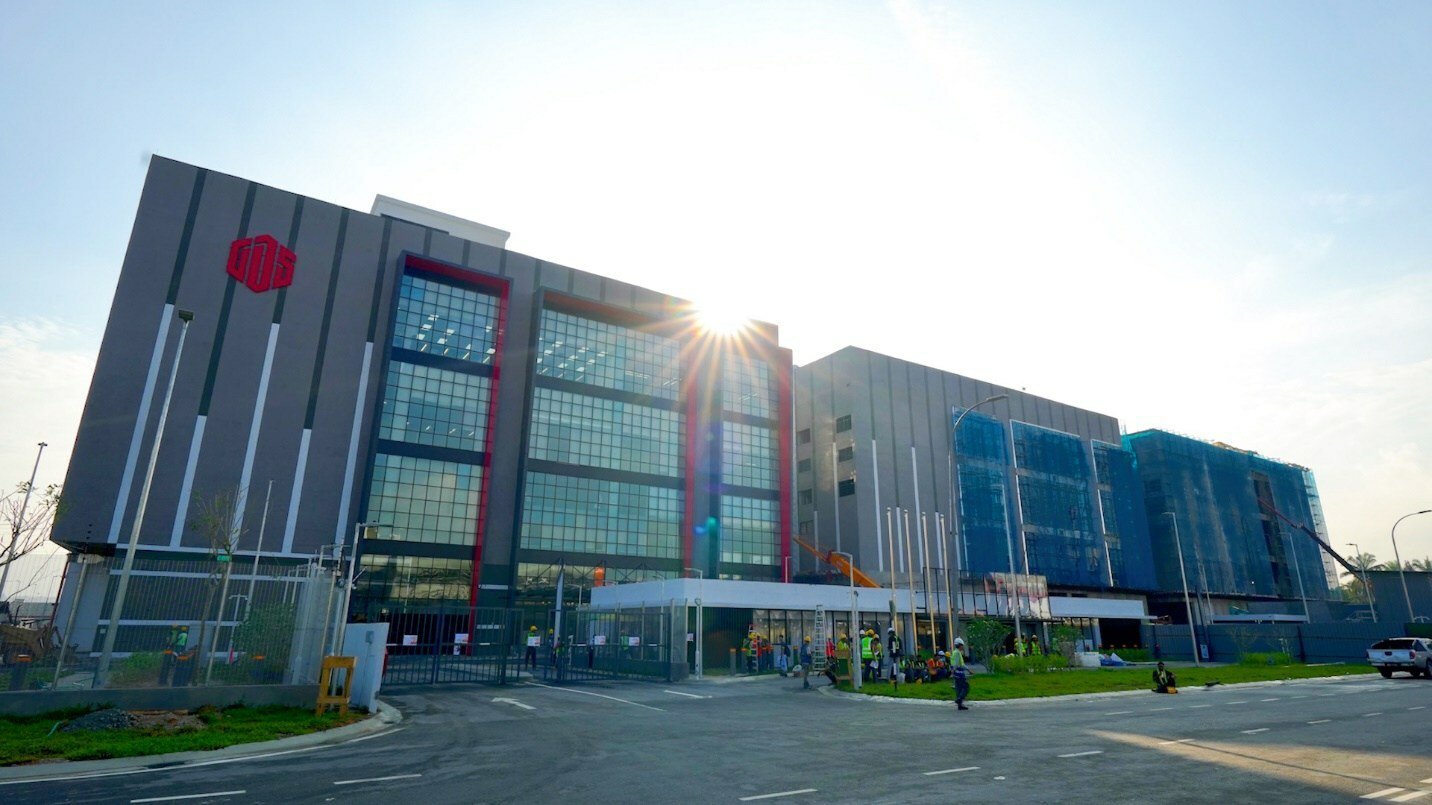
Data centers already operational include two facilities in Johor, Malaysia, located at the Nusajaya and Kempas Tech Parks, while in March, it broke ground on a new data center at Chonburi Tech Park in Thailand, which will offer 180MW.
“The money we raised will help us grow in our six markets,” Khoo says. “Malaysia has been very successful because it was a new market at a time when Singapore was under moratorium, and we were very fortunate to be in that early spur of growth and be able to capture some of that market.”
She identifies Thailand as one area with growth potential, on the back of multiple large investment announcements from the hyperscalers. AWS, Alibaba, Google, and TikTok have all announced significant projects in the country in the last 12 months. “It’s in an early stage and I think we’ll see growth there that’s higher than the rest of the region in the next couple of years,” Khoo says.
The company is also hoping that easing restrictions on data centers in Singapore will play in its favor. Developments were banned completely in the city state between 2019-2023 due to limits on space and power, but in recent years, the government has started to relax restrictions, and DayOne, under its previous guise as GDS International, was one of four companies given permission to add 20MW of capacity in 2023. “We will be kickstarting our construction in Singapore in July, which we hope to deliver by 2026,” Khoo says.
Now up to 300MW has been made available for data centers, which shows they can build sustainable facilities. The successful bidders will be announced later this year, and Khoo is hoping DayOne will benefit. “Everyone is vying for [more capacity in Singapore] and talking to the government, and we are no different,” she adds.
Beyond APAC
While Khoo expects AI to play an important part in DayOne’s future, she says that “in this part of the world a lot of the demand remains cloud-based,” which has an impact on the type of infrastructure offered in its data centers.
“We do have customers with AI requirements, with different GPUs and different cooling demands,” she says. “But compared to cloud and Internet content requirements, AI is on a much smaller scale.
“For us, we focus on delivery - if you can deliver fast, then I think demand will come, whether that be cloud, AI, or anything else. I believe the AI market in this part of the world is going to grow, but it will depend on the kind of technology we can get hold of.”
As she moves into her second year as CEO, Khoo says growing in APAC is the big focus, though DayOne could look to other markets too. It was reported earlier this year that the company was considering going public, with Bloomberg suggesting it had contacted banks ahead of a potential IPO in the US.
“We want to grow outside Asia one day,” Khoo says. “There are plans, and I hope we’ll be able to do it faster than some people think.”
She says her biggest challenge is around people management, and spends a lot of her time jetting between the company’s various locations so she can stay connected with her teams. “Having a loyal, committed team that serves the market and our customers is the most important thing,” Khoo says. “That’s the thing I spend most time thinking about, because that enables a business to grow sustainably in the long term.”
Khoo is a rare female CEO in an industry dominated by male executives, but neatly sidesteps DCD’s question on whether she sees herself as a role model for others.
“I hope in the future there will be more female CEOs, not just in data centers but in other tech sectors too,” she says. “It’s a very rewarding job, and it’s so fulfilling to be in a position to drive a business forward. I really hope more people can have this experience.”
The feature first appeared in Issue 57 of DCD Magazine. Click here to read the full magazine, free of charge.





Comments