
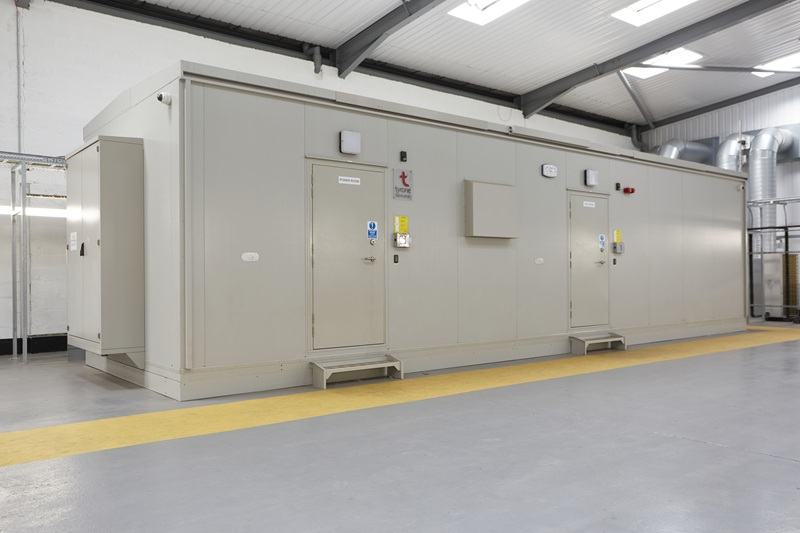
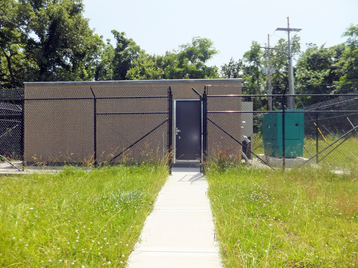
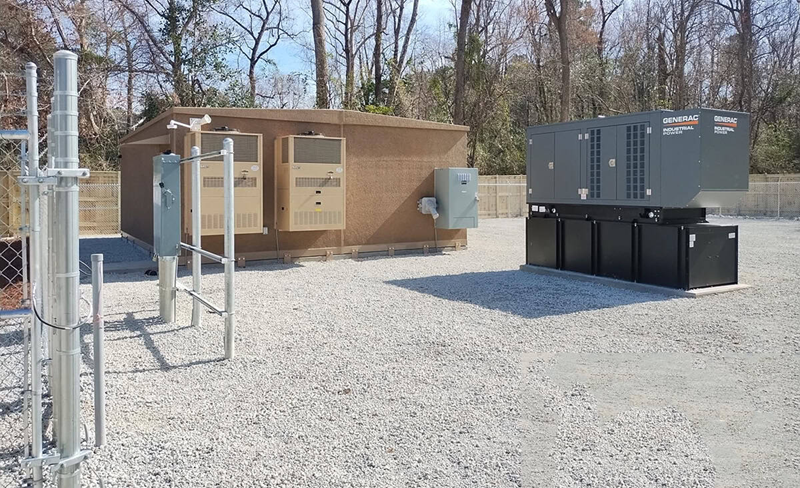
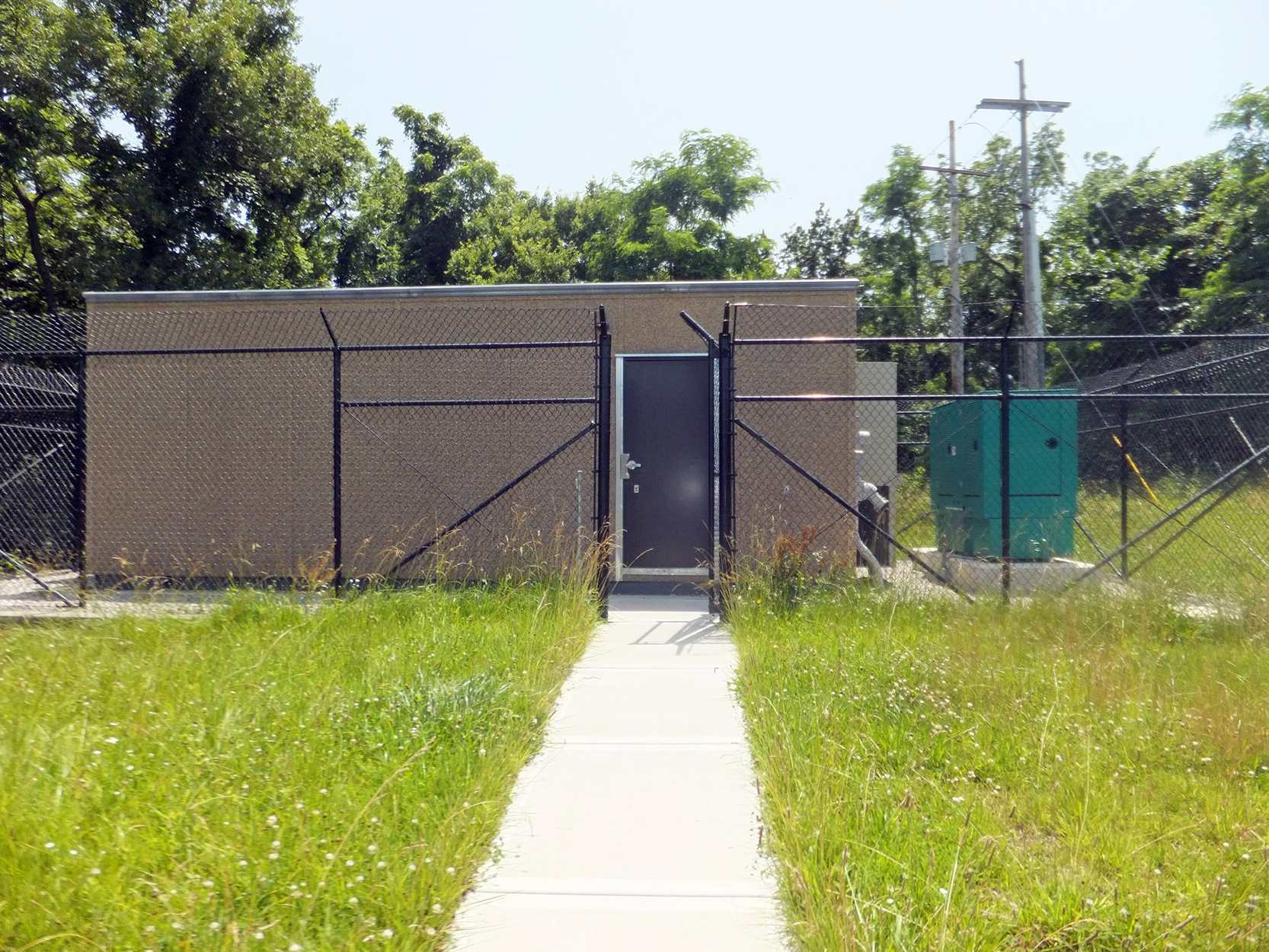
In-line amplifiers (ILAs) are small huts dotted along terrestrial fiber networks.
Located every 80-100 km along those networks, these small shelters contain repeater equipment that boosts signals travelling along the fiber.
These sites, like their data center cousins, host redundant power and cooling infrastructure designed to ensure facility and network uptime.
There are thousands of these ILAs globally. Some are placed along main roads and railways crossing the country, others in random fields miles from any sign of civilisation.
Though they share similarities with data centers and legacy central offices (aka telephone exchanges), ILAs are another sub-sector of the digital infrastructure industry, and one that rarely gets mentioned.
Powering ILAs
The data center industry is currently fighting an ongoing capacity crunch, largely driven by the rush to build out AI capacity as quickly as possible. ILAs have much lower power needs than full-blown facilities, but still have their own geographic and reliability challenges.
Power densities at ILAs have increased over time. Early ILA designs supported around 600–800W per rack. Today, ILAs typically draw around 2–4 kW per rack, with future designs expected to reach 5–6kW, and up to 12kW per cabinet for high‑density hyperscaler deployments.

DCD Magazine #61 - Life and death on a tower
The cell tower climbers risking it all to help us stay connected
While those densities might be on par with the lower end of retail colocation densities, it is a far cry from the extreme end of high-density air-cooled racks and well below liquid-cooled densities. Even at 12kW per rack, a 24-rack ILA would only have an IT capacity requirement of around 288kW.
Exa’s Armada notes that the company is seeing up to 25kW per rack in some locations, with its eight-rack ILAs totaling 200kW of IT capacity. He predicts some ILAs might reach 500kW in the future.
DC Blox, a data center and dark fiber provider in the US, says its ILA sites offer 155kW total power per site, expandable to 465kW each, and have 72 hours of fuel on-site. On its website, the company lists eight ILA sites along its fiber route linking its Myrtle Beach cable landing station in South Carolina and its two Atlanta data center campuses in Georgia.
ILAs largely rely on grid connections for their power. And while they aren’t major power users individually, a whole portfolio of hundreds or even thousands eventually adds up to a not-insignificant amount of megawatts.
“Sometimes power is a challenge, because we’re building where there is nothing else,” says Armada. “On a highway, maybe there are services or restaurants and power is available. Sometimes there is nothing, and we have to pay power companies to reach us.”
Patrik Gylesjö, head of tech and delivery at Nordic fiber firm GlobalConnect, notes that sometimes ILAs can be installed in office buildings to make use of existing power connections.
Many of the operators DCD spoke to are exploring on-site power generation for their ILA sites.
James Flitton, VP network development and optimisation, Colt Technology Services, said the company is “exploring different options” around power for ILAs, including on-site solar and on-site micro-wind (less than 10kW) in “very site-specific" rural or coastal areas where the wind profile and planning requirements are favorable.
Zayo’s Werley said the company is “always looking at alternatives,” including new battery technologies, solar, hydrogen cells, etc., but has not moved forward with any alternative technologies to date.
Lumen’s Prigg notes his company is looking at off-grid power sources including solar and wind as well as propane and fuel cells. The company is trailing some of these to “offset limitations” in the local grid.
Exa’s Armada says his company is also starting to roll out solar panels at ILA sites. In some cases, the solar-powered ILAs generate enough power to be self-sufficient.
An easier build?
Though they are smaller than full-blown data centers, getting ILAs zoned and built is still no small feat.
“ILAs on a one-to-one basis are easier and less complex than a data center,” says Zayo’s Werley. “Entire routes of ILAs can start to enter a similar difficulty to data centers, but still less complex on the design and construction front.”
Lumen’s Prigg notes that while some jurisdictions are “relatively straightforward,” companies deploying ILAs still need to deal with local planning regulations at each site along a fiber route, meaning operators may have multiple concurrent planning and construction projects alongside the actual fiber network construction.
“Even if we already own the pockets of land and have structures there, we have to deal with local municipalities on the permitting front. Some locations are straightforward, some are not,” he says. “If the location is close to a population, people have opinions about generator noise, for example.”
“Sometimes we're working on leased land, and then you have a landlord to deal with, who also has opinions in terms of what you can and can't do on the facility. Each and every one of these is a unique situation, and that's why we built dedicated teams to deal with it.”
“If there’s ten ILAs on a particular route and we’ve got nine done and can’t get the tenth done because of a permitting issue, you can’t hand that route over, you can’t light the fibers up.”
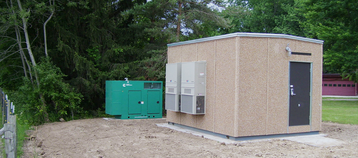
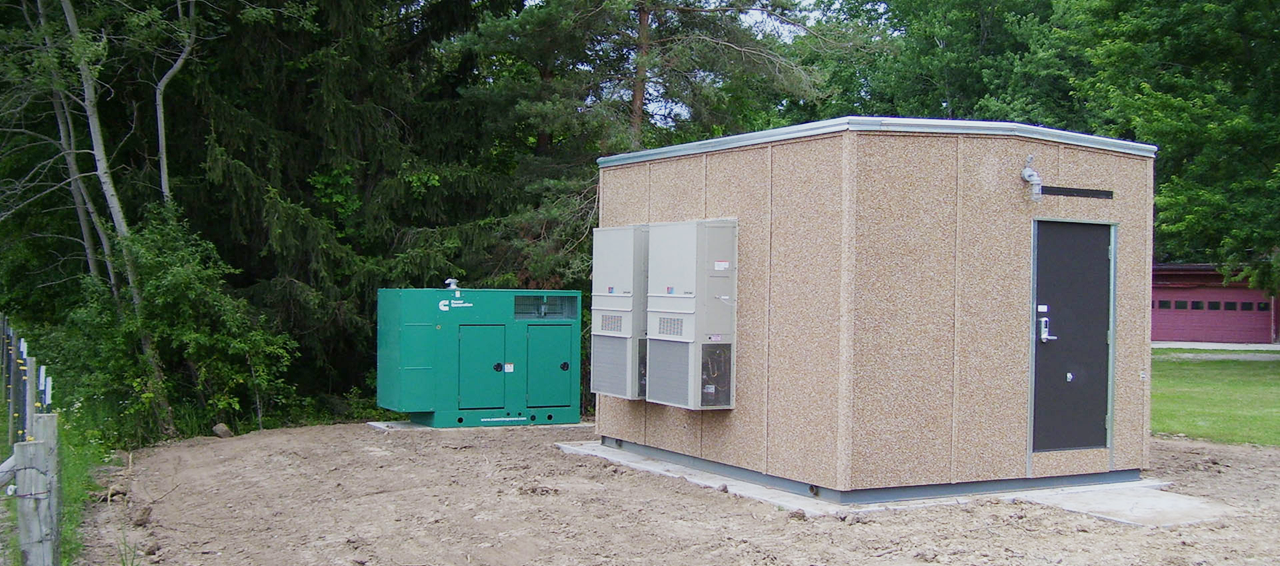
In Europe, Exa’s Armada notes that in many areas, containerized facilities don’t require the same amount of planning permission as larger buildings. He notes that designs of ILAs will vary depending on their location, but the company often uses containerized modules with different finishes to help them better blend into the surrounding area.
“Sometimes they look like small houses made of brick, sometimes they look made of wood,” he says. “It's better that they are confidential, but if you drive in the roads, you will see them. They are easy to spot because they are everywhere.”
“They are designed to blend into the environment,” adds GlobalConnect’s Gylesjö. “Part of the strategy is to make them invisible.
Unmanned en masse
ILA huts are usually unmanned and located in rural areas.
Colt’s Flitton notes that because optimal spacing rarely aligns with cities, ILAs are often found in rural fields, farmland, roadside or railway corridors, or utility rights‑of‑way following pipelines or power lines.
Managing a fleet of hundreds of facilities potentially spanning hundreds or even thousands of miles, where uptime is imperative, can be difficult.
Zayo’s Werley says the logistics of operations and maintenance of ILAs can be a “huge challenge,” explaining that they require “remote monitoring and a nationwide field support staff, along with numerous vendor contractors on call to support emergency dispatch and maintenance needs.”
Some operators outsource a lot of that maintenance to third parties, while others keep the majority of it in-house. Lumen’s Prigg notes the company has “a lot of technicians” at locations across the country, who can respond in a few hours if there is a problem. He even notes the company has access to helicopters for facilities that are unreachable by road in winter.
“The team is out there all the time, checking on the facility, changing out filters, testing generators, just keeping an eye on things. They visit the sites regularly, looking after air conditioners, rectifiers, batteries, etc.” Colt’s Flitton notes, however, that these are “simple locations” with monitoring systems in place.
“We’re agile and respond quickly to react to issues,” he notes. “In a complete disaster recovery situation, such as fire or flood, we have experience in recovering entire sites within just a few days.”
Lumen’s Prigg says that the company has at least one generator per site alongside several days of fuel, and the systems are tested regularly.
“Power outages are quite a common thing in the remote areas that these ILAs operate in, and the network is architected in a way that the traffic can flow in different directions if you were to lose a site,” he says.
Having multiple diverse routes, however, is also helpful, allowing operators to bypass any ILAs that are down via alternative paths.
ILA footprints grow and grow
Each ILA footprint is unique to each fiber operator. Designs are largely standardized, but each company has its preferred provider and layout.
Founded in 2007, Zayo has some 148,000 route miles (238,182km) and 19.5 million fiber miles (31 million km) connecting some 1,700 on-net data centers across the US.
Aaron Werley, SVP of engineering at US fiber firm Zayo, says his company traditionally opt for 24x36 ft pre-cast concrete facilties, capable of holding around 46 racks of equipment. The company operates some 1,300 of them across its network.
“Proximity to our long-haul fiber network is the primary driver in site selection,” he says. “We place them on open lots to allow us to add incremental ILA buildings as needed.”
“Cooling is all air-cooled with externally mounted HVAC,” he adds. “Our longhaul fiber customers will lease space and power to support ILA hardware on the fiber they lease from Zayo.”
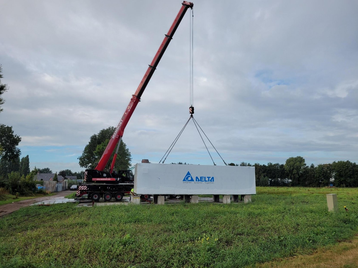
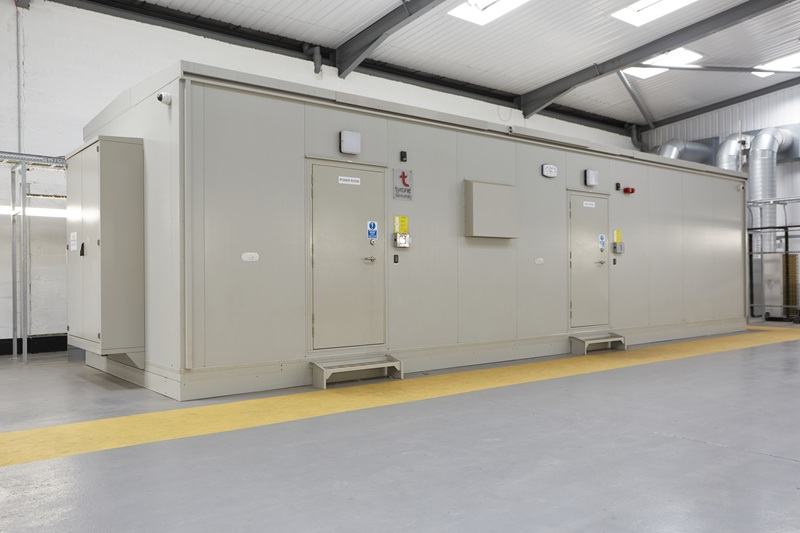
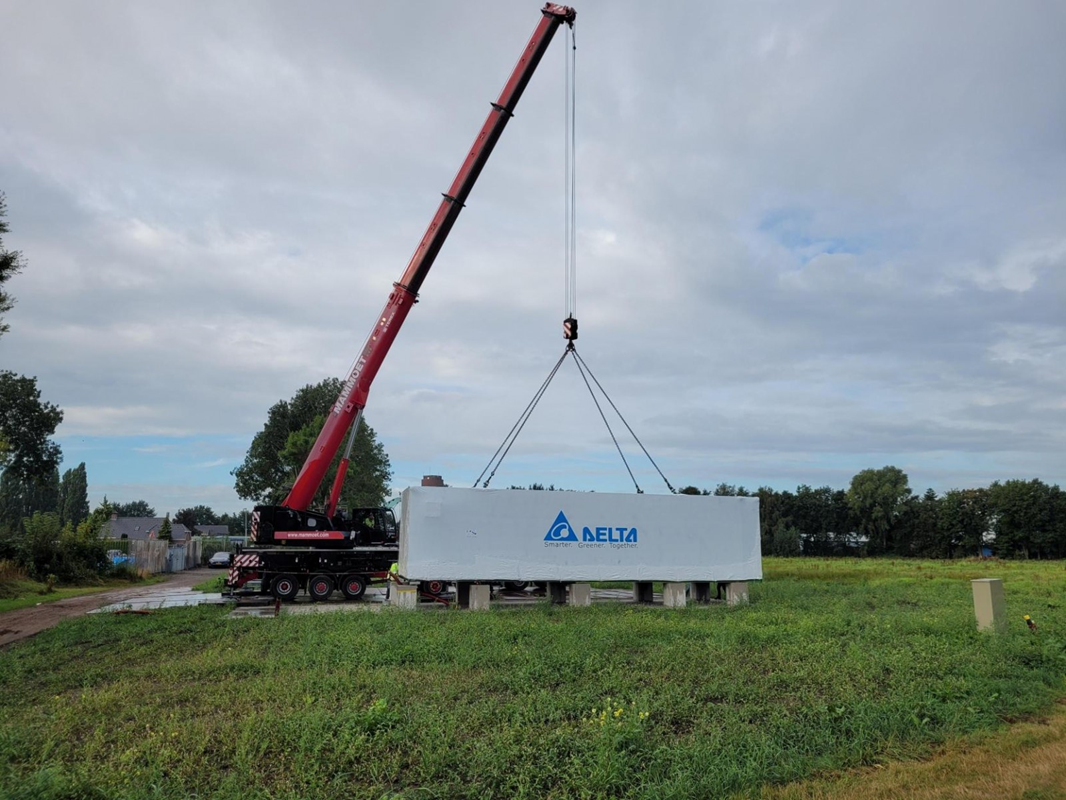
European fiber firm Colt Technology Services uses prefabricated, self-contained containers, and cabins, picking the form factor to suit the local geography. The company’s network connects 32,000 buildings, spans more than 40 countries, and touches more than 275 Points of Presence (PoPs) globally. Its ILAs generally total 12x56 sqm of internal space and able to host 24 racks – although six- and 12-rack options are also common – and are delivered to site and craned into position onto concrete pads
“While shipping container solutions are available, they are typically not the preferred long‑term deployment model for terrestrial ILAs in mature network environments,” says James Flitton, VP network development and optimisation, Colt Technology Services. “Pre‑cast concrete cabins and repurposed shipping containers are generally not preferred for ILAs facilities due to their unfavourable thermal performance and environmental control limitations, which can adversely impact equipment reliability and lifecycle cost.”
“ILAs are generally much easier to build out than data centres or cell towers, but they’re not trivial. ILAs sit in a different infrastructure class; fundamentally low‑power, low‑complexity systems - their challenge lies in their deployment environment, not in their technical demands.”
Exa Infrastructure, a portfolio company of investment firm I Squared Capital, owns more than 155,000 km of fiber across 37 countries, including six transatlantic cables. The company operates more than 300 ILA sites across its network.
Lumen is building out new fiber routes and expanding existing routes as part of its private connectivity fabric offering to serve hyperscale and neocloud companies. The company aims to add some 27,000 miles of fiber by the end of 2028.
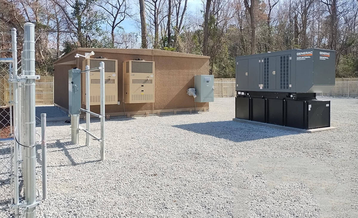
Last year, the company said it had added more than 2,500 route miles of fiber in 2025, adding 5.9Pbps of total capacity, with construction efforts underway at 176 ILA sites. In previous years, Lumen was rolling out around ten ILAs per year, showing the rapid growth of the network. The company said its ILAs offer up to triple the power density compared to traditional ILA shelters and are designed to be updated, renewed, and scaled for the future.
“As we are adding fiber, we have to build new shelters,” Kye Prigg, EVP, chief commercial operations officer at Lumen, tells DCD. “A very large piece of work that we're doing is building additional shelters at existing facilities, acquiring land, building out the facilities and the concrete pads and so forth, where we need to do so. And we have hundreds of those ongoing at the moment. It’s a very large endeavor.”
Lumen’s ILA sites are usually prefabricated reinforced concrete shelters – available in single-wide and double-wide flavors – delivered to site and hoisted into place via crane.
“These are 80,000 pounds and built to last decades and survive whatever you throw at them,” Prigg says.
In the UK, there is generally less need for ILAs than in many larger and more rural countries. Openreach, the infrastructure arm of telecoms incumbent BT, operates more than 1,000 fiber exchanges at legacy telephone exchanges/central offices across the UK. Many fiber firms will use space within these exchanges, reducing their need to repeat signals at interim ILA sites.
One notable exception is CityFibre. The wholesale-focused altnet bills itself as the UK’s largest independent wholesale infrastructure platform. Some 35 ISPs, including Sky, utilize CityFibre’s infrastructure. As well as its own fiber network, the company has developed a fleet of fiber exchanges, known as FEXs, across the country.
The company has at least 100 FEX deployments, with most being small containerized pods with a handful of racks. The company has previously said the sites can support up to 7kW per rack. As well as hosting its own gear, the FEXs can operate as exchanges for other operators.
A company spokesperson previously told DCD that the FEXs were designed and built to enable CityFibre to “operate a resilient fiber network that is entirely independent of BT/Openreach’s network and exchanges.”
Nokia’s Rob Shore notes that many hyperscalers are now deploying their own fiber, especially in the US, leading some to deploy their own ILA huts.
He also notes that many large campus developments in more rural corners of the US are making use of underutilized fiber networks that were built thanks to BEAD and other broadband stimulus funding.
“These are networks that are used to handling maybe a combined total of 100 gig of traffic, and all of a sudden the data center pops up in their backyard, and now they're calling us up saying they now need 6 petabytes over the next four years.”
In those cases, many of the operators are using their existing fiber infrastructure and their existing ILA huts and upgrading the infrastructure to accommodate the increased fiber density and capacities. Some of those networks are also seeing new ILAs developed.
“This is great news for these rural broadband service providers,” says Shore, “because they were making pennies on their network before. And now there's big money in data center interconnect, and they can leverage their fiber.”
An Edge case for ILAs?
Some companies, including Telefónica, are looking to convert now-idle telephone exchanges into Edge data centers. Low-density network facilities that once held gear serving copper networks are now set to hold at least some amount of IT equipment for lower-latency workloads.
Do ILAs potentially offer a new option to deliver Edge computing services?
In reality, probably not. ILA huts are small, low-power, and designed to host networking gear – meaning often distributing DC power. Few, if any, realistically have the space or power to accommodate any worthwhile computing equipment. And unlike telephone exchanges, they are growing in density, not being retired.
“I don’t think they’re fit for that purpose,” says GlobalConnect’s Gylesjö. “They’re too small. They don’t have the power density needed for that type of equipment. It’s 48v DC power; they are designed for telco equipment.”
Some operators, however, are potentially looking to use the land ILAs are sat on to develop new colocation facilities alongside the existing fiber huts.
Speaking at DCD’s Connect event in New York in March, Joe Reele, VP for solutions architects at Schneider Electric, said that with “a little bit more power in these places,” ILAs can “start to do some other things other than just pump up the light.”
In a follow-up discussion, Reele said his company has at least one client that is looking at adopting ILAs for alternative uses, with a little more than a quarter of that company’s ILAs identified as having potential – largely focused in growth markets. While that is still in the early phases, he predicts more will be heard about that project later this year or early next.
“We’re leaving the cloud era and entering the autonomous age, and the ILA hats could play a very important part in the scalability of that,” Reele says. “How do you get same-day delivery drones and robots that walk your dog? More network. Currently, we don't have the network, but I believe that in the future, the ILA becomes a multi-function piece of real estate, not just amplifying data traffic.”
He concedes, however, that many sites will be constrained on space and power, so he doesn’t see every ILA as having potential for greater utility.
“There's not a whole lot of flexibility and adaptability in the base designs. Each site is going to have to be looked at strategically,” he says. “It’s going to depend on how willing and open companies are to work within the ecosystem. If everything is proprietary, that’s a limiting factor.”





Comments