

Most know Cogent Communications as an Internet service provider, delivering fiber services via some 100,000 miles of intercity fiber and nearly 200,000 miles of metro fiber across the US and beyond.
But the company has quietly built up a significant portfolio of data centers, and has been expanding it further after a recent acquisition.
Cogent’s history is founded on acquisitions. CEO Dave Schaeffer founded the firm in 1999 at the peak of the Dotcom bubble, and the company acquired more than a dozen businesses on the cheap as the bubble burst. The list of companies bought includes NetRail, Allied Riser, FiberCity Networks, PSINet, Global Access, and more. A 2007 report suggested Cogent acquired some $14 billion worth of distressed assets for just $60 million over that time.
The company’s latest acquisition – legacy Sprint wireline assets from T-Mobile – has seen the company take over an asset portfolio ready-made to capitalize on the need for space and power amid an AI boom. And acquired it for only $1.
I’d buy that for a dollar
In September 2022, Cogent announced it was buying the Sprint Corporation wireline business (formerly known as Sprint Global Markets Group, or Sprint GMG) from T-Mobile for just a single dollar.
Issue 56 - How this feature got to the Moon
Hitching a ride on the first lunar data center
Even better; as part of the agreement, T-Mobile was set to pay Cogent $700 million over the next four-and-a-half years for Cogent's IP transit services.
The deal largely comprised the legacy Sprint US long-haul fiber network, acquired by T-Mobile as part of the two companies’ $26bn merger in 2020. The fiber assets were made up of around 19,000 long-haul route miles, 1,300 metro route miles, and thousands of miles of leased dark fiber. The business generated around $560 million in revenue in 2021 from some 1,400 clients.
More interestingly, for DCD at least, was the footprint of building assets that came with the fiber. The deal included some 482 technical spaces and switch sites owned fee simple across the US, with the largest 45 set to be converted into colocation data centers.
During the 1980s and 1990s, Sprint had built a fiber optic network that terminated in tandem switch sites and was designed to allow connectivity to black fibers. According to Schaeffer, the network carried exclusively voice traffic until the late 1990s, then carried some proprietary data and a small amount of Internet traffic. By the time of the acquisition, the network was “virtually empty,” with almost no traffic on it.
These were assets, according to the Cogent CEO, generating no revenue, connecting only to the Sprint backbone and to ILECs in their territory for TDM interfaces. According to Schaeffer, this footprint was built at a cost of some $20 billion.
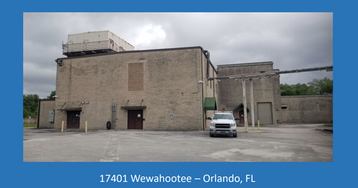
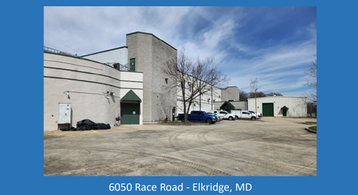
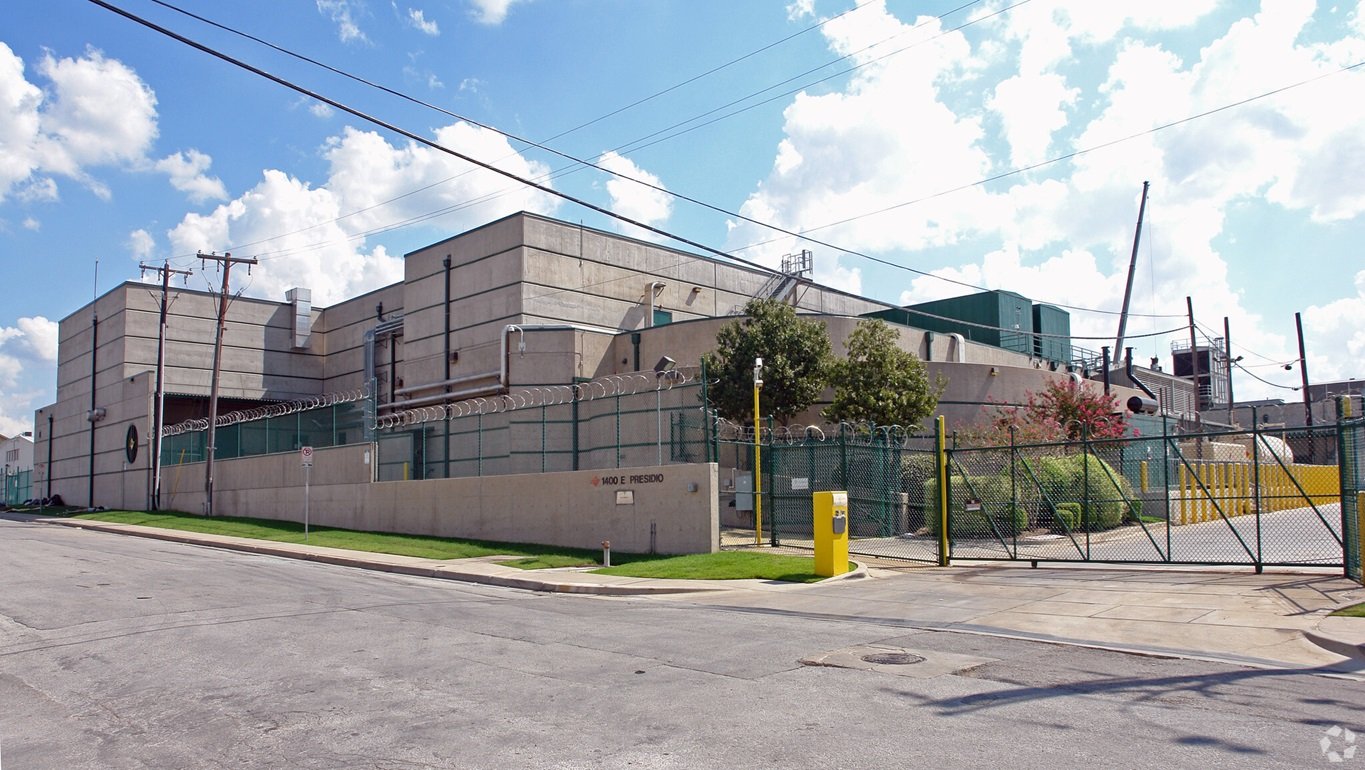
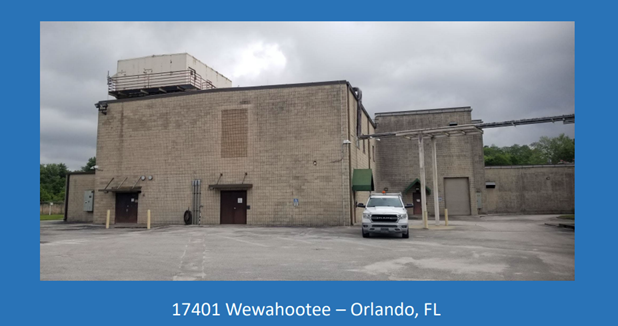
“The facilities are typically on about 5-to-6 acres in an industrial neighborhood, typically 15 to 20 miles from the central business districts,” Schaeffer tells DCD. “Built in the mid-1980s, they are typically poured concrete block construction, about two stories tall.”
The facilities are a mix - some with raised floor and underfloor cabling; some are on tile floors with overhead cable ladders.
“We then went through that inventory of buildings, and identified 48 of those sites as suitable for data center conversion,” he adds. “Built to house telephone switches, they were only connected previously to the Sprint backbone. They had no metro connectivity to the markets in which they were located.”
The footprint spans the US, including sites in Atlanta, Georgia; Baltimore, Maryland; St. Paul, Minnesota; Akron, Ohio; Wyoming; Springfield, Massachusetts; Nashville, Tennessee; Tacoma, Washington; Phoenix, Arizona; Merchantville-Pennsauken, New Jersey; Buffalo; several locations in Texas; and several locations in Northern and Southern California, including Burbank.
“Once we identified those 48 facilities, we began efforts to remove old telephone equipment from those facilities, with a total of approximately 22,500 bays of equipment that needed to be de-installed and removed,” Schaeffer tells us. “We also connected those locations to major carrier aggregation points in the markets in which they were located. We then have been working on general maintenance projects; updating fire suppression, security, UPS and battery systems, generator testing, and general cosmetic maintenance.”
A new footprint of legacy real estate
Cogent has been relatively quiet on announcements about this endeavor. The data center assets acquired from Sprint were mentioned in investor presentations at the time the original deal was made, but largely left out of the press releases. In the years since, the only time the project is mentioned is during quarterly earnings calls.
At the time of the acquisition, Cogent operated some 53 data centers, totaling 600,000 sq ft and around 77MW of capacity; already a fairly sizeable footprint in the retail colo space, if one it didn’t talk about often.
“It's been a relatively small part of our total business. Only two of the (pre-Sprint) facilities were outright owned. So now we have a much bigger inventory of owned facilities,” Schaeffer says.
The CEO has previously told investors that Cogent has traditionally made around $20 million a year from its colocation business; the company originally thought the Sprint sites could add another $15-$20 million or more annually, since revised up to $30-40m. The company has previously said it aimed to invest around $50m in the program.
Once fully fitted out, the new portfolio will double the company’s footprint by the number of facilities, and triple that footprint by space – adding more than 1 million sq ft and some 160MW of capacity. With this project, Cogent has quietly become a sizable player in the data center space.
“Now, with 1.8 million square feet of data center space, and 180MW of power, we're definitely in the top ten data center operators in the world.”
The number has since been revised up to 159 sites, offering 197MW across some 1.9 million sq ft.
The conversion effort has been impressive. There were some 22,500 racks to clear out from the facilities, most of them filled with legacy telecoms equipment that had been dead for a decade. In its place would be a single consolidated cage for Cogent’s network equipment.
“These were not built as data centers, they were built as telephone Central Offices,” Schaeffer has previously said. “Many of them are quite large, but we had to remove telephone equipment, and we had to condition those spaces to turn them into marketable data centers.”
“The equipment that we removed was primarily telephone switches; Lucent, Alcatel switches, boxes, telephone frames, and some older transmission technology,” he notes to DCD. “Typically, these were lined up in rows – 52,500 cabinets, each roughly three feet wide – about 12 miles of cabinets, with literally tens of thousands of miles of cabling between the cabinets and in the ceilings. We had to disconnect the power, pull all the cables out, and then unbolt and remove the equipment.”
The time needed to convert a site will vary, ranging from as little as six months up to 18 months, though Schaeffer says most take close to a year. The undertaking has largely been done by staff Cogent inherited as part of the acquisition.
“When we acquired Sprint, we acquired a workforce. There were not really dedicated people to these facilities. We have repurposed people; there were field service people who were doing a slightly different job before, have gone through the field service organization, and gone down a specialized group to focus on this particular project.”
Another major undertaking has been converting the power plants from negative 48-volt DC power to 120-volt AC power. Originally, the company planned to put inverters in, but decided to instead replace the UPS systems at each site as it provides better power efficiency.
“The initial thinking that only a retail play was to re-use the existing DC plant and just install converters,” he says. “For higher efficiency and greater load, it makes more sense just to put in new assets.”
Given the legacy of the sites, Schaeffer admits the sites are relatively constrained on the power densities they can offer – somewhere around 100 watts a foot – and so power is likely to be more of a limiting factor than space availability.
“We're comfortable if they want to use liquid, immersion cooling,” he says. “We're comfortable if they want to spread it out and use more traditional air cooling. That would really be their decision.”
“I think how each customer is going to use it is somewhat up to their business model and, in some cases, the ability to upgrade the inbound power. In many of these facilities, we do have sufficient land with appropriate zoning where we could add to the facility if we were able to sell out everything that we had.”
Schaeffer says upgrades or expansions to the sites would have to be on a case-by-case basis depending on what the local utility can offer. The CEO says Cogent has not had definitive conversations with many utilities about it – and notes some likely to be capped where they are at, while others could offer greater capacity.
The deal to acquire the Sprint assets closed in May 2023. By Q2 2024, the company had completed the conversion of 31 sites, rising to 43 by Q3 2024 – and had upped the total number set to be converted up to 48 sites and later 52 core sites. The company aims to have them all converted and fully operational and marketable by the end of Q2 2025.
Cogent and Schaeffer haven’t shared how many people and man-hours have been involved in the transformation project, but admitted to DCD that it had been a “significant” investment.
The wholesale pivot
Originally the plan was to keep some space at each site for the Cogent network and offer a limited amount of retail colocation from each facility. The rest of the space was to be kept fallow and expanded as the retail side demanded. But the thinking has now changed.
“We are typically dividing them into three spaces,” Schaeffer tells DCD. “One small amount of space will be used to house our network equipment; think of that as a POP or telco room that will typically be about 1,000 square feet, about half a megawatt of power.”
“We are then generally taking out 10,000 square feet, about a megawatt of power, and we are going to be offering colocation services on a retail basis to customers on a one- and two-rack size average sale.”
The company expects the retail business to remain about three percent of what will be a bigger combined company.
But the opportunity on the wholesale side could be even larger.
Last year, Cogent decided it had an opportunity to capitalize on the frantic demand for space and power demanded by AI hardware. As well as retail colo, the company is now also marketing the sites on a wholesale basis, either as a direct sale, or a long-term lease.
“We're taking all of the remaining space and power, offering that on a wholesale basis to either other data center operators who want to acquire this space and add it to their footprint or to end users,” he explains. “We are doing that under two different potential economic models. One would be to rent excess capacity at about a million dollars per megawatt per year on a triple-net basis. And the other model would be for a potential company to acquire the facility; in which case, we may or may not retain that retail space and telco room.”
Schaeffer said the decision to pivot to making the entirety of these sites available to wholesalers wasn’t made until the end of 2023 – some eight months after the deal closed.
“We didn't expect initially to have this wholesale component to the repurposing of these switch sites. Our thinking on this was initially that we would only put the POP in the corner and the retail colo, with the remainder of the space [to lie] fallow for future development,” he says.
“But as the demand for space and power increased materially amid the rollout of large language model training for AI, there has been clearly an acute shortage of available power, which changed our thinking into what we originally intended to be future growth opportunities.”
At the time of our conversation in late 2024, Cogent is in the process of marketing out the capacity to potential wholesale customers. Schaeffer says the company has existing relationships with many of its target customers that may be interested in the facilities thanks to its fiber business.
“It [the reception from potential customers] has been better than we expected. We have done tours with multiple parties at multiple locations,” Schaeffer says.
At the time of our conversation, Schaeffer said there has been interest from companies, but is yet to sign any definitive binding agreements. Originally, there was more interest from parties in acquiring the sites outright. However, now it seems conversations have evolved to focus more on leasing agreements.
“There's probably not one party that will take the whole footprint. It's possible, but it's probable that there'll be different transactions, a mix of purchases and leases,” he adds.
Based on comments made during Cogent earnings calls, around 23 of the 48 total sites that the firm is converting to data centers have been deemed suitable for wholesale monetization, totaling more than 88MW.
“We're still testing the market, but I do think the availability of these assets and a limitation on power availability in the general market, means we're going to be able to monetize most if not all of them,” he tells us.
Since DCD spoke to Cogent, the company has put at least six sites up for sale and/or wholesale lease publicly.
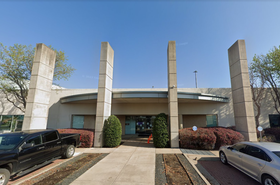
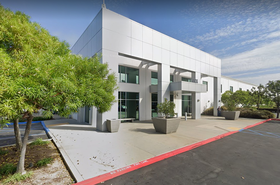
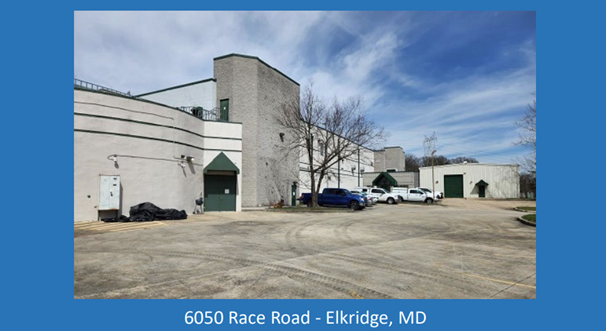
The facilities span Orlando, Florida; Fort Worth, Texas; Elkridge, Maryland; Akron, Ohio; Kansas City, Missouri; and Atlanta, Georgia. The facilities range from 38,650 sq ft up to 110,740 sq ft, offering from 5MW to 14MW. To buy, the prices range from $44.1 million up to $140m, and total more than $495m for all six.
The company has since said it has received multiple offers for the entire portfolio - and held off deploying retail space in some of the wholesale locations in case the wholesaler demands the entire space.
A steal or perfectly rational?
Telecoms providers have long been known to be ok with selling off assets - especially their data centers. But, even by telco standards, paying a company hundreds of millions of dollars to take a potentially lucrative data center portfolio seems like a missed opportunity for T-Mobile.
“I think it was perfectly rational on their part. T-Mobile is a pure-play wireless carrier,” Schaeffer argues. “They owned the Sprint Wireline network as an afterthought that came along with buying the wireless business.”
“They acquired a small, declining enterprise service business, where 93 percent of the revenues did not utilize the Sprint network, and that business was burning a million dollars a day in cash. It was declining. Cash burn was getting worse, not better, and it was a cash drain to T-Mobile.
“They had acquired a huge capital-intensive network that was constructed at a cost of $20.5 billion between 1982 and 1991 that was essentially sitting fallow – whether it was the data centers or the fiber. And since it was not strategic to their business, they were willing to divest that.”
“We got the network assets for $1 but were paid $700m to take the operating business, which was a cash drain to T-Mobile. From our perspective, we are taking on a global enterprise business that we’re in the process of stabilizing but will probably not end up ever being a great business.”
Cogent is also decommissioning some legacy Cogent-leased data center facilities that are redundant with its fee simple-owned Sprint facilities.
Schaeffer tells DCD that up to a dozen existing Cogent sites may be exited and customers migrated into the repurposed Sprint sites in the same markets.
The CEO has previously told investors there was almost 300,000 square feet of leased technical space that Cogent will be exiting, which will save the company $180m in the US and $25m internationally.
A former Cogent facility in Herndon, Virginia, was recently put up for sale, but it's unclear when the company exited the site.
Separately, a number of vacant or soon-to-be vacant former Sprint data centers occupied by T-Mobile have come onto the market over the last couple of years. Small facilities in Texas, Florida, Iowa, and Maryland have been listed for sale - many listings noted T-Mobile was exiting the sites due to already having data centers in the area.
As well as the core 48 or so sites that are being repurposed, there are still some 440-odd other technical spaces and switch sites that the company inherited from the acquisition.
“Many of them are too remote, too small, with too little power to justify repurposing as data center,” Schaeffer says. Some are needed for the network, and others, he suggests, may suit being repurposed for some other non-network application.
In March 2025, however, Cogent announced it had added a further 55 Sprint sites to its retail portfolio as Edge sites. Typically supporting 40 racks each with 350kW of power, they total 20MW across 108,800 sq ft.
When asked if Cogent might spin out a separate data center business, Schaeffer says he is open to “whatever maximizes the value.”
“It's hard to know what the future is going to bring,” he says. “Until we get tenants in these facilities, I don't think a spin-out makes sense.
“It may make sense to effectively sell it as a business if someone's going to pay us where we put it in our enterprise valuation.”



Comments