
Quantum computing is still all about potential. Despite the money being spent in hardware development and the time and effort going to developing quantum algorithms, we have yet to see the sector take off in a meaningful way.
Altman Solon predicts the quantum computing total market revenue will reach $2.5 billion in 2025, split between hardware and software services, and slightly in favor of the former. By 2030, the telecoms strategy firm predicts the market could reach $8bn, split almost evenly between the two markets. By 2035, the firm thinks quantum computing could reach $34.3bn, with around two-thirds being spent on the hardware side.
To date, IBM claims to have made a total $1bn in quantum-related revenues. The publicly-listed quantum providers such as IonQ and Rigetti generally post quarterly revenues in the single-digit millions against regular losses in the tens of millions.
While far cheaper than buying a dedicated system – for which starting prices for a low-qubit system can easily reach $1 million or more – renting time on a QPU via a cloud service can also be pretty pricey. Amazon’s Braket service charges around 30 cents per task to access a QPU from one of its partners, with hourly reservation rates ranging from $2,500 to $7,000 depending on the provider and the type of QPU being reserved. Year-long access to D-Wave’s Leap Cloud service through AWS Marketplace is priced at around $70,000. IQM’s first-come-first-served, pay-as-you-go tier for its own Resonance cloud starts at 30 cents a second.
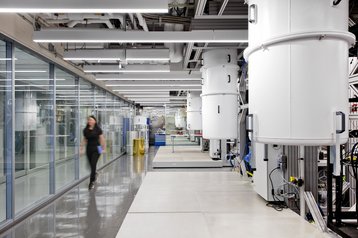
During DCD’s visit to its German data center hosting quantum systems in Ehningen outside Stuttgart, IBM said just one system had run some 100,000 jobs in the last 90s days, with the company saying the demand “is definitely there” for quantum.
"It's still in batch mode," says David Faller, IBM vice president development and managing director, IBM Germany research & development. "Partly because of the complexity of the topics that are being worked on."
He notes many large organizations still do batch computing for certain tasks, and QPUs will initially fit into that schedule, before potentially speeding things up immensely.
"Many big organizations do things like route planning for their fleet once a week. It can take a long time if you have a traveling salesman problem with high enough complexity, even on a big supercomputer. It's not real time. We see indications that quantum computing can be much faster, and end up at a point that you can also include quantum computing jobs into real-time operations."
The interest is there, though. A recent global survey of 500 business leaders across industries by SAS found that more than 60 percent of respondents indicated they are actively investing or exploring opportunities in quantum AI.
Companies across health care, life sciences, manufacturing, retail, government, and banking across China, France, Mexico, the UK, and US were cited as interested in the technology. Cost, lack of understanding, and uncertainty of practical real-world use cases were cited as barriers, as well as skills shortages and a lack of regulatory guidance.
The list of companies known to be interested in quantum is impressive. The US government, EDF, Boeing, Lockheed Martin, CERN, Credit Mutual, HSBC, Mitsubishi Chemical and Mitsubishi Estate, automakers Mercedes-Benz and Volkswagen, ExxonMobil, Bosch, Deloitte, NTT Docomo, Pattison Food Group, software firm Datev, are enterprise customers named as customers of some of the biggest quantum companies.
“Bosch, they are researching on new materials for battery technology,” says Faller. "That's not just some theoretical thing. They have a clear business objective in mind. Credit Mutual; they have clear business objectives in mind for their financial markets.”
They might have business objects, but in these pre-quantum advantage days, most of these companies’ work with quantum computers has been developing proofs of concepts and conducting small pilots to test and prove out theories that might be useful on more powerful machines in future.

Inside a quantum data center
DCD visits quantum data centers from IBM and IQM in Germany
For those punchy market predictions to come to fruition, quantum companies need to build systems that offer ‘quantum utility’ above traditional silicon hardware, and the customers will need to develop the algorithms and use cases that make use of them, learn how to integrate them into existing IT architectures, and how to host them in data centers.
The on-premise quantum customer view - LRZ
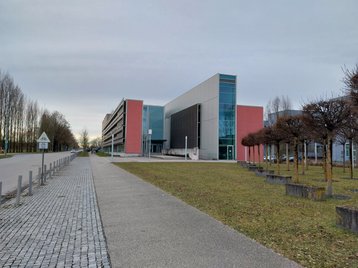
While in Germany, DCD also visited the Leibniz Supercomputing Center (LRZ) in Munich, which has an IQM machine in operation and integrated with one of its supercomputers – a rare case of a quantum system colocated in white space with unrelated traditional IT hardware.
The LRZ, part of the Bavarian Academy of Sciences and Humanities (BADW), is the IT service provider for Munich’s universities and scientific institutions around Munich and the state of Bavaria. Founded in 1962, the current data center opened in 2006; it currently offers up to 10MW across 10,000 sqm (107,640 sq ft), with an additional 5MW coming in 2026. Another building, designed to hold power and cooling infrastructure, as well as a new dedicated substation, will take the LRZ site to 40MW from 2028. DCD was shown around by Dieter A. Kranzlmüller, chairman of the LRZ.
The Q-Exa consortium, featuring IQM, Eviden, and HQS Quantum Simulation, launched the quantum computer at the LRZ in June 2024. The first hybrid quantum deployment in Germany, the system is integrated with the SuperMUC-NG supercomputer.
The 20-quibit IQM system is kept on the data hall floor close to a number of other GPU and HPC clusters hosted by LRZ for itself and partner organizations. The supercomputer the QPU is actually integrated with is, however, located on the floor above.
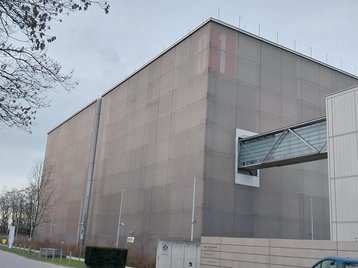
“We wanted to run this in a production environment that is computer-based. There's no experimental physicists here,” Kranzlmüller adds. “We wanted to understand what it means to have one. With the security measures, what does it mean if IQM have to get in here, how often do you need to get in here? IQM also needs to understand what to do when they have to come in for maintenance.”
Rare as it is to see a quantum computer, rarer still is it to see one hosted in the same space as ‘classical’ IT equipment from the likes of Lenovo, Atos/Eviden, Cerebras, and HPE. Above the screams of air-cooled systems, though, the rhythmic pumping of the quantum system's compressor is still audible.
“Our idea is not to use the quantum computer stand-alone, but to submit a job to the supercomputer, and whenever the supercomputer sees the quantum advantage, it passes the command on and the quantum computer does what it has to do and then returns the result,” says Prof. Kranzlmüller. “In general, we are happy.”
“One of the things we learned is that the electromagnetic shielding is better than expected, so my mobile phone does not disturb the computation,” he adds, waving his phone close to the cryostat drum.
While the IQM Q-Exa system is out in one of the main data halls, it isn’t neatly tucked into a row of classical 19-inch racks or placed in an air containment aisle with any other HPC clusters.
The quantum system is tucked into one corner of the hall, slightly away from the classical racks – close but not quite within touching distance of other systems. This is partly to accommodate all the photos and tours press and other dignitaries want to take. And unlike with IQM’s data center, the liquid nitrogen and helium distribution systems aren’t in a conjoined technical area but simply placed next to the quantum system on the main floor.
As with many quantum computers, the Q-Exa system is fixed to the slab underneath the data hall's raised floor due to its weight. Prof. Kranzlmüller also notes the height of the system was difficult to initially accommodate – in what is a reasonably tall data hall that previously had a plenum for hot air to escape into. When asked about the handling of supercooling fluids, the professor calls it an “interesting challenge.”
“My facility manager had to learn how to deal with these things, but you only know if you really do it,” he says. “I think it works fine now, but in the beginning, there was an entry barrier.”
In terms of power, Prof. Kranzlmüller said the company predicts the computing center would have to spend around €50,000 ($57,900) powering the Q-Exa system over its five-year mission – described as “peanuts” in the total scheme of things.
“€50,000 is my electricity consumption for one and a half days,” he notes.
The LRZ also hosts another IQM system in a lab attached to the main office building next door to the data center – along with an ion trap-based System from AQT. These systems are integrated with a single HPC test node to test quantum algorithms that the hybrid production machines will use. AQT’s system eschews supercooling in favor of lasers to achieve the required quantum effects.
Another system, a 1,000-neutral-atom computer from PlanQC, is also coming. Spun out from the Max Planck Institute, it relies on technologies and techniques developed for atomic clocks and also doesn’t require the same kind of supercooling infrastructure as IQM or IBM’s hardware.
The supercomputing center is set to host another 50-qubit IQM system – located adjacent to its existing one out in the main data hall – on behalf of the EuroHPC JU, followed by another 150-qubit system in future. If one quantum computer out amongst its classical brethren is rare, having two or even three such systems out on a shared data hall is near unheard-of.
When asked on the future, Prof. Kranzlmüller notes the LRZ is vendor-neutral and is taking the same approach with its quantum systems.
The quantum cloud customer view – E.ON
One early enterprise use of quantum computers is energy company E.ON. The European utility is a customer of both IBM’s quantum cloud as well as D-Wave.
Giorgio Cortiana, head of data & AI – energy intelligence at E.ON Digital Technology, the company’s digital unit, tells DCD the company has several proofs of concept in development around quantum. The main targets, he says, are uses cases where quantum might speed up results on large, complicated calculations or provide more accurate data predictions.
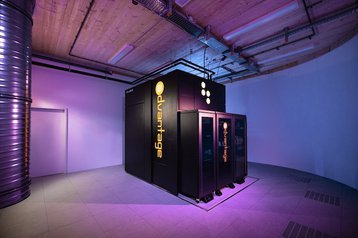
“We see quantum as an additional complementary tool; we will delegate to quantum only the hard problems that we know classical computers will not be able to solve,” he explains. “The fact that we are investigating that speaks for the fact that we see the potential of these technologies. ”
In development for around five years, he says the use case the company started with around quantum was to help orchestrate the charging and discharging schedules of electric vehicles when they can exchange bi-directionally electricity with the grids.
“It was the start or the reason why we started looking at quantum computing in the first place,” he tells us. This is one use case where, if you scale it up to millions of vehicles, classical resources might fall short.”
While he said it isn’t currently a problem that can’t be calculated on classical silicon hardware, Cortiana noted this was “one of the use cases which was identified to be a potential risk going forward” if it continues to scale in future.
The company is also looking at how we will integrate quantum resources into the firm’s standard enterprise architecture.
“It's still at the stage where it's not yet live or in any productive environments, due to the limited scale of the project and the benefits that this would create for the businesses,” says Cortiana.
Other use cases included using quantum simulations when evaluating the risks of weather changes to the group’s energy portfolio.
“We need to fulfil the demand of the customers at any point in time, and the demand can have some fluctuations depending on weather outcomes,” says Cortiana, “which have an impact on whether we need to either procure additional gas from the energy markets or sell it back to them.”
“We take into account potential weather outcomes at different points in our network, folded in with different potential outcomes of energy prices. You can easily end up with millions of different scenarios that you have to take into account in order to evaluate what are the risks that you are exposed to in your energy portfolios.”
In partnership with IBM, the company has develop a new quantum algorithm it claims could be more than 200 times faster than currently possible on classical hardware. The caveat, however, is the quantum hardware to run the new algorithm at production scale isn’t currently available.
Like with the electric car scenario, the company is currently using similar calculations on traditional silicon hardware, but as power generation on the grid becomes more decentralized – with more renewable assets distributed over wider areas – the number of variables increases. This greater number of assets, combined with more granular weather predictions, could lead to future limitations on classical hardware.
“It could potentially become a bottleneck in a few years from now,” says Cortiana. It's not yet there, but we are preparing for a future in the case that classical computing resources with fall short.”
“If you move toward more real-time risk assessment, you can take measures and mitigate those risks in a much prompt way,” he adds. “It's a proven theoretical advantage that we could generate with our algorithms. For practical value generation, however, it is still too early, but will come in the next few years.”
Though E.ON has on-premise compute hardware where required by law, the company has a cloud-first strategy. The company is taking a similar approach to its quantum hardware – using cloud-based quantum hardware. The company uses systems both in the US and Europe – with the precise location governed by use case and data privacy concerns.
“Quantum computers are not yet mature, they’re developing and evolving every year,” Cortiana explains. “It's much more convenient for us to go in the cloud and have the possibility to access the latest, greatest resources, rather than having to stick with our on-prem machines that will be outdated soon.”
He notes that before E.On could make any decision to move to on-premise quantum, there would need to be “clear advantages” compared to the current classical ones.
When asked if E.ON will consolidate around one particular quantum provider in the future or continue to use a multi-vendor approach, Cortiana says it’s “hard to predict” how the hardware market will shake out.
“We are open, and we will make sure that we use the best machines that serves our use cases,” he says. “I cannot exclude at this stage that we will have to have different providers depending on the use case that we need to tackle.”
From pet to cattle: quantum and the cloud
Cloud – either via public provider or direct from the quantum companies – is currently by far the most common and popular way to access quantum systems while the tech is still in development and companies work through different proofs of concepts.
IBM launched its first quantum offering in May 2016, a 5-qubit cloud-based quantum computing service that was known at the time as IBM Quantum Experience. The company and industry have come a long way since.
To date, IBM says it has deployed some 80 quantum systems, more than any operator, based on publicly available information. Across its two current quantum data centers in Germany and Poughkeepsie, New York, IBM currently has around a dozen quantum systems in operation. The latest, the 156-qubit Aachen, equipped with Heron r2 processor, launched in April 2025 and was the third system in Ehningen.
Confusingly, IBM’s systems are all currently given unique pet names to reflect important locations in the company’s history. Aachen (named after the German city) joined Strasbourg and Brussels in Ehningen – a system called Ehningen was deployed in 2021.
IBM's Faller admits to DCD, however, we might be reaching the point where the systems need to be ‘branded’ with numbers like cattle; more akin to how it treats servers in the cloud. Quantum machines might never reach the volume of traditional server pizza boxes, but the days of each system being unique and special could be coming to an end. Finnish quantum computing firm IQM says it can up to 20 quantum computers per year – enough to quickly lose track of names.
Currently, IBM is the only ‘classical’ cloud platform providing access to its own quantum systems on its cloud. The IBM quantum cloud is part of the company’s wider IBM cloud, with the quantum systems hosted in a data center in Ehningen linked to IBM’s Frankfurt region, some 120 miles away.
While all working on their own proprietary machines, the likes of Amazon, Microsoft, and Google currently offer access to hardware from providers, including IQM, IonQ, D-Wave, and others. Rather than hosting hardware from these providers in their own data centers, the hyperscalers use APIs to book times on systems hosted by the quantum companies themselves.
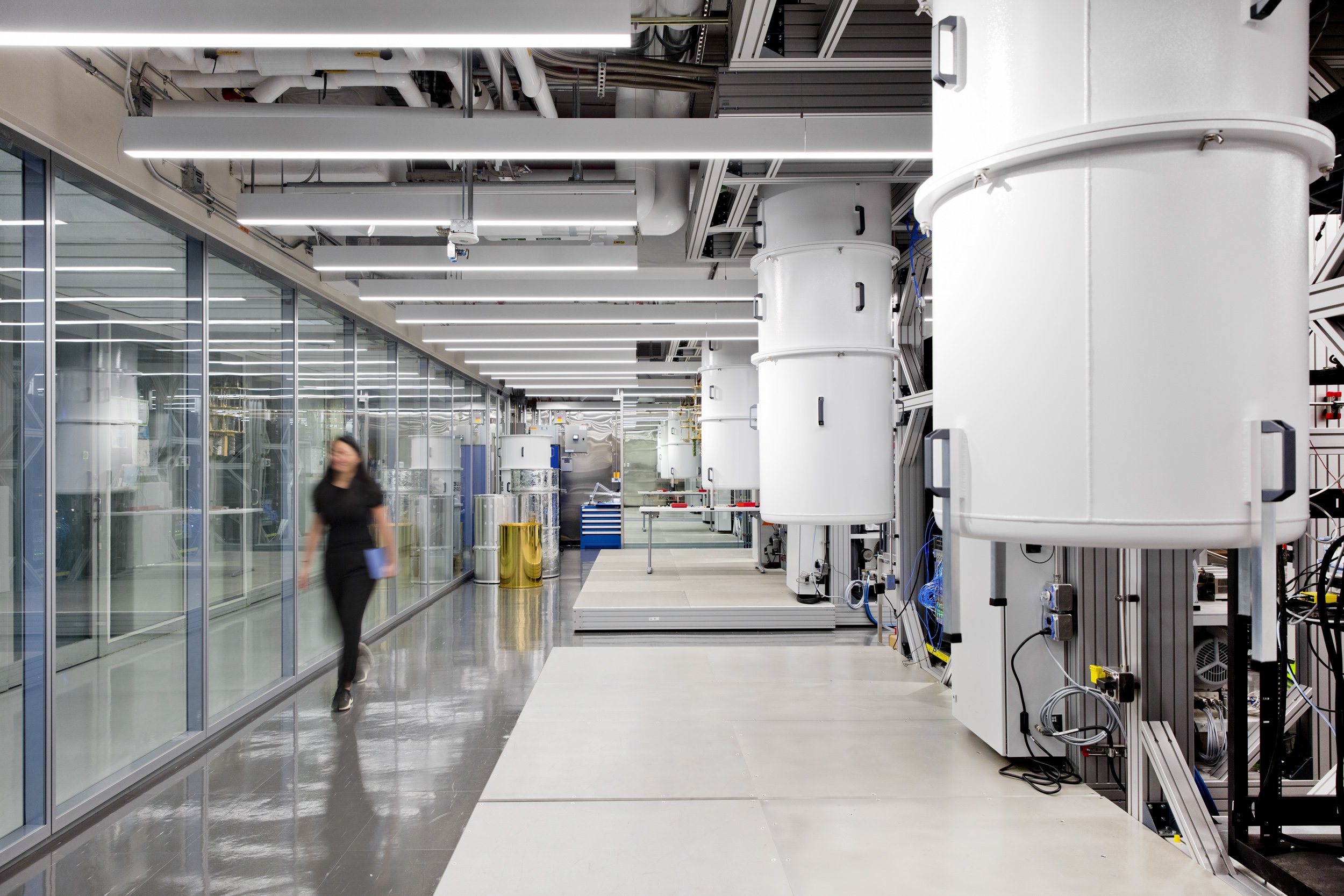

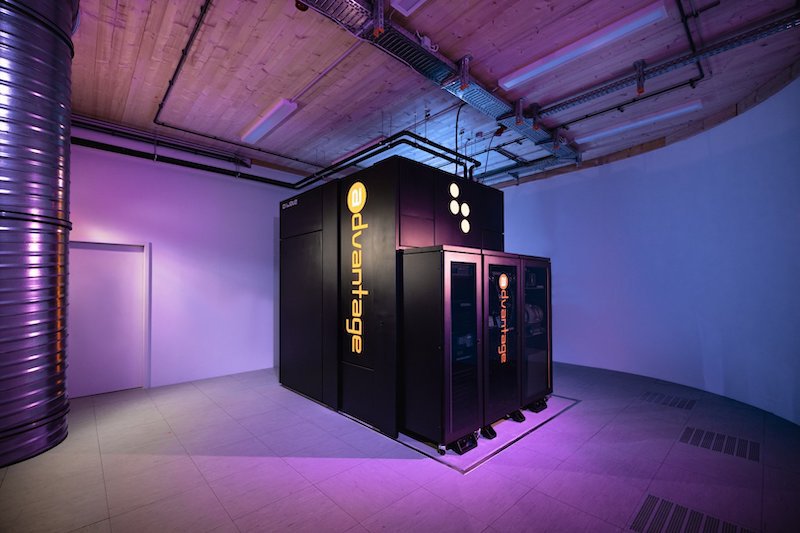
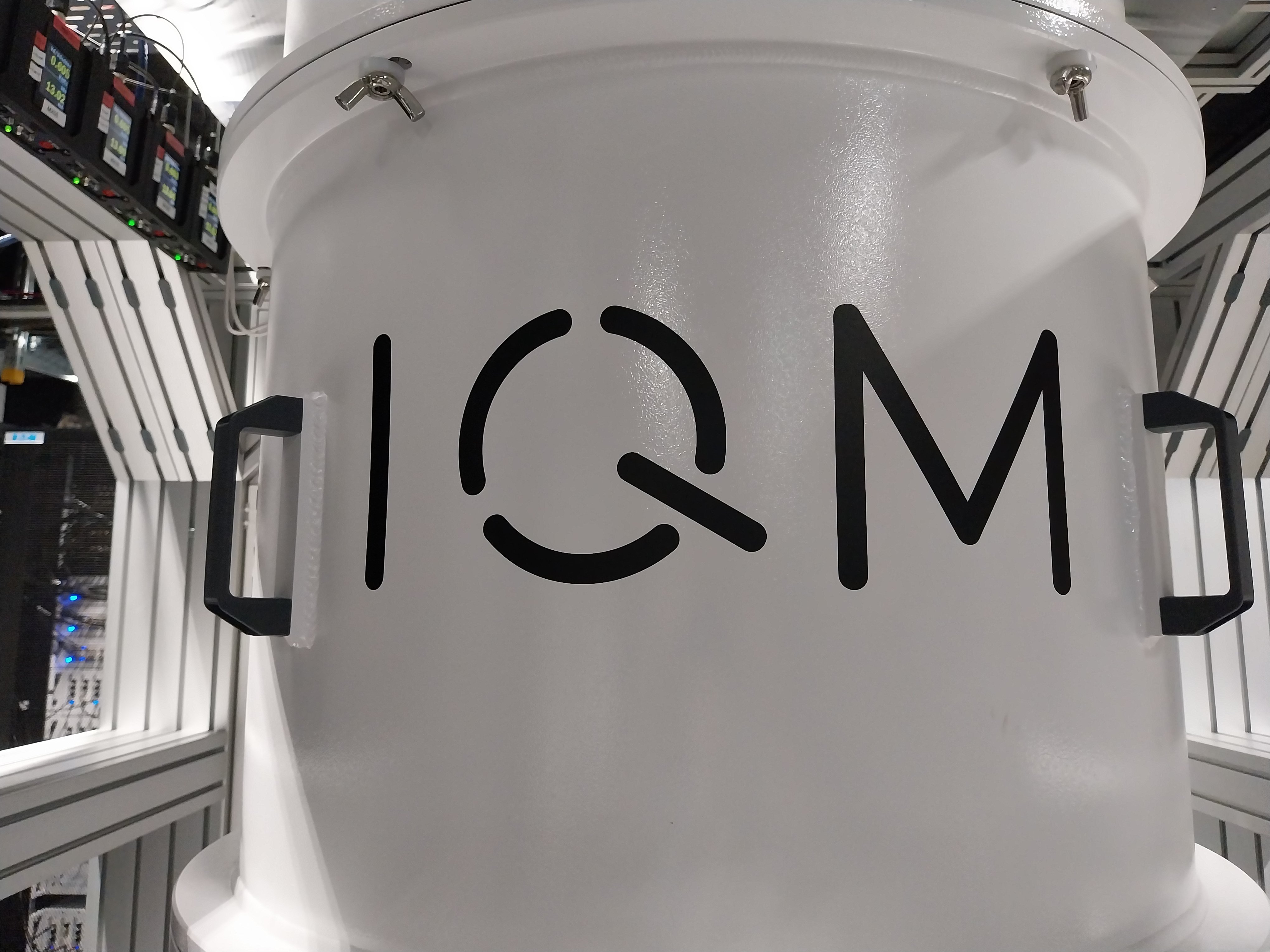

IQM, for example, offers time on its 20-qubit Garnet system through Amazon. IQM CEO Jan Goetz tells DCD that that company is aiming for a dual-pronged approach for future build-out. As well as hoping to eventually place its systems within the data centers of hyperscalers, the company aims to expand its own footprint and operationalize to reach the industry-standard five-nines level of uptime.
“We have some systems which are running now for more than 100 days without human interaction,” Goetz says. “It's fully automated, and that's really the goal on our journey; to bring the system to a level that it fulfils all the requirements so it can be then actually located in a data center from AWS, Azure, Google or whatever cloud you prefer.”
IQM launched Resonance, a quantum cloud service that provides access to its quantum machines and systems, in March 2024. The service is currently served by systems out of its site in Munich, Germany, and another Espoo, Finland. When asked how the company aims to compete with companies offering a more complete package of quantum and classical silicon cloud products, IQM’s Goetz suggests plans are afoot to build-out the firm’s infrastructure to host more AI hardware.
“We have our own cloud, and we will start colocating GPU clusters and other compute infrastructure next to our systems, and offer this in a hybrid fashion,” he says, without providing more details on how that might impact its approach to data centers.
The large US hyperscalers are currently happy to offer access to multiple quantum vendors on their own clouds – things might change once their own proprietary QPUs come online – letting customers decide which type of quantum topology best suits their needs in the same way they do with CPUs and GPUs.
Despite offering access to several GPU providers, IBM, however is yet to offer access to anything other than its own in-house QPUs on its own cloud, and is yet to make its own QPUs available via any other platforms. IBM’s Faller suggests that could happen in future, saying “why not?”; the company’s Qiskit software stack for quantum computing is open and able to work on QPUs from other providers, proof, he says of the company’s flexibility.
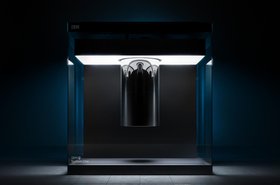
Why would you want an on-premise quantum computer?
Cleveland Clinic’s chief research information officer talks to DCD about partnering with IBM for an on-premise quantum machine
For now, quantum computers can still be quite temperamental; despite uptime reaching hundreds of days or longer for some systems, downtime can still be necessary to recalibrate systems. To counter this and try and keep their respective quantum clouds as available as possible, many providers are turning to a strength in numbers approach and maximizing the number of available QPUs.
“We are building in redundancy in our system, so that if something breaks or needs to be recalibrated at system A, then we are sure that there's a system B in the pipeline which then jumps in,” says Goetz. “Right now it's really two individual physical systems, but there are also efforts so that there are two chips mounted in one system and then it just jumps from one to the other.”
To truly reach quantum advantage in a meaningful way, there's more work to do. Hardware developers need to increase the capabilities of the systems; enterprises need to figure out how best to use this new potential compute capacity, and the cloud providers need to operationalize these systems to provide the kinds of service customers have come to expect from traditional classical silicon-based IT services. For now, though, it's all just potential.
Further quantum reading
-
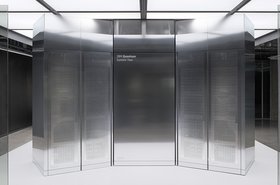
Qubits come of age in the data center
What happens when you put a quantum computer alongside conventional systems?
-
Inside a quantum data center
DCD visits quantum data centers from IBM and IQM in Germany
-
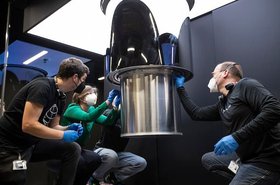
Longer coherence: How the quantum computing industry is maturing
Academics with screwdrivers are making way for operations engineers and SLAs
-
Why do we need a quantum Internet?
Quantum computers are still in development. But the quantum Internet may be closer than you think
-
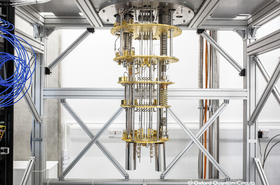
When data centers meet quantum computers
What happens when quantum computers arrive in data centers?
-
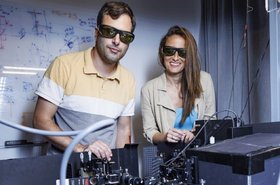
Quantum computers face a laser challenge
Could laser-based computing deliver the best of both classical and quantum computing?
Comments