

At Nvidia’s 2025 GTC conference, CEO Jensen Huang made a joke that probably had many executives squirming.
“When Blackwell starts shipping in volume, you couldn’t give Hoppers away,” the CEO of the $4 trillion chipmaker told the audience, referring to the company’s current and previous generations of GPU architecture. For the GTC delegates, many of whom were Nvidia customers with fleets of Hoppers at their disposal, Huang’s tongue-in-cheek remarks may have struck a nerve.
While Nvidia’s CEO likely only intended to reaffirm his confidence in the firm’s latest product, the reality is that following the AI boom, hyperscalers and neoclouds alike have invested at scale in Nvidia GPUs and now face the economic reality that, with more rapid refresh cycles - along with wider availability of the GPUs - the value of previous generations are depreciating fast.
In the past couple of years, neoclouds have entered the game, going from small resellers of access to GPUs, to large players holding the key to thousands of chips.
What they have in common is that, in order to get started, a large (relative to scale) capex investment was needed - often with debt tied to an asset with a limited life span.
Speaking to Ozan Kaya, CEO of Voltage Park - a neocloud that kicked off operations with 24,000 Nvidia H100s - DCD had some fun plotting its own neocloud empire.
“If you and I wanted to start a company and buy, say, 100 GPUs, we would either have to get friends and family to invest, or we would need to use private credit, which has a rate usually between 13 and 17 percent. It's very hard to make sure that you have a long-term contract that supports those cash flows,” Kaya explains, somewhat dampening DCD’s hopes for taking the AI world by storm.
“If we bought those 100 GPUs on spec and didn’t know what we were getting in revenue, we would be subject to the volatility of pricing.”
The economics of this problem were emphasized by Ditlev Bredahl, CEO of hosted.AI, a company offering a GPU orchestration platform to help GPUaaS providers who previously spoke to DCD about the issue.
Bredahl says that, for meaningful entry into the market, those looking to get into the GPU provider game are looking at a minimum of half a million dollars of investment, comparing it to a landlord simultaneously paying off their mortgage while trying to rent out a property in an area where rental values are dropping dramatically.
“A year ago or so, an H100 was maybe $5-6 per hour. Now, it's around 75 cents, [Google suggests this is likely actually more than $1] maybe less. Hardware typically depreciates in three to five years, but that's happening in a year now,” Bredahl explains. “Let’s say your leasing cost is fixed over three years or even five years. But if your revenue is eroded by 80 percent in just 12 months, then you have a real problem.”
We can even see these price cuts with the hyperscalers. In June, Amazon Web Services (AWS) announced that it was cutting costs for its instances with Nvidia H100, H200, and A100 GPUs - in some cases by as much as 45 percent.
In explaining these cuts, AWS wrote in a blog post: "Regular price reductions on AWS services have been a standard way for AWS to pass on the economic efficiencies gained from our scale back to our customers,” adding that high demand for GPU capacity has historically outpaced industry-wide supply, making GPUs more expensive to access.
Beyond that, and not addressed in the blog post, is the impact of new generations of tech coming out. The rapid turnaround of AI hardware was noted by AWS CFO Brian Olsavsky during the company’s Q4 2024 earnings call.
Olsalvsky said that the company "observed an increased pace of technology development, particularly in the area of artificial intelligence and machine learning."
"As a result, we're decreasing the useful life for a subset of our servers and networking equipment from six years to five years, beginning in January 2025," Olsavsky said, adding that this will cut operating income this year by about $700 million. In addition, Amazon had “early-retired” some servers and networking equipment which cost about $920 million and is expected to decrease operating income in 2025 by about $600 million.
Even five years is quite a long useful life span to rely on, however, says Scaleway CEO Damien Lucas.
Lucas says that the neocloud is working on the assumption of a three-year depreciation rate.
He notes that, a year or so ago, a customer offered him a couple of thousand of Nvidia’s older V100 GPUs for free to run in the cloud. The company did the maths, and found that, after considering the power of the compute, energy costs, space constraints, it was cheaper to buy H100s instead.
The V100s, he says, were around two generations behind the H100s at the time. “At the moment, we are at the very beginning of the Blackwell generation, so the H100 is still worth quite a lot,” Lucas says. “However, the A100 is getting on the low side, and by the beginning of 2026, I predict it won’t be worth anything.”
Based on a two-generation life span, and estimating around 18 months per new generation, Lucas has come to the conclusion that Scaleway can get around three years of life out of its hardware.
While AWS cites big numbers associated with the one-year reduction in server lifespan, this pales in comparison to the hyperscaler’s actual revenue, and AWS cutting costs of its instances is unlikely to have any real impact on the company’s bottom line. The case is vastly different for neoclouds.
Money, money, money
Scaleway is lucky in that it is part of Iliad - the fifth largest European telecom operator, meaning that some of its operations are financed by the group through equity, and some through debt. This is not the universal experience.
Kaya explains that, to get started in a capital-intensive industry, most companies need to raise funds via private credit, which comes with higher interest rates.
“Then there is OEM financing, from vendors like HPE, Dell, Lenovo, or Pegatron,” he says. “Some of them have internal financing capabilities, some partner with banks, and they are likely to give you a good rate because they want to sell the GPUs as well. That alignment of interest internally means you could get rates as low as seven percent and then up to 13 percent, which is more capital efficient.”
He notes that even better is going public because then “you have relationships with investment banks, and you can start getting cheaper financing - more like five to eight percent.”
He describes the latter as the “second holy grail” of financing, followed by the ultimate goal of securitization financing, which offers the best rates.

The AI Week Supplement
Opportunities and challenges in the AI age
Securitization funding is where illiquid assets are pooled together, turned into marketable securities, and then sold to investors. While Kaya believes this is the best long-term option for GPU financing, the volatility of component values makes this challenging.
“We’re still very early in that phase, because it requires long-term contracts and it requires known residual values of the GPU servers,” he says. “We know that for the A100, but that was three years before the H100. We are going to need data on how the newer hardware works over time.”
Voltage Park itself is in a fairly unique position on this front, with the company having purchased its initial 24,000 GPUs with equity, meaning it doesn’t have any debt to worry about. “We have our colocation payments, but that is our primary expense besides employees,” Kaya says.
We cannot discuss neoclouds and “going public” without turning to CoreWeave, which had its Initial Public Offering in March of this year, with shares priced at $40, giving the company the potential to raise up to $1.5 billion.
This was less than the $4 billion some had predicted, but still a huge IPO, and as Kaya notes: “Ultimately, going public unlocks a lot more bank capital, and they can provide good financing because their deposit costs are low.”
During CoreWeave’s first earnings call following the IPO, things looked pretty good for the company. Revenue was up 420 percent year-on-year, but the call also revealed the extent of the company's debt.
As of May 2025, CoreWeave had raised more than $21 billion, and in the first quarter of 2025 the company spent close to $264 million in interest expenses alone. Just one week after the earnings call, CoreWeave raised another $2 billion in unsecured bonds with an interest rate of 9.25 percent to refinance some existing debt.
DCD cornered Mike Mattacola, CoreWeave’s general manager, international, at a recent conference and asked what the company’s strategy is to deal with the debt. Mattacola mostly evaded the subject, saying: “Just keep watching our progress. It’ll all come to light how it’s going to work soon.”
Since that conversation, the company has acquired one of its data center providers, Core Scientific, for $9 billion.
Despite sitting on billions it eventually needs to pay off, the reality is that CoreWeave’s success, and continued stock value, is because the company has several years of revenue already booked in and guaranteed.
DCD has asked CoreWeave for further comment on its business strategy moving forward, including how the IPO has benefitted the company, what it expects to gain from acquiring Core Scientific, and how it will handle its hefty pile of debt.
Inference vs training
While $21 billion is definitely at the higher end of the scale, what CoreWeave will have in common with other neoclouds is that a large chunk of that capital raise will have been spent on AI hardware.
CoreWeave’s Mattacola told DCD that the approach to hardware depreciation is “a really simple model.”
“You do training on the latest tech, and you run inference on the previous iteration, that will work perfectly well,” he claims. When asked if this plan has endless longevity, he conceded: “I can’t say indefinitely, because there is so much innovation going on, but that’s typically what we’re doing.”
This view was shared by Daniel Kearney, CTO of Firmus - another player in the neocloud space.
Kearney acknowledged that, with the launch of new hardware from Nvidia, people to like “the shiny new toy” and that he sees the role for the latest and greatest hardware going to “developing LLMs and the leading class, tip of the spear, work” but that a lot of enterprises are still on a “digital journey.”
“Hopper has a lot of value in inference,” he says. “Even some of the largest companies in the world are still using some previous generation tech, such as A100s, to do inference. There is still a long tail of compute that will add a lot of value in AI, and that will happen into the future.
“Of course, the contracting and the financial models need to understand the lifetime of a product. I think inference is going to be a big part of that, and there are a huge amount of workloads that are being repurposed for this accelerated compute to run on Hopper systems. I think we are going to see that shift over the next few years where things being developed will be less CPU-based and more GPU-based, or at least a mix of that,” he argues.
Similarly, Voltage Park’s Kaya says that while he does not think anyone has enough data to know what a six-to-12-month replenishment cycle will really look like. “New hardware is primarily important for people with large training runs, big data files, and big batch sizes,” he says. “We have a large customer base that is still using A100s, and going to an H100 project is really attractive from a speed and cost perspective.”
However, while some remain optimistic for this business model, Scaleway’s Lucas is a little more sceptical. He says customers looking to run models such as Meta’s popular open-source Llama LLM don’t care about which GPU is being deployed as long as it’s up to the jobs.
“How long can we do that? I don’t know,” says Lucas. “The main limitation I see is the amount of memory associated with the GPU. A100s can’t be used for large models because they don’t have enough memory. For the inference of very large models, we will still need the latest GPUs. The big question is whether the industry will go for specialized, smaller models, or very large models. If someone has the answer to that, they will probably be able to build a great cloud.”
Additionally, Lucas notes that chips from vendors besides Nvidia are becoming more widely available and at a lower price, putting a question mark over the longevity of A100s and H100s. “We will definitely be able to use older generation Nvidia tech for inference, but are we going to be able to reuse all of them?,” he asks.
Contractual obligations
The current generation of Nvidia chips, Blackwell and Grace Blackwell, come with a much higher pricetag.
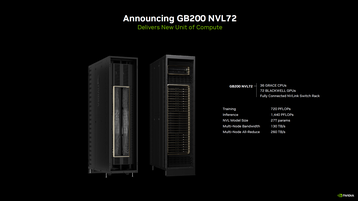
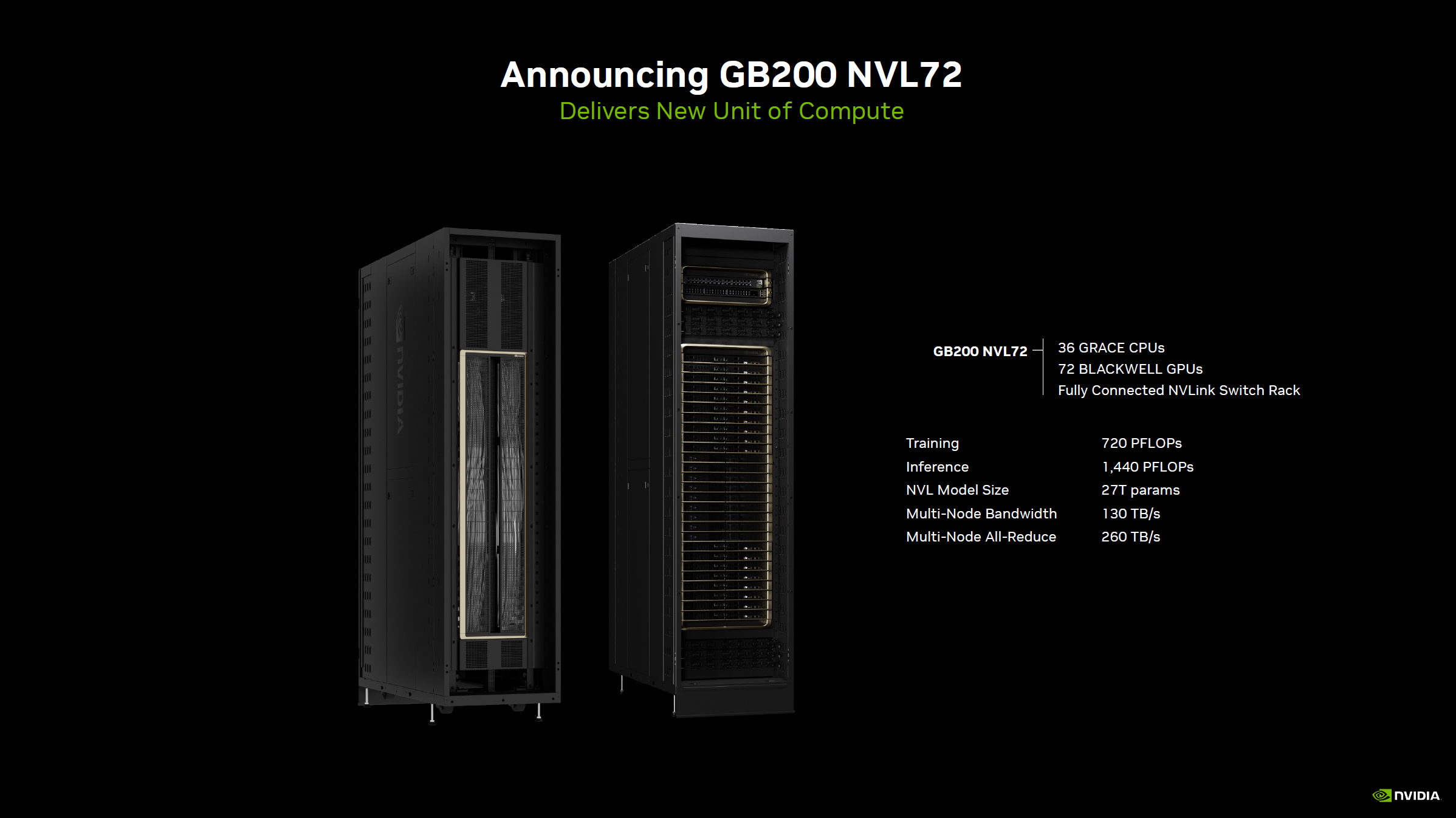
The GB200 Superchip has an estimated cost of between $60,000 and $70,000, while a GB200 NVL72 rack is thought to cost $3 million. With the GB300 now shipping as well, this can only be assumed to be more expensive.
Kaya thinks Blackwell will require longer contract times of up to three years to ensure neoclouds can get a return on their investment.
“If rates end up depreciating very quickly, every neocloud will ultimately end up needing long-term contracts, because they won’t be able to raise millions or hundreds of millions of dollars if they’re taking a depreciation risk after one year,” he says. “They are going to require a three-year contract to make sure they break even on the investment.
“Then, after that, the rest of the cash flow - whether it’s on demand or if they choose to sell it, they know their profit because mostly these things depreciate in a straight line over five or six years.”
In the case of CoreWeave, the company’s ability to secure long-term and valuable contracts has already been demonstrated. It has landed a contract worth close to $16 billion with OpenAI, while Microsoft has committed to spending at least $10bn with the company by the end of the decade.
The importance of long-term contracts was reiterated by Scaleway’s Lucas, who noted that it keeps around 70 percent of its GPUs dedicated to such contracts, only offering up the other 30 percent for short-term deals.
This means the company is “safe on 70 percent of our GPUs, [but] on 30 percent, we have to reduce the price every few months,” Lucas says.
GPU marketplaces and diversifying offerings
In May of this year, Nvidia launched an AI marketplace dubbed “Nvidia DGX Cloud Lepton,” bringing together the GPUs from different providers.
While by no means a first - there are plenty of such chip brokerages available - its launch did give the timely opportunity to ask around if these types of platforms can help neoclouds maximize their fleet of GPUs, as much as possible.
Scaleway is part of Lepton, which Lucas says gives it the opportunity to “maximize the revenue” from its GPUs. But it comes with limitations as, with every provider on that platform competing for business, prices inevitably tumble. “Selling an H100 at 50 cents an hour is very easy, selling it at $2 an hour is a bit more challenging,” Lucas says.
As a result, Scaleway prefers to sell GPUs on its own platform, but for those that are being unused, something is better than nothing.
In reality, what seems to be a more solid approach is bringing in other capabilities as well as offering access to chips. But this can be tricky as a lot of neoclouds don’t have their origins in the data center, cloud or even IT area.
Vast Data’s co-founder Jeff Denworth noted this, telling DCD: “These new clouds are emerging from unlikely places - bitcoin miners, energy companies and even LLM builders themselves.
“Every cloud starts with good intentions, ambition and lots of capital, but the challenges of building a robust confidential computing environment require these new players to quickly become experts in scale, multi-tenant service delivery, security, AI pipelines... and once that's all done, then there's a massive feature gap that needs to be closed as Neoclouds realize that long term value is defined by helping customers building our full-stack solutions for training and inference.”
“A few Neoclouds have native software development capabilities, but most don't - which makes smart partnering a critical competency.”
Vast Data, at this point, is working with a large portion of the neoclouds - from what it describes as the “giants” - Lambda, Crusoe, and Nebius, and the next level down - Scaleway, Northern Data, and Nscale.
Dan Chester, EMEA lead on CSP business at Vast Data, explains that they are helping the neoclouds embrace both storage and database capabilities, which brings both higher margins and makes the providers “stickier.”
Chester adds that the company is seeing strong adoption from neoclouds due to its “native multi-tenancy and the scale and enterprise features needed to support some of the most critical model development projects in the world.”
Regardless of approach, economic challenges lie ahead for many neoclouds. After all, the current AI market is likely to normalize at some point, even if the more gloomy predictions of a bursting bubble do not come to pass.
Optimism for the continued economics of the Neocloud is varied. Lucas says: “I believe there will be a lot of companies that go bankrupt when it will be time to write off those H100s in the books.”
Unfortunately, what seems to be shared is the understanding that, currently, very little is predictable. We simply don’t have the data to know what will come in the future.





Comments