
The collaboration combines IT and physical infrastructure expertise to simplify and optimize data center infrastructure for AI workloads, helping accelerate AI adoption across industries.
Energy efficiency, availability, and deployment speed are foundational principles in these designs. Reference designs provide a blueprint for reliable, validated AI deployments, helping AI factory data center owners shorten planning cycles and reduce operational downtime risks.
The designs become especially important when AI infrastructure requires power and cooling solutions that differ from those traditionally deployed by owners and operators.
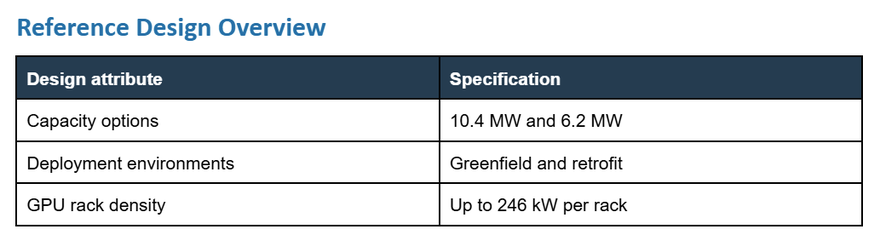
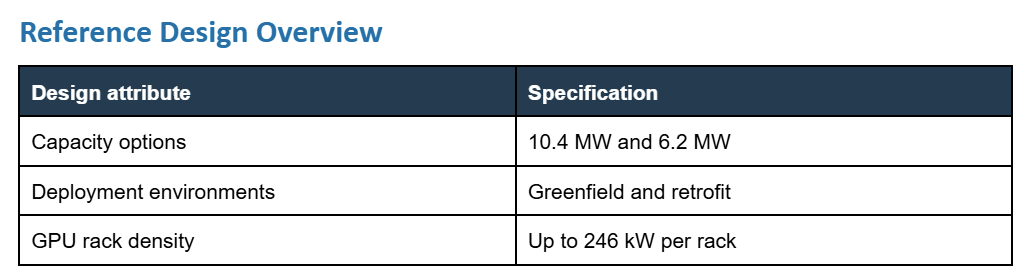
The AMD Helios rackscale solution is a flagship, fully integrated rack-scale AI solution designed for massive data center and frontier AI workloads. Its value lies in its open, high-density architecture, massive memory capacity, and competitive positioning. Through this collaboration, Schneider Electric and AMD have produced an industry-first, comprehensive, validated data center reference design for high-density AMD Helios clusters, with rack densities of up to 246 kW.
It also supports data center teams addressing extreme densities and organizations that have not previously implemented liquid cooling.
Explore the published data center referencedesign.
An Open Architecture for AI at Scale
Unlike proprietary systems, the AMD Helios rackscale solution is based on Open Compute Project (OCP) standards, allowing enterprises and hyperscalers to integrate it without being locked into a single vendor ecosystem. AMD has taken a major step in vertical integration, enabling AI companies to use its processing power and memory capabilities to develop powerful, fast, and accurate frontier AI models.
The AMD Helios rackscale solution is a primary focus for multi-gigawatt AI factory deployments globally, with major rollouts and collaborations across the United States, Europe, and the Asia-Pacific region, including Supermicro, Microsoft, and TCS.
However, deploying at 246 kW per rack creates significant power and cooling challenges for many data center designers. Teams must plan not only for capacity at the facility level, but also for electrical connections and mechanical piping at very high densities within the IT space.
Learn more about Schneider Electric solutions for AI factories.
The Value of Data Center Reference Designs
Schneider Electric reference designs for AI factories are pre-engineered blueprints that provide a validated starting point instead of requiring blank-sheet engineering. By standardizing physical and software architectures, these designs can accelerate deployment timelines, optimize high-density power and cooling, and reduce implementation risks for massive-scale AI clusters.
The new reference design is the first developed to support high-density AI workloads on the AMD Helios™ rackscale solution, powered by AMD Instinct™ MI455X GPUs. It provides tightly integrated and engineered designs for both greenfield AI factories and high-density retrofit environments.
Explore Schneider Electric AI factoryreference designs.
Greenfield Design
- Four 3.75 MW power trains in a 3+1 configuration
- Three 1.25 MW Galaxy VXL UPS units per power train
- 40 racks across two liquid-cooled AI IT pods
- 22 air-cooled racks, 8 in a standalone network pod, and 7 in each of the two AI IT pods
- 2 MW power trains for fan walls, chillers, and fluid coolers, with 2N redundancy, including 500 kW Galaxy VXL UPS units supporting the coolant distribution units (CDUs) and the facility water system (FWS) pumps.
Retrofit Design
- Four 2.5 MW power trains in a 3+1 configuration
- Two 1.25 MW Galaxy VXL UPS units per power train
- Ten 246 kW IT racks and seven 45 kW network racks in one liquid-cooled AI IT pod
- 176 20 kW racks with rear-door heat exchangers or hot aisle containment (rear-door heat exchangers removed).
- 2.5 MW power trains for fan walls, chillers, and fluid coolers, with 2N redundancy, including 200 kW Galaxy VXL UPS units supporting the CDUs and FWS pumps.
- Rear-door heat exchangers reduce the number of fan walls required, optimizing the overall cooling infrastructure.
Benefits of the AI Reference Designs
- Simplify implementation feasibility analysis: Extreme rack densities can make many traditional designs impractical. Retrofit projects also introduce constraints that influence design choices. Using these designs as a starting point can simplify the feasibility-study process.
- Reduce planning cycle time: The designs include an equipment selection list covering electrical and mechanical systems available today, along with documented physical layouts. This information can reduce the time required for project planning.
- Apply proven guidance to key design considerations and obstacles: The designs provide best practices for addressing high-density complexity. They cover electrical considerations such as short-circuit current, breaker coordination and selectivity, as well as cooling considerations including set points, airflow, liquid cooling, and CDUs.
- Increase confidence in reliable AI cluster deployment: New technologies can introduce additional implementation risk. These designs have been iterated using state-of-the-art electrical and mechanical design software to validate reliable operation.
- Leverage expertise in efficient design: In addition to supporting reliable operation of high-power, high-density AI loads, the designs follow best practices for energy efficiency and align with industry sustainability goals.
Accelerating AI Infrastructure Deployment
Collaborative data center referencedesigns from Schneider Electric and AMD provide value for data center operators planning to add AMDHelios™ AI clusters to an existing facility or build a new one.
By producing the first publicly available, comprehensive blueprints for these AI data centers, the collaboration goes beyond infrastructure optimization. It helps organizations deploy AI infrastructure with greater efficiency and ease.
Comments