
As data center operators face increasing pressure to reduce environmental impact while maintaining resilience and uptime, Grundfos is highlighting the role of advanced water treatment solutions as a key enabler of efficient, sustainable cooling system operation.
In cooling and heat rejection systems, water quality has a direct and measurable impact on performance. Without effective treatment, the formation of scale, corrosion, and biofilm inside pipes and heat exchangers increases thermal resistance, reducing heat transfer efficiency and driving higher energy and water consumption.
Over time, these effects degrade power usage effectiveness (PUE), increase water usage effectiveness (WUE), and shorten the lifespan of critical cooling assets.
Grundfos water treatment solutions are designed to address these challenges by combining precise chemical control, system diagnostics, and data‑driven optimization. By stabilising water chemistry and preventing the accumulation of insulating deposits, these solutions help cooling systems operate at their intended design efficiency throughout their lifecycle.
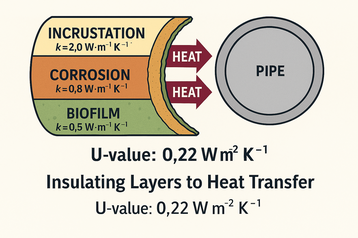

Even minimal fouling can have a significant impact. Studies referenced by Grundfos show that mineral scale layers of less than half a millimeter can increase energy consumption by more than ten percent, while biofilm – which has far lower thermal conductivity than metal – can impose an even greater thermal penalty at microscopic thicknesses.
Grundfos technologies are engineered to mitigate these inefficiencies by controlling scaling indices, limiting nutrient availability for biofilm growth, and reducing corrosion risk across the entire cooling circuit.
Importantly, Grundfos solutions go beyond basic disinfection. While oxidizing biocides can limit microbial activity, they do not prevent mineral precipitation or long‑term corrosion and may contribute to material degradation. Grundfos adopts a holistic water treatment approach that integrates scaling, corrosion, and biological control into a single operating strategy, preserving heat transfer performance while protecting system components.
From a sustainability perspective, Grundfos water treatment technologies also enable operators to reduce water consumption. By supporting higher cycles of concentration and enabling the safe use of alternative water sources – such as rainwater, surface water, or treated wastewater – operators can significantly lower make‑up water demand and blowdown volumes. This capability is particularly relevant for data centers operating in water‑stressed regions, where WUE optimization has become a critical design and operational priority.
At the heart of the Grundfos approach is continuous monitoring and data‑based decision‑making. Using established indicators such as the Langelier Saturation Index (LSI), Grundfos solutions provide predictive insight into a system’s scaling or corrosion tendency, allowing operators to proactively adjust operating conditions rather than respond to failures. This level of control supports stable PUE performance, improved WUE outcomes, and reduced unplanned downtime.
By integrating advanced water treatment into the cooling system strategy, Grundfos enables data center operators to transform water from a limiting factor into a controlled performance variable. The result is greater operational predictability, lower total cost of ownership, and improved alignment with sustainability targets – without compromising cooling reliability or system availability.
Comments