
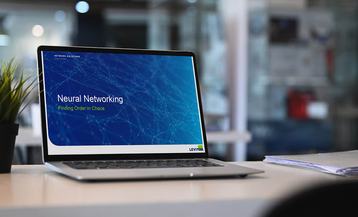
On March 25th, 2026, Leviton Network Solutions hosted ‘Neural networking: Finding order in chaos,’ a webinar aimed at tackling the challenges data center operators face when integrating AI nodes into their data centers.
Led by Leviton senior product managers Mike Connaughton and Michael Lawrence, the presentation – now available on demand – unveils how the requirements for AI compute are reshaping the data center by evaluating its impact on four critical areas: the front-end, back-end, DC interconnect, and entry-point subsystems.
Viewers will leave with practical strategies to overcome integration pain points, and the knowledge necessary to design an infrastructure that’s not just AI-ready, but high-performing and future proof.
The webinar follows a simple structure: a breakdown of the relevant subsystem with an explanation of complications caused by AI node integration, followed by an exploration of both modern and future solutions. A brief overview of the four subsystems is available below, with more information available through the webinar.

The entry point
The entry-point subsystem is traditionally part of the data center gray space, supporting infrastructure by connecting outdoor cable to indoor-rated cable in the entry facility.
Moreover, the entry point is where those fibers are separated and directed to different areas of the facility. With thousands of fibers housed and minimal space to accommodate upgrades, AI and its increased density requirements can cause tension.
The front end
The front-end subsystem is typically white space, and is the layer that handles traffic between users, internal resources, and external networks. Of the four subsystems, the front-end is least impacted by the addition of AI due to its established infrastructure – but AI’s demand for both power and space can exacerbate pain points in this subsystem, especially as data centers expand.
DC interconnect
The DC interconnect subsystem is part of the data center’s gray space, and consists of multiple trunks running under the facility that connect buildings across the data center. The ideal is that these buildings all ‘talk’ to each other with minimal interruption, several systems exchanging information from several places at the same time.
A labor-intensive subsystem that covers great distances, the DC interconnect subsystem struggles with latency, density, and speed of deployment.
The back end
The back-end subsystem is the white space that houses the AI cluster, and where AI implementation really changes the subsystem’s status quo. As the density of the system increases to accommodate the AI cluster, all five key attributes (power, cooling, latency, speed of deployment, and geography) become critical.
‘Neural networking: Finding order in chaos’ is available on demand through Leviton’s EZ-Learn platform, and is worth one BICSI Continuing Education Credit (CEC).
More from Leviton
-

Sponsored Leviton introduces new high-density solutions and resources for AI networks and hyperscale data centers
Company announces new network infrastructure solutions with 3,456-fiber density per rack unit, immersion cooling solutions, additional fiber optic manufacturing capacity, and enhanced design support
-

Sponsored Fiber takes center stage
Once a quiet supporter of connectivity, fiber cabling is stepping firmly into the spotlight as the strategic enabler of resilient, adaptive networks in the AI era
-

Sponsored A new map for connectivity
As modern data centers become more congested and interconnected, keeping traffic moving demands a fundamental rethink of how the digital roads are built and managed
Comments