

The biggest challenge isn’t building data centers; it’s building them fast, flexible, and scalable enough to keep up with the transformative and changing requirements of AI.
Compute demand is expected to grow at 16 percent annually from 2023 to 2028. Real estate advisors project a 46 percent rise in total capacity within just two years and nearly 180 percent by 2030.
The undeniable rise of AI applications, cloud migration, IoT, and low-latency digital services is pushing organizations – including the world’s biggest hyperscalers – to seek new locations that match demand.
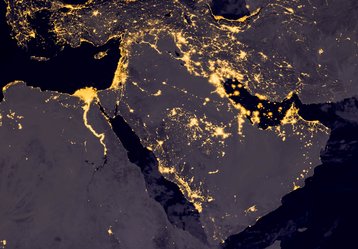
But where will this growth happen when the usual markets can’t keep up? Increasingly, the answer points towards the Middle East – particularly the Gulf – which is rapidly becoming one of the world’s most strategic hubs for AI-ready infrastructure.
A region built for growth
Data center capacity in the region is projected to triple by 2030, with the Gulf Cooperation Council (GCC) accounting for over 60 percent of MEA investment. But this isn’t just a short-term play.
The Middle East is already gaining the attention of those with ambitious growth plans who are seeking to expand their data center footprint quickly. Just look at the US-UAE AI Campus and Stargate UAE announcements. They’re a result of a regional philosophy that treats digital infrastructure not as a utility, but a tool of economic transformation.
This philosophy is supported by one of the Middle East’s most underappreciated advantages: the sheer scale and strategic focus of its capital deployment. State-backed entities like G42, MGX, and Humain are deploying billions of dollars into AI, cloud, and data center infrastructure, with accelerating project timelines and reducing investor risk.
The UAE’s sovereign wealth ecosystem gives it a structural edge over other markets where infrastructure growth can be constrained by financing gaps. With capital readily available, projects can scale faster and attract global partners seeking access to well-funded, future-ready infrastructure.
State-level investment strategies are also accelerating the creation of a digital government that supports AI innovation. This ethos has a direct influence on legislative structure that offers clarity and faster permitting for major infrastructure projects.
This readiness at the policy level complements the region’s geographic advantage, positioning it as a natural hub for connecting continents and catalyzing cross-border digital growth.
Bridging the gap with global partners
The geographic location of the region allows it to serve as a bridge between Europe, Africa, and Asia. Low-latency and scalable connectivity is abundant thanks to a multitude of subsea cables providing redundancy, and most countries, particularly in the GCC, have strong domestic fixed and mobile networks.
Among these, Abu Dhabi is ranked among the world’s top emerging data center markets. Its position isn’t just evidenced by its current capacity, but also by its ability to develop infrastructure that is ready to grow for the future in line with demand.
With this level of connectivity already in place and the ambition to scale capacity quickly – particularly with the US and OpenAI-led Stargate UAE AI infrastructure plan – there’s even greater opportunity for international collaboration.
The UAE will soon have more than enough capacity for its own needs. There’s growing potential for this surplus to serve the Global South, where, in many countries, infrastructure remains limited.
Data and AI corridors could see nations hosting their sovereign infrastructure in the UAE, much like digital embassies. This opportunity adds to the pressure to scale quickly.
Building future-ready and sustainable infrastructure
The speed to market is one challenge, but another is meeting this demand without compromising on sustainability – ensuring that speed and responsibility go hand in hand.
Data center design now plays a crucial role in how organizations make responsible choices for their data center partners, and we’re seeing best practice being modelled in the Middle East.
For example, extreme-climate engineering has driven innovation in cooling, energy efficiency and redundancy. At Khazna, we’ve pioneered adiabatic free cooling, which not only reduces energy use in the harsh Middle East climate, but also massively scales down water consumption.
Meanwhile, through a zero-waste approach, our modular builds with smart project sequencing massively reduce the amount of construction waste
We’re also increasingly integrating clean energy into our mix, aligning ourselves with the UAE national goal of achieving net zero by 2050. Across the UAE, the transition to clean energy is following a similar trajectory by transitioning to a clean energy grid.
In Abu Dhabi, nuclear is now an important part of the energy mix, with a quarter of the UAE’s electricity needs being produced at the Barakah Nuclear Energy Plant. Meanwhile, the Mohammed bin Rashid Al Maktoum Solar Park is among the world’s most ambitious solar complexes. It will deliver 5,000MW of power by 2030.
This combination of efficiency, innovation, and clean energy integration is not only strengthening the UAE’s domestic capacity but is also becoming an exportable advantage sought by markets worldwide.

Exporting expertise: From UAE to Italy
Indeed, these capabilities are no longer limited to the Middle East. The region is taking steps to become an exporter of digital infrastructure expertise.
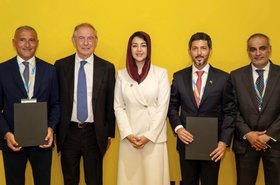
Already, homegrown talent and innovation are making their mark on the global stage. Khazna has signed an agreement to develop a 500MW AI data center campus in Lombardy. The ambition is to develop the campus on ‘blue power,’ a decarbonized energy source generated from a state-of-the-art carbon capture plant.
Working in partnership with Italian energy supplier Eni, the center will mark the first time in Italy that sustainable power and high-density AI infrastructure have been combined.
With these incentives and initiatives in place, the UAE is on track to become a net exporter of expertise. This is a powerful draw for investors and operators looking for a long-term foothold in the global market. As these capabilities mature, they are shaping a new global model for data infrastructure.
Time for change
The world needs an evolved model for data infrastructure – one that’s sustainable, scalable and sovereign. The Middle East, with players like Khazna, is delivering that model. For those seeking growth, resilience and future-ready infrastructure, the future points here, and the influence and expertise of engineers in the region are increasingly being felt worldwide.
The growing demand for data centers calls for faster, more robust approaches to time-to-market. AI needs a home, and now more than ever, that home is in the Gulf.
More from Khazna Data Centers
-
Khazna Data Centers bags $2.6bn bank financing
Facility secured from two lenders
-
Sponsored Are regulatory frameworks fueling innovation or stalling expansion in the data center market?
Amid record data center investment, industry collaboration with regulators is vital to ensure smart, sustainable policies that protect growth, resources, and economic benefits worldwide
-
Italy’s Eni and Khazna partner for 500MW data center campus outside Milan
Companies build on Eni’s previous agreement with G42 and MGX
Comments