

Data centers are multiplying to satisfy the world’s appetite for computational power, driven by AI and other emerging technologies. The outcome has been an unprecedented surge in energy demand and greenhouse gas (GHG) emissions, meaning data centers must look beyond their direct carbon footprint and adopt a holistic approach to multi-emission capture and valorization.
Until recently, data centers had a modest environmental footprint compared to other sectors. According to the International Energy Agency (IEA), data centers and transmission networks account for less than one percent of global GHG emissions. Yet a recent IEA report projects data center consumption will more than double from 415TWh in 2024 to 945TWh in 2030. Streaming, cloud gaming, blockchain, AI, and VR are among the driving forces behind this growth.
IDC predicted in 2022 that data centers’ yearly energy consumption would expand by 16 percent over the following five years, with carbon emissions continuing to grow beyond 2027 despite mitigation efforts. According to a recent Goldman Sachs study, power demand from data centers will soar by 160 percent by 2030, with carbon dioxide emissions more than doubling during the same period.
Some tech giants share these predictions. Google stated in its 2024 Environmental Report that “in spite of the progress we're making, we face significant challenges that we’re actively working through. In 2023, our total GHG emissions increased 13 percent year-over-year, primarily driven by increased data center energy consumption and supply chain emissions.”
A holistic approach to data center sustainability
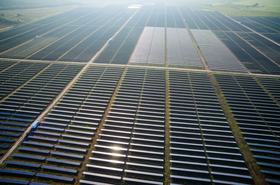
Some leading tech companies claim to have purchased or generated enough renewable electricity to match 100 percent of their operational energy consumption. However, as the IEA points out, renewable energy purchases or certificates don't mean that a data center runs on clean energy 24/7.
Firstly, the intermittent nature of wind and solar may not match a data center’s actual energy demand trajectory. Secondly, purchased renewable energy may be generated in a different grid or region.
More importantly, a data center’s environmental impact is greater than the emissions directly caused by its energy consumption, also known as scope two emissions.
This broader footprint also includes indirect emissions throughout the supply chain — the so-called scope three emissions. These include mining raw materials like copper, silicon, and lithium, used in a data center’s server racks, or the production of building materials like aluminum, steel, and concrete. E-waste disposal is another example of indirect emissions that data centers need to address.
It's encouraging to see how some industry leaders have adopted a more holistic approach to sustainability, encompassing scope two and three emissions. For example, Microsoft recently started testing low-carbon concrete for some of its data centers. This is a step in the right direction, but a successful, sustainable, and circular model calls for further action. This is not only a moral obligation, but also a legal requirement.
Complying with new sustainability regulations
Although not specifically aimed at data centers, the EU’s Corporate Sustainability Reporting Directive (CSRD) requires organizations, including tech companies, to report on their sustainability performance, including scope one, two, and three emissions.
In addition, earlier this year, the European Commission adopted legislation specifically aimed at “establishing an EU-wide scheme to rate the sustainability of EU data centers”. Under this regulation, data center operators must report their key sustainability performance indicators to the European database.
To comply with these new legal obligations, data center operators must examine their environmental footprint holistically. Addressing all GHG emissions, beyond CO2, is critical to ensuring regulatory compliance. This is where a regenerative practice, known as advanced adsorption or multi-emission capture, can help.
Why atmospheric chemistry matters to data centers
Until recently, the discourse around climate change and GHG emissions has focused almost entirely on CO2. Although reducing the amount of CO2 in the atmosphere remains vital, we must also address other gases that can harm our ecosystems and climate.
These chemicals include nitrogen oxides (NOX), carbon monoxide (CO), hydrogen sulphide (H2S), sulphur oxides (SOX), hydrocarbons, and various metals. Once released, these gases can react with one another, leading to secondary pollutants. The consequences of these are yet to be fully understood.
These chemicals derive from combustion processes across industries, from mining and cement production to energy generation and waste management. As noted, all these sectors are sources of scope two and three emissions that data centers are responsible for.
Traditionally, there have been two ways of capturing atmospheric pollutants. Take CO2 as an example. The sacrificial method uses limestone to remove CO2 and other gases, creating non-reusable carbonates. The regenerative amine-based method produces reusable amine carbamates but emits harmful, amine-based degradation products.
One regenerative process known as advanced adsorption captures and valorizes CO2 with minimal energy consumption and emissions. While amine-based regenerative processes require high temperatures between 150°C (302°F) and 200°C (392°F), advanced adsorption can occur at significantly lower temperatures, below 100°C (212°F), reducing energy demand and emissions. Pollutant gases bind weakly to inorganic surfaces with complex three-dimensional structures and can be separated easily.
By supporting the adoption of advanced adsorption technology throughout their supply chains, data centers can address their scope two and three emissions more effectively and meet their sustainability goals.
Multi-emission capture is the key to sustainable data centers
Thanks to innovative technologies like advanced adsorption, we can go beyond capturing and neutralizing potent GHGs like nitrogen oxides. We can also transform these emissions into valuable by-products like fertilizers, supporting a circular economy. The same method applies to multiple GHGs across different environments, from mines and cement factories to power plants and incinerators.
As the world’s insatiable demand for data grows, data centers must adopt holistic sustainability strategies that withstand the test of time. Multi-emission capture must be part of the solution, enabling data centers to balance the growing need for powerful AI with the needs of our planet.

Comments