

As Berkeley undergraduate students, the Internet is a part of our everyday lives. We use it to scroll through social media, binge-watch Netflix, and its failure is our favorite excuse when we forget to submit an assignment.
Yet, most Berkeley students, and the general public more broadly, don't know about the critical pieces of digital infrastructure that support the global Internet and their wider societal impacts.
In an increasingly digital world, so much of our economic and social life depends on these infrastructures. Their significance is growing even more amidst the rapid development of artificial intelligence, large language models, 5G, and other emerging technologies.
But their invisibility is both a private and public problem.
It's also an issue for the digital infrastructure industries, as data center and subsea cable companies are deeply concerned about how to recruit the next generation of their workforce when many are unaware of their existence. This is also a problem for broader society: as critical sectors increasingly depend on digital infrastructure and services, a basic literacy of their operations is needed to ensure their commitment to security, resiliency, and environmental responsibility.
Over the past year and a half, we have been developing the University of California, Berkeley Center for New Media’s Certificate in Global Digital Infrastructure, the first university program to introduce students to the technical, economic, legal, environmental, and social dimensions of the global Internet’s infrastructure, with a sustained focus on data centers and subsea telecommunications cables.
Introducing the Certificate in Global Digital Infrastructure
A collaborative university curriculum on global Internet infrastructure
It is available to students from UC Berkeley and universities around the world, as well as young professionals interested in this industry. We have built the curriculum by collaborating with industry executives in the digital infrastructure sector alongside significant organizations in the space, including Data Center Dynamics, iMasons, and the SubOptic Foundation.
This program gives students access to the knowledge they need to make a direct impact in these industries once they get a job. Another essential component of our curriculum development is documenting major industry trade conferences. It is at conferences such as the Data Center Dynamics events that we learn from discussions around emerging challenges and technologies reshaping digital infrastructures.
Our team, Bringing Lightning to the Cloud, is developing a lecture series covering the challenges in energy sourcing for data centers. Much like the interdisciplinary nature of the Certificate in Global Digital Infrastructure, our team is made up of an environmental economist, an environmental sociologist, and an environmental engineer - ensuring that students in our curriculum understand the economic, social, and technical aspects of these infrastructures simultaneously.
To build this portion of the curriculum, earlier this year, we attended Data Center Dynamics New York to see how the challenge of power sourcing has evolved in the data center industry. In this article, we cover our experience at the conference and document some of the critical trends in energy sourcing challenges and solutions for data centers.
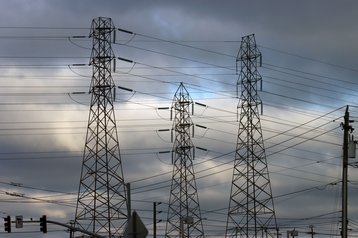
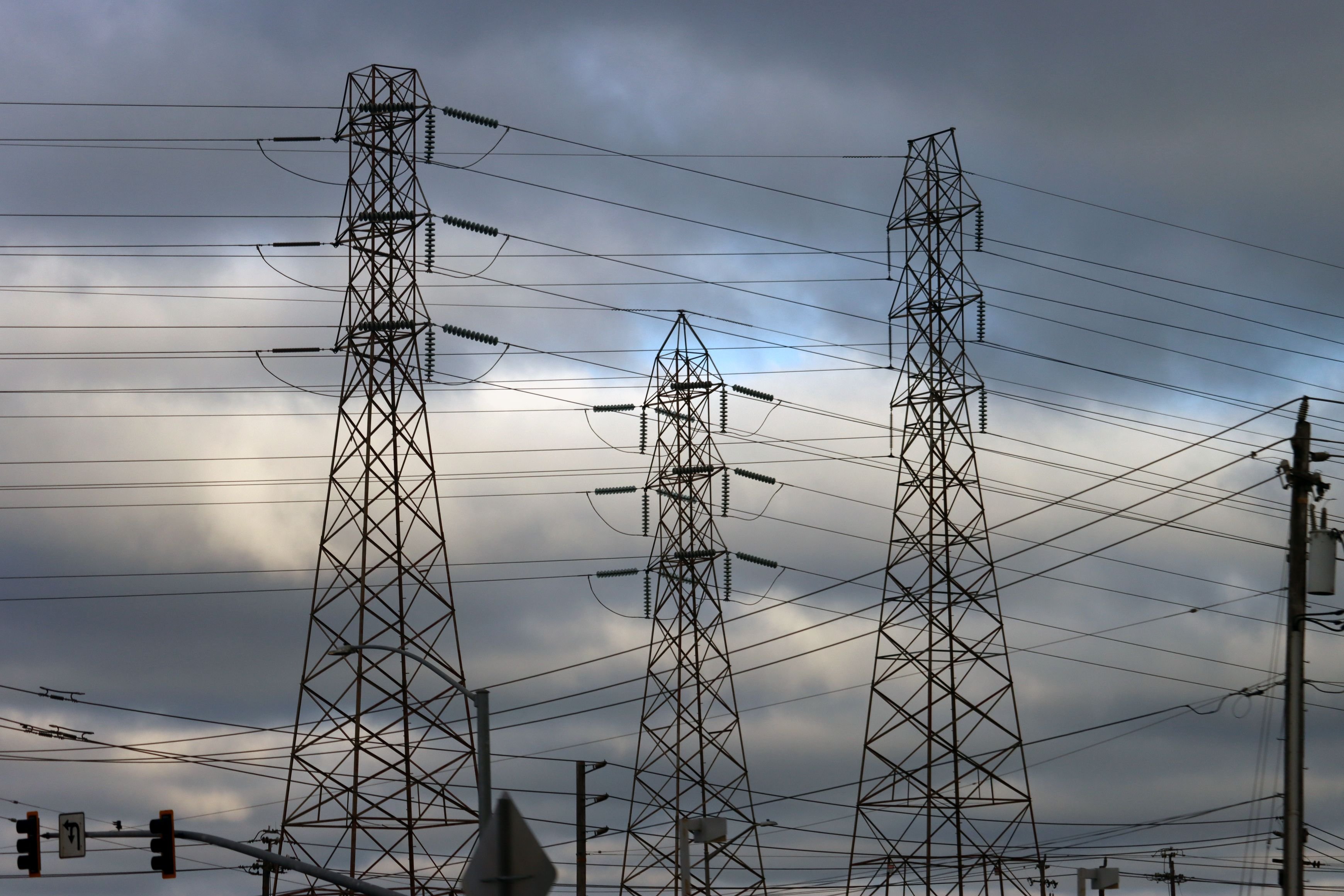
Energy constraints remain the most significant challenge for data centers. Clay Macfarlane, principal at Blackstone, noted that “power has become the North Star of the equation” in determining where data centers are built. While data center demand continues to increase to meet the needs of emerging technologies, utility operators are struggling to keep up. Across the conference, industry leaders noted that starting to solve this problem isn’t easy, as it requires working with developers, utility operators, and investors, among other stakeholders.
This complicated web can delay development. Jerri Negash, a senior associate at the Emerald Strategy Group, noted that “sometimes there is duplicative demand” where “one data center is looking for the same amount of power as a colocation data center, which would most likely lease out the capacity to them,” ultimately slowing down development.
Joe Bush, director of investments at Edged Data Centers, explained that standardization is becoming increasingly important as “every utility has a different set of contract terms they're trying to negotiate for any given procurement agreement.” While coordination challenges exist, the industry seems eager to collaborate with partners to solve them. One area the industry seemed especially interested in at the conference was behind-the-meter projects.

DCD>Studio: Building a sustainable future in digital infrastructure with Michael Brand, Berkley
DCD's Tom Liddy speaks with Michael Brand, Undergraduate Curriculum Developer at Berkley, about the need to engage younger generations and raises awareness about the significance of digital infrastructure.
Instead of relying on the central grid, many data center designers are considering building their own power sources. Ramiro Martinez, AVP of Technical Space Operations for AT&T's Data Center Operations, explained that “the behind-the-meter phenomenon is really taking off” and it might be “the only solution until long-term utility installations are in place.”
Macfarlane noted that “behind-the-meter is a really attractive opportunity,” given that utilities are so heavily overstretched. In theory, behind-the-meter projects seem like the perfect solution - decreasing strain on the central grid while also ensuring that data centers get the power they need to operate. But the industry has seen some trouble with adopting them. Negash noted three primary concerns.
First, “there are not enough people available with the right skill sets to operate everything that data centers require.” Second, since “data centers are always going to prefer grid power,” there is a question of what to do with “this asset when we're done using it.” Third, “you can't just put a power plant, 400MW, into a city, into a community, and not have a dynamic with the grid.” The complicated nature of bringing power to data centers only intensifies when considering it in the context of nuclear power.
Over the course of the conference, it seemed that nuclear power, and especially small modular reactors (SMRs), are increasingly being seen as an important way to reduce the data center industry’s carbon emissions while also meeting the industry’s power demand in the future.
Mike Kramer, VP of data economy strategy at Constellation, talked about the prospect of taking old nuclear power plants and using them for data centers, given that “you have the interconnection points, you know the power's there.” In the case of Amazon’s restarting of Three Mile Island, he notes that the project will provide “835MW of 24/7 power that we can get on the grid by 2028.”
In addition to restarting old nuclear power plants, there was excitement about developments in SMRs. To sustainably transition, Thomas Seeber, global director of data center power generation at INNIO Jenbacher, noted the industry needs “to decarbonize natural gas” and “SMRs are the solution for that.”
But actually implementing SMRs is extremely difficult. There was a common consensus at the conference that SMRs were at least five to ten years away. And even if they were ready to be deployed, there may be large political and social barriers to their adoption.
As Miranda Gardner, executive director of the iMasons Climate Accord, explained, to “get over some of the regulatory hurdles … the community has to buy in” – a feat that has been historically challenging with nuclear technology. It is unclear how the data center industry could get communities on board.
Dean Perrine, EVP of JSA, noted that when he told his dad the industry might be turning to nuclear power, his response was “he hopes he's dead before we start building more nuclear.”
While nuclear power may be the industry’s best energy solution from a technical perspective, there needs to be a strategy for overcoming societal and regulatory challenges, or it will never be widely used. There must also be a consideration of the environmental trade-offs. Though nuclear energy can reduce carbon emissions, fuel mining and waste management come with significant ecological and logistical consequences. These impacts must also be acknowledged and addressed when envisioning widespread adoption.
Across the conference, it became clear to us that solving energy challenges in the data center industry ultimately comes down to relationships between people. Adapting to an electrical grid never intended for this scale of demand is a complex and substantial issue with no easy fix.
However, it is through ongoing, cross-sector collaboration that progress will be made. In these conversations, people across disciplines, from engineers to sociologists to environmental economists, are coming together to address another critical dimension of the problem: how do we meet growing energy demand in ways that enhance, rather than undermine, sustainability? This is work especially critical to our generation, currently entering the industry with a strong commitment to building a sustainable future.
Susanna Kass, operating partner at Digital Gravity Infrastructure Partners, emphasized the significance of incorporating young perspectives by saying that the industry must “recognize that sustainability doesn't come second nature to you, but it does for those around to live on this planet for the next 50 years… the folks that actually care unfortunately are not here sitting at this table in this conference.”
As young people looking forward to those next fifty years, we think it is important for our generation to learn about and participate in the discussions about data and energy infrastructure. We hope that capturing the insights and challenges at events in this sector will generate more interest in these issues and build the collaborative momentum needed to address them.
This article was written by Michael Brand, Melina Tisopulos, and Stephanie Schaupp

Comments