

The data center industry is running into a set of constraints it cannot engineer its way out of quickly enough: grid congestion, greenfield land scarcity, water stress, and increasingly hostile planning environments. Hyperscalers and developers alike are spending as much time on infrastructure procurement as they are on hardware. Finding sites where power, land, connectivity, and planning risk converge favorably has become the defining challenge of this decade's build-out.
Scotland has a credible answer to most of those constraints.
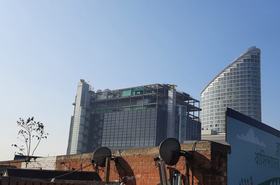
The country's post-industrial sites are overlooked by the data center industry. Former steelworks, engineering campuses, and manufacturing estates often retain the grid connections, substation infrastructure, and road access that take years and significant capital to establish from scratch. These are not derelict plots. They are infrastructure-ready brownfield sites in a country with one of the most favorable renewable generation profiles in Europe.
Power is the constraint. Scotland reduces it.

The bottleneck constraining new data center development across most of Western Europe is not land or capital. It’s power. Queue times for grid connections in parts of England now stretch to a decade. Developers who cannot demonstrate committed, dispatchable power are being pushed back in the queue or stalled entirely.
Few markets in Europe can match Scotland's renewable generation capacity, and that matters enormously to a developer trying to solve a power problem. Wind, wave, tidal, and hydro resources, combined with the ability to site generation directly adjacent to load, offer something that most European markets cannot: the realistic prospect of a campus where generation, storage, and consumption are co-located and operating under private-wire arrangements. It reduces exposure to network charges, removes dependence on a congested transmission system, and provides the kind of resilience that regulated sector buyers are beginning to require as standard.
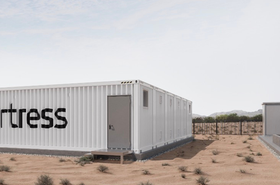
Long-duration storage technologies, including vanadium flow batteries, can further de-risk that model, smoothing intermittency without the degradation profile of lithium-ion at scale. The technology is proven. The resource base exists. The industrial land to host both exists. What has been missing is the integration of those elements into a coherent infrastructure proposition, and the recognition from the broader development community that Scotland is where that proposition is most achievable right now.
You cannot legislate your way to sovereignty
The conversation about digital sovereignty has matured beyond data residency compliance. Enterprise buyers in regulated sectors are now asking harder questions about where compute is physically located, what jurisdiction governs it, who owns the energy supply, and what happens to service continuity if a major provider reprices or restructures its regional footprint?
Those questions do not have satisfactory answers if the underlying infrastructure is owned, operated, and priced by a small number of very large platform companies. They do have answers if sovereign, independently owned infrastructure exists as a credible alternative. The challenge is that such infrastructure does not appear by default. It requires deliberate investment decisions in specific places.
The European Commission's preliminary move to designate major cloud providers as gatekeepers under the Digital Markets Act is a signal worth reading carefully. Regulatory pressure on platform concentration will not resolve buyers' sovereignty concerns on its own, but it does reinforce the strategic logic of building alternatives that are not dependent on the same platform ecosystem for compute, storage, and connectivity. That logic points toward geographically distributed, independently owned infrastructure in jurisdictions with stable regulatory environments and strong renewable energy profiles. Scotland fits that description.
The regeneration case is real, but it is secondary
There is a genuine economic regeneration argument for developing AI infrastructure on Scotland's post-industrial sites. Construction employment, permanent operational roles, supply chain activity, and the downstream effects of anchoring a technology cluster in places that have not seen significant industrial investment for a generation are all meaningful. They matter to local authorities, to the Scottish Government, and to communities that have been waiting a long time for a replacement industry.
But the primary case for this approach is not regeneration. It is that brownfield industrial sites in renewable-rich regions with existing grid infrastructure are genuinely better places to build data centers than many of the alternatives currently attracting capital. The regeneration benefit is a consequence of making the right infrastructure decision, not a reason to compromise on it.
The data center industry is moving toward evidence-backed sites with secured generation, credible power planning, and demonstrable resilience. Scotland's post-industrial infrastructure has been quietly accumulating those characteristics for forty years. The AI economy has finally created the conditions where that matters to the people writing the checks.
The sites are there. The power resource is there. The engineering capability is there. The only question is whether the industry recognizes it before the next wave of capital commits elsewhere.





Comments