

Understanding the impact of data center growth
The expansion of data centers is creating an evolution in the energy industry. These facilities require uninterrupted power to support AI workloads, cloud computing and real-time data processing.
Utilities, ISOs and energy providers are navigating a landscape where sustained load growth is no longer speculative. It’s now a reality that is accelerating faster than many system planners had anticipated.
This shift is introducing new complexities that require utilities and developers to rethink how they collaborate, plan and invest. The traditional strategies they have been using for grid planning are being transformed in real time, and the stakes are high for solving the supply issues correctly as the challenges grow. Some of the key issues facing the grid today include:
- Demand forecasting: Understanding which data center projects are likely to move forward to plan more accurately and avoid overbuilding or falling short.
- Infrastructure constraints: Managing long lead times for critical components like transmission upgrades and transformers, which can delay project timelines and limit regional capacity.
- Capacity limitations: Managing grid stress in areas where supply is already tight, while balancing the need to support new loads without risking reliability for existing customers.
Exploring the challenges and opportunities
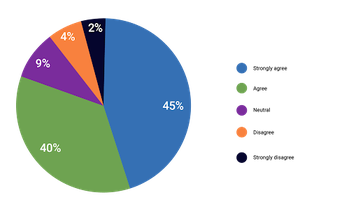
Constellation and DCD recently published a survey examining data centers and focusing on trends and attitudes about energy and technology challenges. According to the survey, 85 percent of respondents agreed that data centers need to play a more significant role in grid management to effectively meet power demand, with 45 percent strongly agreeing and 40 percent agreeing.
As the proliferation of AI and other high-density workloads continue to add strain on local power grids, the industry recognizes the challenge and is ready to implement solutions to better manage the grid.
Businesses need to be strategic about grid management to meet future power demands. To overcome challenges in the energy market, they should explore new strategies to help ensure reliable power delivery.
Optimizing the grid to meet future goals
Rather than implementing traditional expansion strategies such as building new generation, typically natural gas plants, the energy sector is shifting toward smarter, more flexible solutions. Grid optimization can offer a faster, more cost-effective path to resilience that could align with both operational needs and sustainability goals.
This approach focuses on improving existing infrastructure and deploying targeted technologies so the grid can support new loads without the delays and costs of large-scale generation projects. Grid optimization strategies that are gaining traction across the energy industry include:
- Accelerated deployment: Implementing upgrades faster than building new generation, helping meet demand without long construction delays.
- System flexibility: Using distributed energy assets to respond to changing grid conditions and support reliability.
- Decarbonization support: Reducing reliance on fossil fuels while maintaining stable and resilient power delivery.
Rethinking backup power for modern data centers
Reliability is increasingly important in today’s data center environment, but traditional diesel backup systems are no longer sufficient. As facilities scale to gigawatt levels, the limitations of diesel become more apparent, especially during emergencies when fuel delivery is delayed or disrupted.
Operators are now exploring alternatives that offer greater resilience and better alignment with sustainability goals. These strategies are also becoming more data-driven, with decisions based on actual grid connection levels and site-specific risks. The focus is shifting toward flexible, scalable solutions that can support modern infrastructure needs.
Some of the alternative backup strategies include:
- Natural gas systems: Providing scalable, lower-emission alternatives to diesel that can support larger loads more reliably.
- Battery storage: Delivering fast-response backup power while enabling participation in grid services like demand response and helping stabilize supply and demand across the system.
Building resiliency
As energy demand continues to rise, the need for smart, collaborative solutions is urgent. The path forward requires innovation in technology and how stakeholders work together to build a more resilient grid.
That means investing in tools and technologies that enhance flexibility and reliability, modernizing market structures to support long-term capacity planning and strengthening coordination between public and private sectors to meet long-term capacity needs. These efforts are essential to meeting the demands of digital growth, supporting local economies and building a more sustainable energy future.
In the DCD survey, companies indicated strong interest in battery storage and backup generation to help manage peak load.
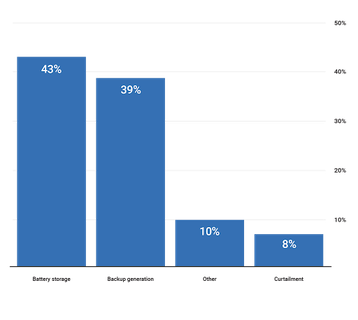
To effectively manage peak load, data center operators are prioritizing investments in battery storage and backup generation. By adopting these technologies, businesses can strengthen their resilience and ensure reliable power delivery as demand continues to grow.
Addressing power availability and reliability
While waiting for grid connections, data center are exploring various bridging solutions. Some of the options include natural gas turbines or generation using diesel/HVO, as well as onsite microgrids using solar, batteries or natural gas.
Energy storage solutions are proving increasingly popular too, particularly given the intermittent nature of renewable energy, allowing facilities to store excess power that can be utilized during periods of peak demand.
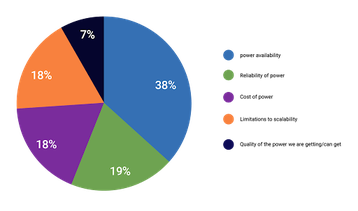


Data centers, particularly in grid constrained areas like PJM and ERCOT, are utilizing alternative sources of both primary and backup power, with utilities, aggregators and governments trying to further incentivize these approaches to drive adoption and improve ROI.
The Electric Power Research Institute’s (EPRI) DCFlex initiative aims at enhancing data center flexibility and grid reliability. Operators and developers are seeking ways to support the grid, improve asset utilization and contribute to the clean energy transition. Insights from this initiative will be shared to enable broader adoption of flexible solutions that strengthen grid reliability.
Gain more insights through Constellation’s podcast, Plugged In: Exploring Energy.
In a recent episode we explore the topics discussed here and more with Brian Janous, co-founder of Cloverleaf Infrastructure and former leader of Microsoft’s global energy team.
Listen to our series for insights into how data center growth is reshaping energy infrastructure, the evolving role of backup power and the strategies behind power as an asset.
Comments