

We all know US data center growth is surging and that it’s straining an outdated, tired grid. Grid access is a real problem, but there's another question looming in the minds of data center operators: is my data center receiving and using power as efficiently as possible? For most, the honest answer is that improvements are likely needed to achieve optimal data center performance.
AI changed the shape of demand
The arrival of AI workloads didn't just increase average power consumption; it changed its character entirely. Traditional data workloads draw power at relatively predictable rates, whereas AI introduces complex models and queries that can spike demand dramatically, then fall back just as quickly, creating peaks and valleys that strain infrastructure designed for steadier loads.
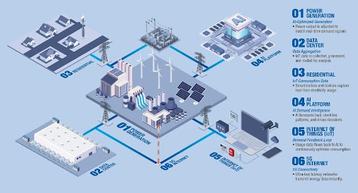
Hyperscale campuses that once drew 20 to 50 megawatts now routinely plan for 100 megawatts or more, requiring a fundamentally different approach to power delivery.
With global data center energy demand projected to rise by 175 percent by 2030, US utilities are trying to quickly add capacity but are still falling short of what AI, cloud computing, and electrification trends require annually.
Smarter power starts at the transmission layer
Smart power solutions often focus on energy use within a facility. However, power inefficiencies can begin well before the energy reaches the building or the equipment it powers. Electricity carried through overhead or underground lines inherently loses some of its energy during transmission.
For an AI data center drawing 100 megawatts, roughly five megawatts of power that was paid for may never reach the facility. At scale, across multiple facilities, that's a significant amount of wasted power and money. Most data center operators accept that loss as part of the cost of doing business, but there are transmission solutions that can reduce line losses and deliver more power to the facility.
Overhead transmission lines engineered for high loads and extreme weather can reduce line loss and improve reliability across existing rights-of-way while avoiding the need for new infrastructure. Medium- and high-voltage solutions built with advanced insulation and jacket materials further reduce energy loss and ensure reliable power to meet data center uptime demands.

Data center owners and operators should engage early with utilities and manufacturers to share multi-year capacity forecasts. Early collaboration ensures everyone is on the same page about the data center’s needs and future expectations. With current supply chain backlogs causing lead times of more than 50 weeks for some cables, planning ahead ensures that the optimal materials are specified and delivered on time.
This includes selecting cables engineered for the data center's specific environmental conditions, reducing line losses, and increasing the power that reaches the data center. In addition, working with made-in-America manufacturers will help streamline order delivery and speed time-to-power.
In more rural areas, where grid capacity may not yet be available, on-site and distributed generation are bridging the gap. Localized renewable power generation and microgrids allow data centers to come online and remain powered while utilities work to meet demand. They can also reduce strain on the broader grid and give operators more control over their energy mix and long-term resilience.
The smarter power distribution decision
Once power enters the facility, the efficiency of power distribution becomes the primary concern. To deliver power to the racks, data centers use either a busway, which runs a continuous copper bar overhead with tap-off points serving individual racks, or a cable-based (cable whip) delivery system, in which pre-terminated assemblies run from a remote power panel directly to each rack.
Busways have long been the preferred choice for many hyperscalers, but supply constraints are causing long lead times, and any changes or reconfigurations during installation add to an already significant price tag.
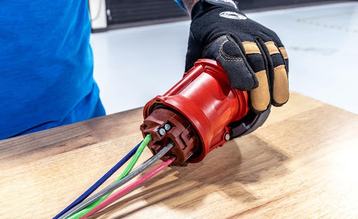
Cable whip systems enable faster deployment, easier reconfiguration, and significantly less field labor. Pre-terminated, plug-and-play assemblies arrive ready to install, reducing wiring errors and cutting installation time. With the US already short roughly 80,000 electricians, solutions that offer more flexibility and require less labor allow data center operators to not only power smarter but also more cost-efficiently.
Major hyperscalers are already making the shift, moving decisively toward cable-based delivery, citing speed, flexibility, and long-term adaptability as the deciding factors.


Eliminating losses between panel and rack
Even with the right architecture in place, energy is lost at every AC-to-DC conversion point between the panel and the server. Each conversion step generates heat, which requires cooling that consumes additional power. Reducing the number of conversion steps will improve power efficiency.
With NVIDIA's announcement that its next-generation AI architecture is designed around 800VDC power delivery, hyperscalers will see a significant improvement in panel-to-rack power delivery. By switching to DC power and reducing conversion steps, less heat is generated, so less cooling is required, saving data centers both power and money.
For greenfield builds, designing for DC distribution from the outset is worth serious consideration. Retrofitting existing facilities is more complex, but the market’s direction is clear.
Planning and design tools, such as load calculators, cable-sizing resources, and layout optimization tools, help engineers right-size systems before installation begins, avoiding over- or under-specification. In addition, wire and cable manufacturers offer technical support services that provide expert guidance to help engineers order the right materials for the job and the specific environment.
Built for what’s next
Powering smarter means making deliberate decisions for every layer of the power delivery chain. Reducing transmission line losses, choosing distribution solutions that ease labor constraints, and eliminating conversion inefficiencies between the panel and the rack all contribute to meaningful improvements in performance and operating costs.
The infrastructure decisions being made now will determine whether data centers are ready for the next ten years or the next thirty.
Discover what it takes to power smarter at southwire.com/energizing-the-digital-era.
Comments