

Global data center capacity grew from 42GW in 2023 to over 60GW in 2025. Goldman Sachs projects 122GW capacity by 2030. That means the industry is building more data center capacity in the next five years than it built in its entire prior history.
Conventional stick-built data center construction, with its 24–36-month design-permit-build schedule, cannot deliver at this rate. AI training clusters now consume hundreds of megawatts per deployment, and inference demand is scaling faster than anyone forecast even eighteen months ago.
The response is prefabricated modular data center construction. Power distribution, cooling plant, and IT infrastructure are moving from the job site to factories. Highly modularized projects achieve 30–50 percent schedule improvement, bringing delivery from 24–36 months down to 12–16 months.
Some operators report sub-nine-month timelines for pre-engineered deployments. But the engineering challenges of this change run deeper than speed. Modular construction completely changes how electrical systems are designed, tested, and coordinated — and the standards framework has not kept pace.
Numbers driving the shift
Major hyperscalers have moved server room construction into factories. Pre-assembled skids, integrating racks, power distribution, and security systems, now compress on-site assembly from fifteen weeks to two or three. Internal targets at multiple operators aim for shell-start to the first operational room in under 35 weeks. Every top-tier cloud provider has a modular program in production, and several are already on second-generation designs.
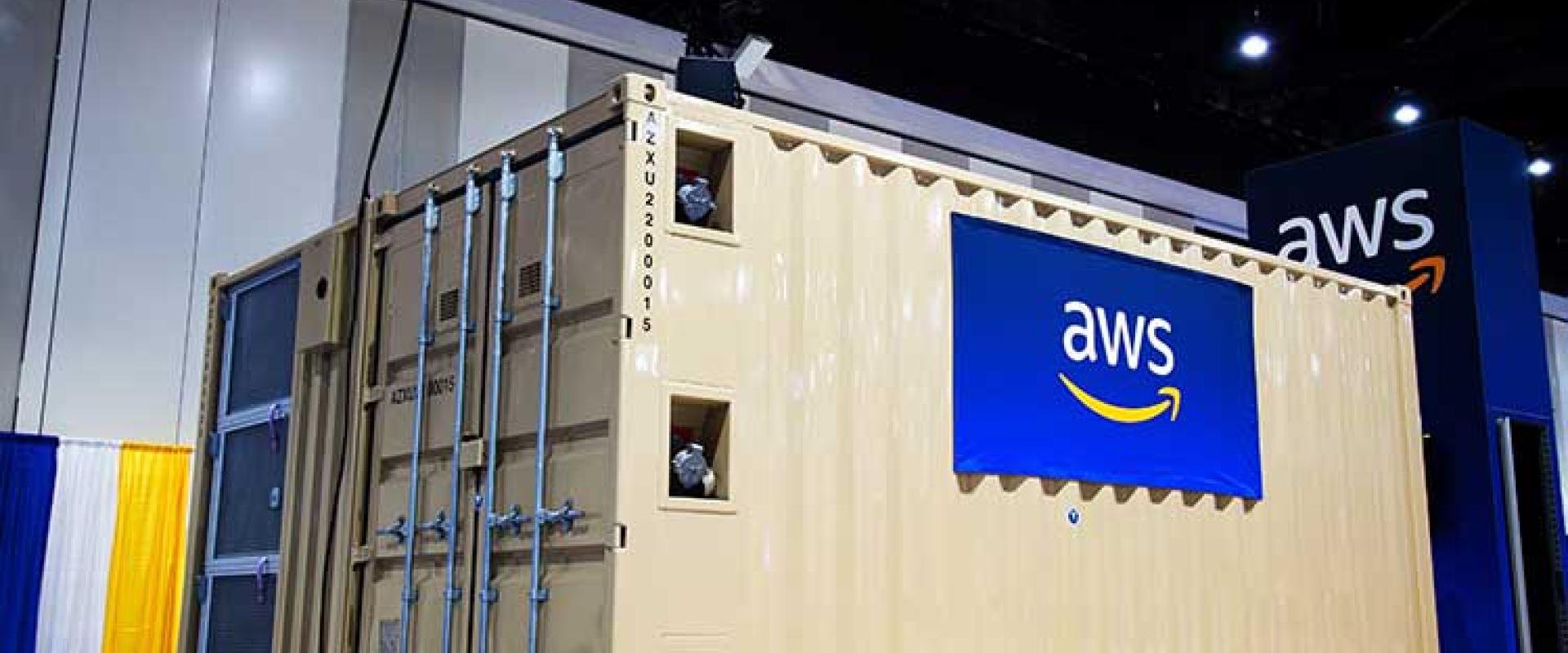
At a smaller scale, Duos Edge AI deploys 55-foot factory-built pods housing 576 GPUs with integrated liquid cooling in six months, including site prep. LG CNS launched a modular product in South Korea with plans to scale a single site to 50 units and 28,800 GPUs. Flex reports 30 percent deployment acceleration from pre-engineered systems. Grand View Research projects that the modular data center market will more than double by 2030. Factory assembly is now the primary construction path across the industry, not a pilot.

How modular changes electrical architecture
In traditional stick-built data center construction, the electrical distribution system is designed as a unified network. Medium-voltage switchgear feeds step-down transformers supplying low-voltage switchboards, automatic transfer switches, UPS systems, and PDUs in a single engineered hierarchy. Protection coordination, arc flash analysis, and selective coordination are performed end-to-end because the engineer has visibility into the complete system. Each facility is a custom electrical plant.
Modular construction breaks up this model. Standardized power block, typically 500kW to several megawatts with defined electrical, mechanical, and control interfaces, must be self-protecting and capable of integrating with adjacent modules and upstream utility infrastructure without a project-specific coordination study every time a new block is added.
Critical engineering shifts to interfaces: impedance matching across module boundaries, total fault current contributions from parallel sources, protective device coordination between modules designed independently, and grounding architectures that remain valid as the data center block scales.
Testing example changes in parallel. Stick-built facilities undergo integrated systems testing after construction, with design errors corrected during commissioning. Modular systems are factory-acceptance-tested in isolation, but system-level behavior only appears once modules interconnect on site. A protection relay setting that coordinates within a single power block may fail when that block operates in parallel with three others behind a shared utility transformer. Factory-tested does not mean the entire data center is system-coordinated.
The mechanical cooling system drives similar complexity. AI racks exceeding 100kW per position require direct liquid cooling factory-plumbed within each module and connected to campus-level coolant distribution on site. The electrical topology effects compound: variable-frequency drives for coolant pumps, module-level power factor correction, and harmonic distortion from dozens of parallel inverter-driven loads. All of this requires system-level analysis that compressed modular procurement timelines often do not allow for.
Where standards have not caught up
IEEE authorized Project P3710 in June 2025 — a guide for North American standards-based design of modular data centers covering three configurations: power distribution only, IT infrastructure only, and combined power/IT modules. The scope addresses consistency with electrical installation codes and product safety standards, noting that existing frameworks (NEC, UL standards) were written for fixed permanent installations, not factory-built modules that may be relocated, reconfigured, or expanded in stages.
P3710 arrives after deployment is already at scale. First-generation modular systems are being engineered without consensus design frameworks, relying on ad hoc code extensions or proprietary internal standards. A power block designed to one hyperscaler’s specification cannot necessarily integrate with infrastructure built to another’s. For colocation operators and the secondary asset market, this lack of compatibility adds real cost.
But specific technical gaps remain open. First, fault current management across module boundaries. Parallel power modules can push the combined available fault current beyond the interrupting ratings of protective devices within individual modules, particularly as systems scale beyond the initial configuration. Second, grounding and bonding. Modular systems deployed across physically separated positions connected by variable-length cable runs break the single-building-ground-grid assumption. Third, arc flash labeling. NFPA 70E requirements assume a relatively static system topology, not configurations that change quarterly as capacity blocks are added.
IEEE P3710.1, under parallel development, addresses HVDC distribution from 300V to 1500V for data centers. Modular architectures increasingly adopt 800VDC bus distribution to eliminate AC-DC conversion stages. This voltage class is a big shift from the 480V three-phase AC distribution that existing codes, protective device ratings, and workforce training are built around.
Speed versus precision
The pressure driving modular adoption also shortens the engineering cycles that guarantee reliability. Traditional design allows extensive protection coordination studies, iterative peer review, and commissioning that validate fault-condition behavior before energization. Modular construction demands that this engineering be completed during module design, when specific site conditions and final system configuration may be unknown. Engineers must design for a range of deployment scenarios instead of one known condition.
Workforce shortages worsen the problem. The skilled labor shortage motivating factory assembly also means protection coordination specialists, commissioning agents, and arc flash analysts are rare. Modular construction does not eliminate these roles — it concentrates their work into shorter, higher-intensity site integration periods while distributing module-level engineering across factory teams with limited visibility into the wider system context.
The US data center electrical equipment market will likely grow from $20 billion in 2026 to $65 billion by 2030. Growth at this rate demands a matching investment in system-level engineering discipline.
What comes next
Modular construction is here to stay. The timeline limits set by AI demand and the economics of factory assembly (cost per megawatt roughly half that of traditional builds in some configurations) make the case independent of schedule pressure alone. But deployment is outrunning standardization, and the consequences will not appear as construction delays. They will appear as protection failures, coordination errors, and availability incidents that hurt the reliability metrics that data centers exist to deliver.
IEEE P3710 needs participation and pressure matching to the deployment pace. Engineers specifying modular systems must demand system-level coordination studies even when procurement timelines resist them. Operators must invest in interface engineering — boundary protection schemes, dynamic fault analysis, grounding verification at each expansion phase. Modular construction solves the timeline problem. Whether the industry builds the engineering infrastructure to make it a lasting solution, not just a shortcut with delayed consequences, is still an open topic.


Comments