

Driven by pandemic digitization, massive migration to cloud storage, and, especially, the AI boom, data centers are popping up faster than coffee shops in the 90s.
Recent reports on data center demand give evidence of this shocking growth:
- Colocation vacancy rates of 2.3 percent, down from 9.8 percent in 2020
- A 10x volume increase in the facility construction pipeline from 2020 to 2025, with 73 percent pre-leased
- A 161 percent growth in market cap from 2019 to 2025
This expansion hasn’t come without its growing pains, however. Data centers are extremely thirsty, with some estimates equating a large data center’s daily water use to that of a town of 50,000 people. The encroachment into people’s freshwater supplies has citizens angry and lawmakers concerned, moving some places to block data center expansion in their area.
These concerns have pushed many in the data center industry toward various sustainability measures, such as Microsoft’s carbon removal deals to offset its impact. Many are making their sustainability commitments by choosing air-based cooling over water-based chillers, as air-based cooling allows data centers to show a significantly lower water use rate.
But follow the power lines back, and you’ll still find the same – or even more – water use to ultimately cool these data centers. Truly sustainable data center cooling is all about finding balance.
Someone’s gotta chill
Data centers have to cool their central IT equipment (white space) and the supporting infrastructure (gray space). Many data centers are turning to immersion cooling or direct-to-chip cooling for their white space, but gray space cooling is still largely the domain of water-cooled or air-cooled heat exchangers.
When a data center chooses air cooling, fans circulate air, allowing refrigerant-filled evaporator coils to pull heat away and cool the air. All of this takes electricity, rather than water, as in a cooling tower-based system.
Air-cooling passes the high water use back to the power provider. The data center will use significantly greater electricity, sometimes doubling or tripling the kilowatt usage, to air-cool its operations. This greater electricity use requires the power company to use more water to chill its operations – usually in the form of giant, natural-draft cooling towers, sometimes augmented with smaller counterflow towers.
While data centers may be able to report more favorable water use, the overall impact is arguably worse. As the old saying goes, it’s robbing Peter to pay Paul.
A balanced solution depends on scale
Passing water use obligations back to power companies isn’t the answer. But defining a truly sustainable balance depends on a data center’s size.
Hyperscalers, along with enterprise data centers and colocation data centers that often handle a hundred or more megawatts of power capacity, may consider the benefits of on-site power generation. Rather than pulling from the local power plant, a private plant serves a specific property or operation. Data centers in central Ohio are already considering this option. Private, on-site power generation can help increase sustainability by:
- Reducing power losses during transmission
- Minimizing strain on the main grid
- Choosing efficient technologies for augmented cooling
And because these microgrids are rarely publicly owned, this also gives more flexibility to experiment with cutting-edge technologies like water-producing hydrogen fuel cells – though this is not yet scalable enough to support hyperscale operations.
Edge and regional data centers are strong candidates for sustainably efficient on-site cooling. Water-based cooling towers are available that can support the megawattage for this scale of data center while maximizing resources, minimizing waste, reducing operational safety risks, and speeding installation times. This gets the tower working faster, safer, and ultimately cooling effectively and efficiently on-site.
A micro-data center is usually the size of a large walk-in closet up to a shipping container size. This small size makes air cooling the most practical option, as even the smallest, most efficient cooling tower has over 10x the cooling capacity that a micro-data center would need.
Seeking balance requires long-term planning
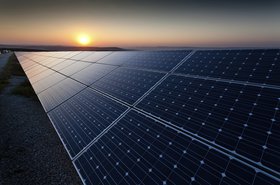
True sustainability can’t be cherry-picked or sacrifice sustainability in one area to claim it in another. Data centers must invest in ways to reduce water use without increasing power consumption. Until we have a consistently “unthirsty” power source for data centers, such as hydrogen fuel cells or renewables, the industry must invest in water and power-conscious technologies on its campuses that avoid merely passing the buck to the power companies just to claim that green checkmark.



Comments