
The alliance between the United States and the Republic of Korea has been one of the most successful partnerships of the modern era. Built on shared sacrifice and common values, it has evolved into a cornerstone of economic growth, technological innovation, and regional security.
Today, as South Korea considers revisions to its cloud security framework, it faces a decision with implications far beyond technology policy. It will signal whether South Korea intends to uphold its commitments to fair competition, open markets, and technological cooperation with its closest ally. It will also demonstrate whether the South Korean government is serious about leveraging best-in-class technologies to make the country a top-three global leader in AI.
The issue centers on whether South Korea's National Intelligence Service (NIS) will impose physical separation requirements as part of its revised cloud security guidelines. It is anticipated that NIS will designate most of South Korea’s government data in the “sensitive tier” – even when it does not contain confidential or top-secret data – and require that cloud service providers physically isolate it. While presented as a cybersecurity measure, such requirements would effectively prevent many leading American cloud service providers from servicing significant segments of Korea's public-sector cloud market.
Such a move would be inconsistent with the spirit – and potentially the obligations – of the trade commitments Korea has made to the United States over the past two decades.
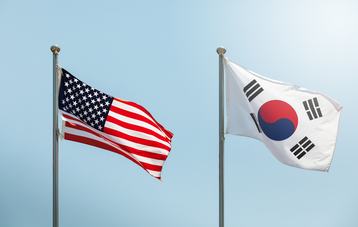
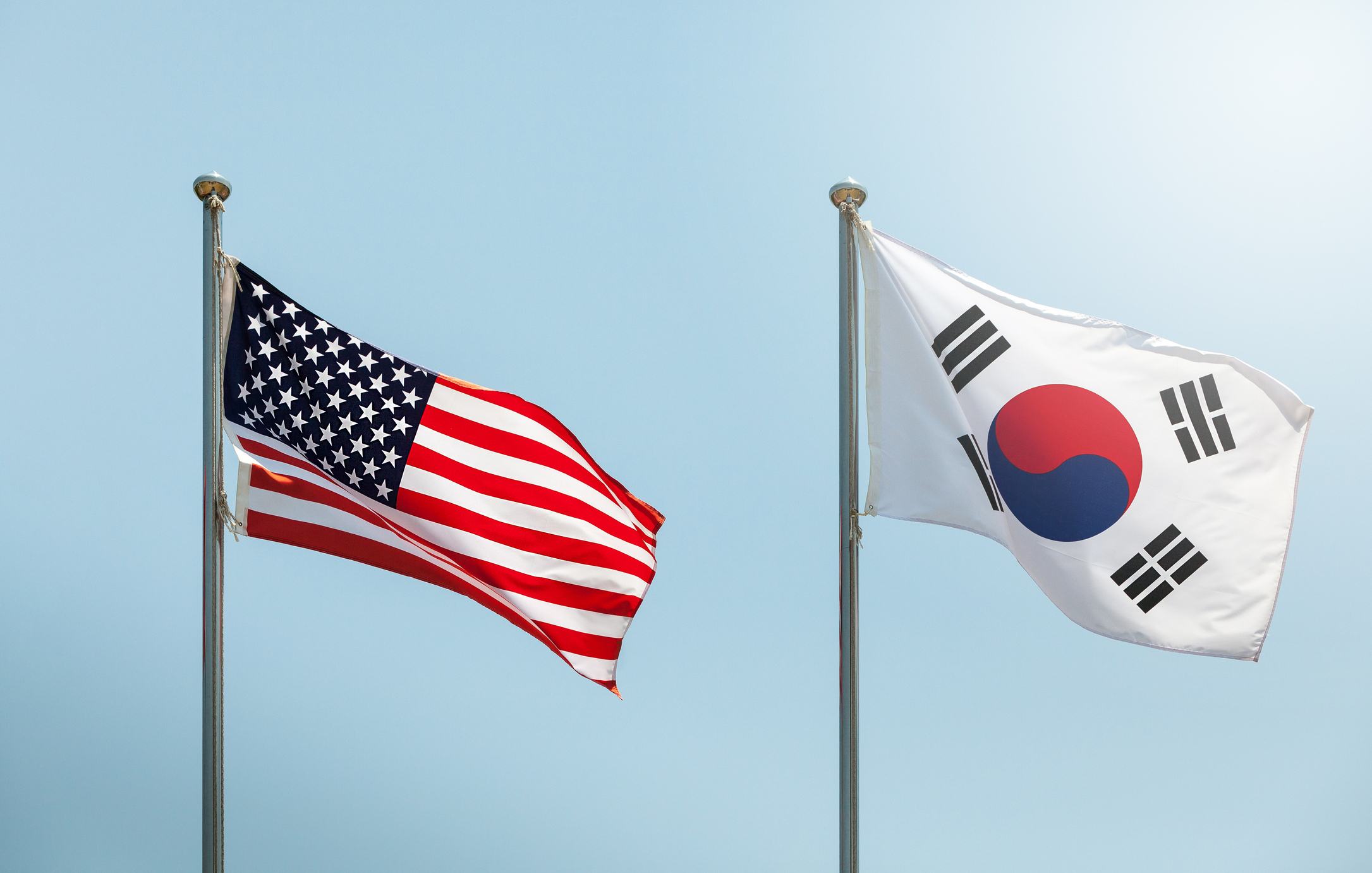
For years, the United States and South Korea have worked to build a rules-based economic partnership grounded in transparency, fairness, and non-discrimination. These principles are embedded in the Korea-US Free Trade Agreement (KORUS FTA), one of the most comprehensive and ambitious trade agreements either country has ever negotiated.
At its core, KORUS was designed to ensure that American and Korean companies compete on a level playing field. The agreement sought to eliminate barriers to trade, increase transparency in regulatory processes, and prevent measures that unnecessarily restrict market access.
Likewise, both the United States and South Korea are parties to the World Trade Organization's Government Procurement Agreement (GPA), which is founded on the principles of non-discrimination, national treatment, transparency, and open competition in government purchasing.
The objective of these commitments is straightforward: governments should not use technical requirements or regulatory processes to favor domestic firms or disadvantage foreign competitors absent a compelling and demonstrable necessity.
Physical separation requirements raise precisely those concerns.
Mandating infrastructure
By mandating infrastructure architectures that differ from globally accepted cloud computing models, such requirements would impose significant costs on foreign providers while offering questionable additional security benefits. The practical effect would be to increase costs for Korean government agencies, restrict access to world-class cloud services, and, critically, impede the Korean government’s ability to innovate as it is scaling its vision for AI.
Cloud is the foundational technology for AI, and having the best-in-class cloud service is essential to building out the AI capabilities that run on top of the platform. As President Lee Jae-myung executes his vision for making South Korea one of the top three AI powerhouses in the world and driving a government-wide AI transformation, giving the South Korean government access to global cloud services options is essential.
However, American companies would be excluded not because they lack secure technology, but because the rules themselves would make participation economically or operationally impossible.
That is not what KORUS envisioned.
Nor is it consistent with the future our two countries committed to – and are continuing to commit to – build together.
In 2025, the United States and South Korea launched a new chapter in bilateral cooperation through the US-ROK Technology Partnership, recognizing that emerging technologies—including artificial intelligence, cloud computing, semiconductors, advanced communications, and cybersecurity—will define economic competitiveness and national security for decades to come. South Korea also committed that U.S. companies would not be discriminated against and would not face unnecessary barriers in terms of laws and policies concerning digital services.
The premise of that partnership was clear: trusted allies should deepen cooperation, reduce barriers to innovation, strengthen supply chain resilience, and ensure that democratic nations lead the development of critical technologies.
The United States welcomed that vision because it reflected a shared understanding that technology policy is now economic policy and national security policy.
Yet it is difficult to reconcile that vision with regulations that would effectively exclude many of the world's most advanced cloud providers from Korea's public sector market.
If the United States and Korea are serious about working in lockstep on economic and national security interests through building a trusted technology ecosystem, then trusted providers from allied nations should be evaluated based on their security capabilities, performance, resilience, and compliance – not on whether they conform to infrastructure requirements that are increasingly out of step with international best practices.
This extends beyond cloud computing
The stakes extend beyond cloud computing.
The decisions Korea makes today will be closely watched by policymakers, investors, and technology companies throughout the United States. They will shape perceptions about Korea's commitment to market openness, regulatory transparency, and fair treatment of foreign firms.
They will also influence the broader conversation in Washington about economic reciprocity with our trading partners.
Congress has consistently supported a strong US-ROK alliance. We have welcomed hundreds of billions of dollars in Korean investment into American communities. Korean companies are helping build semiconductor plants, battery facilities, electric vehicle supply chains, advanced manufacturing centers, and shipbuilding capabilities across the United States.
These investments have strengthened bipartisan support for our economic relationship because Americans see tangible evidence that the partnership benefits both countries.
But partnerships must work both ways.
Just as the United States welcomes Korean companies to compete and invest in our market, American companies should be afforded a fair opportunity to compete in Korea's market under transparent and non-discriminatory rules.
This is not a request for special treatment. It is a request for equal treatment.
South Korea has earned a global reputation as a leader in innovation and technology. It can reinforce that reputation by adopting cloud security standards that are risk-based, technology-neutral, and aligned with international best practices. Such an approach would protect national security while promoting competition, innovation, and economic growth.
More importantly, it would demonstrate that Korea remains committed to the principles that have guided our economic partnership for decades.
The United States and South Korea have repeatedly declared that our alliance must evolve to meet the challenges of the digital age. That goal requires more than speeches and joint statements. It requires policies that reflect our shared commitment to openness, fairness, and cooperation.
As Korea finalizes its cloud security framework, I urge its leaders to uphold the commitments embodied in KORUS, respect the principles of the WTO Government Procurement Agreement, and advance the vision established under the US-ROK Technology Partnership.
The future of our alliance depends not only on the promises we make, but on the commitments we keep.


Comments