

The rapid growth of data centers across Europe is transforming both the digital and energy sectors. Rising demand for AI, cloud computing, and other digital services is driving the need for reliable, low-carbon electricity. This growth brings a complex set of legal and regulatory challenges, just as Europe is pushing to achieve ambitious decarbonization targets and modernize its aging energy infrastructure. The legal profession is thus increasingly called on to navigate the delicate intersection of energy law, administrative procedures, industry expertise, and sustainability requirements that will support the future of digital infrastructure.
Data centers are among the most energy-intensive forms of infrastructure in today’s economy. They require a constant, high-quality power supply, as even brief outages can seriously disrupt critical services and economic activity. The legal framework that governs how these facilities get their energy must thus ensure both reliability and compliance with evolving sustainability standards.
At a European level, there’s growing awareness of the need to harmonize and modernize energy market rules to support the digital sector’s rapid growth and the shift to clean energy. In fact, the European Commission recently identified data centers as a priority in its energy efficiency roadmap, with a dedicated package planned for 2026. This initiative signals a clear commitment to improving the energy performance of digital infrastructure – though the road ahead is far from smooth.
One of the biggest obstacles to the ‘electrification’ of the economy, including the growth of data centers, is the state of Europe’s electrical grid, often described as an ‘abandoned giant.' Around 40 percent of Europe’s distribution networks are more than 40 years old, and investment in expansion and innovation has not kept pace with the demands of the net-zero transition that Europe is aiming for. Legal hurdles, such as lengthy and complex authorization procedures for new grid connections and infrastructure upgrades, make things even harder. That’s why modernizing energy infrastructure is now a top priority at both national and EU levels.
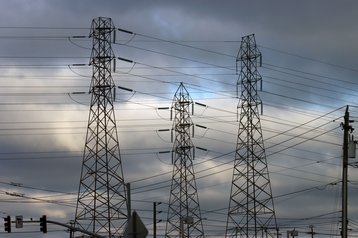
The recent European Grids Package is a prime example, as it is aimed at simplifying and speeding up authorization processes, promoting digitalization, and encouraging cross-border projects. And some areas have recently begun to tackle a growing problem known as ‘virtual saturation’ of the grid, i.e., when connection requests exceed what the grid can actually deliver – indeed, countries like Italy are considering reforms to move beyond the ‘first-come, first-served’ connection model in favor of projects that are already authorized and can contribute most to energy efficiency and the clean energy transition.
The growing electricity demand from data centers is also prompting a rethink of how these facilities procure energy. Traditionally, data centers have relied on the local grid and its existing mix of generation sources. But as companies ramp up their net-zero commitments, many are turning to power purchase agreements (PPAs) with renewable energy providers.
Wind and solar are among the cheapest and fastest energy sources to deploy, but their variable output can be a challenge for facilities that need a stable, 24/7 power supply. This has sparked growing interest in more flexible and dispatchable energy sources. Announced in June, the 20-year PPA between Meta and a US nuclear power plant is indeed a sign of a new era in energy procurement. However, replicating similar agreements in Europe is not straightforward, given the regulatory differences and slow authorization processes, not to mention public opposition to nuclear energy.
Beyond ‘traditional’ renewables and nuclear, newer technologies like small modular reactors (SMRs) and geothermal energy are being explored as potential sources of clean and dispatchable power. The European Commission has launched initiatives to support the development of SMRs, but progress remains slow and capital-intensive, often hampered by regulatory and public resistance (the NIMBY effect). Italy’s recent decision to join the EU’s Nuclear Alliance marks a significant policy change, signaling renewed national interest in nuclear energy as part of Europe’s broader strategy for decarbonization and energy security.
Geothermal energy also holds promise, especially in geologically active regions like southern Italy. But high upfront costs, site-specific resource limits, and technical risks mean it is likely to remain a niche solution for powering Europe’s data centers in the near term.
Meanwhile, investment in energy storage systems and smart grids is picking up speed, thanks in part to national initiatives to support and scale-up these sectors. Storage solutions, such as batteries and pumped hydro, allow excess renewable energy to be stored during low-demand periods and released when needed; these technologies will thus be key to balancing the variable output of renewables and providing backup power during outages, contributing to grid services and strengthening grid stability.
Looking ahead, the most effective approach will likely involve a mix of renewables, storage, and ‒ where feasible ‒ nuclear or other dispatchable low-carbon sources, supported by reforms that enable more flexible and transparent energy procurement. Legal frameworks will need to be adaptable and ready to accommodate emerging technologies and business models. Although replicating Meta’s US nuclear deal in Europe might be difficult today, a combination of regulatory reform, streamlined authorization processes, grid modernization, and innovative use of renewables and new technologies could pave the way for similar agreements in the future.



Comments