

As AI and cloud computing accelerate the digital transformation of businesses, one fact is becoming increasingly clear: the digital economy is now fundamentally shaped by access to energy. For European data center operators, energy has become a strategic issue that will directly influence the sustainable competitiveness of our continent.
Energy at the heart of the digital economy
Data centers host the servers that power our digital services, from cloud platforms to artificial intelligence models. Without electricity, these infrastructures simply cannot operate.
For data center operators, electricity represents the major part of operating costs. It is therefore by far the largest expense. This reality is profoundly reshaping the way the sector approaches energy. While price remains an important factor, other dimensions have become just as critical, such as sustainability.
The first is the production of electricity and, more specifically, its carbon intensity. Companies developing digital services are committed to carbon neutrality targets and increasingly expect the infrastructures supporting their activities to align with those ambitions.
The second is cost predictability. In an industry where energy represents such a significant share of expense, stable electricity prices are essential for planning and securing operations, especially in a context shaped by geopolitical and climate uncertainty. Ultimately, this is about the long-term viability of the sector and Europe’s technological sovereignty.

Securing stable and decarbonized energy supplies
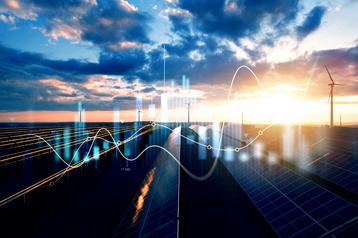
Direct renewable electricity contracts between producers and users, known as Power Purchase Agreements, or PPAs, play an important role in this context. They allow companies to secure electricity prices over several years and bring much needed visibility for industrial players, while supporting the development of new renewable capacities.
But securing low carbon electricity is not just about producing more renewable energy. It is about ensuring that supply matches real usage. Data centers operate 24/7, with constant demand, while renewable sources such as solar or wind remain intermittent and, in the case of solar, do not produce electricity at night.
This creates a mismatch between production patterns and operational demand. As a result, the objective is no longer simply to rely on ‘100 percent renewable' energy, but to build a resilient, decarbonized energy mix.
In practice, this means combining renewable energy with stable low carbon sources such as nuclear power, capable of delivering continuous baseload electricity. This balanced energy mix is essential to ensure both the reliability and the sustainability of Europe’s digital infrastructure.
Data centers as drivers of new energy ecosystems
Data centers are not only major consumers of electricity. They can also become drivers of energy innovation.
All the electricity used by servers is ultimately converted into heat. The question therefore becomes how to recover and reuse that energy rather than letting it go to waste. At Data4, several projects are exploring this potential.
One initiative, developed with Paris Saclay University Foundation, uses the heat generated by servers to cultivate algae through photosynthesis in modules installed on the roofs or facades of data centers buildings. The harvested algae then create a virtuous cycle with applications in various sectors, from food and cosmetics to pharmaceuticals and biomass production, which can be used to power the data centers.
This biomass then generates a true virtuous circle with application in various sectors, from food to cosmetics, medicines and energy production.
Initiatives of this kind demonstrate the capacity of digital infrastructure to support new circular economy models.
Aligning the energy transition with Europe’s digital sovereignty
Data centers, whose expansion is fueled by the rapid growth of digital services, are increasingly affected by delays in securing electricity connections, which have become a growing strategic constraint for Europe’s competitiveness.
Without timely access to electricity, it becomes difficult to deploy the infrastructure needed to support Europe’s digital sovereignty. In some parts of the world, new data centers can be built and connected to the grid in under a year, whereas in Europe the process often takes significantly longer.
Europe’s challenge is therefore to invest in low carbon energy production, stronger electricity networks, and digital infrastructure capable of supporting sustainable continued growth.
More from Data4
-

Sponsored DLC by design: how Data4 is shaping the next generation of sustainable cooling
In an industry where sustainability and performance are often framed as trade-offs, Data4 is making the case that they can – and must – go hand in hand
-

Sponsored Data centers: The ten main trends for 2026
From AI and energy consumption to investment and social issues
-
Sponsored Scaling AI at industrial speed: The new data center imperative
The next decade will be defined not only by models, but by the industrial platforms that sustain them
Comments