

Data center growth has increased demand on supply chains, cascading back to power generation and supply. A recent report indicates that US data center electricity consumption could triple to 12 percent of total US electricity demand by 2030, up from 4.4 percent in 2023.
Hyperscale campuses that once operated comfortably at tens of megawatts are now planning for 100MW-plus load profiles. At the same time, operators face increasing scrutiny around energy consumption, supply chain emissions, and long-term environmental impact. Although electricity is viewed as one of the most sustainable power sources, it still carries a carbon footprint, and decisions made at the wire-and-cable level can greatly improve sustainability outcomes, including reducing Scope 3 emissions.
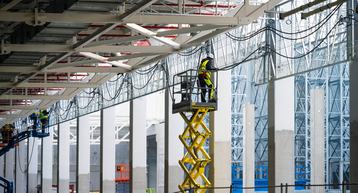
As more facilities come online, infrastructure decisions made during engineering specification reviews and procurement will have lasting implications for operational resilience and sustainability performance.
For data center owners and operators pursuing long-term green initiatives, sustainable electrification one must evaluate the full lifecycle of electrical infrastructure, not just operational energy consumption.
Data center sustainability begins before installation
Most sustainability discussions in data center operations focus on cleaner power generation and energy-efficient cooling solutions. But before the racks even turn on, sustainability is shaped by the choices made during the early design cycles including engineering specification reviews and construction planning.
Steel and concrete receive the most scrutiny, yet far less attention is paid to the electrical infrastructure that delivers power into and throughout the facility. Yet the sourcing, manufacturing, specification, installation, and lifecycle management of wire and cable all influence a data center's long-term sustainability profile.
Large-scale data center projects require miles of copper and aluminum conductors and significant volumes of manufactured materials, all of which have historically received little attention in sustainability planning.
That is beginning to change as hyperscalers and enterprise operators place greater emphasis on Scope 3 emissions and embodied carbon within their supply chains. For example, recycling pre-consumer copper scrap into conductor-grade material uses approximately 85 percent less energy during manufacturing than primary copper production.

Contractors and engineers specifying electrical components for data centers need to be prepared to have sustainability conversations with manufacturers and to move beyond a sole focus on product performance. Questions about raw materials, recycled content, and product transparency are becoming part of the procurement process alongside reliability, lead times, and cost.
Data center operators increasingly want to understand:
- where and how the copper for conductors is sourced,
- whether recycled-copper solutions are an option,
- what raw materials are used in the dielectric formulations,
- whether manufacturers are investing in renewable energy or energy-efficiency initiatives,
- and what steps are being taken to reduce waste across manufacturing production and packaging.
In addition, product transparency is increasingly expected as sustainability reporting requirements expand. Access to verified environmental data through environmental product declarations (EPDs) enables procurement and design teams to make more informed infrastructure decisions during the specification phase, rather than addressing sustainability concerns later through costly retrofits or offsets.
Third-party certifications and independently verified environmental data can help validate claims and provide confidence that sustainability commitments extend beyond marketing language.
Long service life is a sustainability strategy
Sustainable electrification also depends heavily on infrastructure longevity and operational efficiency. In many cases, the most sustainable infrastructure decision is to avoid unnecessary replacement altogether. Electrical systems designed for the actual operating environment, including its unique heat, moisture, mechanical stress, and future capacity demands, typically deliver longer service life and require fewer interventions over time.
This is especially important as AI workloads place a growing strain on power infrastructure. Facilities designed around older load assumptions may struggle to meet increased density requirements without substantial upgrades. Designing for future capacity demands from the outset can help operators avoid future rip-and-replace scenarios that carry both financial and environmental costs.
Transmission and distribution choices also play a role in sustainable electrification. Overhead conductors engineered for higher capacity can increase ampacity while leveraging existing rights-of-way, helping utilities and operators reduce the need for entirely new transmission corridors and significantly lowering associated carbon emissions. Similarly, retrofit solutions that extend the life of existing underground infrastructure can reduce material use, construction activity, and environmental disruption.
Early coordination improves sustainability outcomes
Installation practices also influence sustainability outcomes more than many teams realize. Electrical construction projects routinely generate waste from over-ordering, installation offcuts, damaged materials, packaging, and scrapped reels. Poor coordination during design and procurement can further exacerbate these inefficiencies.
As a result, early collaboration among developers, utilities, engineering firms, contractors, and manufacturers is increasingly important to avoid excess waste. Planning tools, load studies, cable-sizing support, and installation guidance can help teams right-size their orders for expected loads and reduce scrap before energization.
While some material waste is unavoidable on large-scale projects, recycling programs, reel-return initiatives, cable repair and modernization solutions, and nitrogen-purging services can significantly reduce landfill waste and unnecessary replacement.



Building for long-term data center sustainability
Electrification remains one of the most important pathways to a lower-carbon future, and data centers are at the center of that transition.
Infrastructure decisions, spanning responsible sourcing, product transparency, and end-of-life considerations, can substantially affect a data center’s sustainability profile. Price and availability remain critical, especially in a constrained supply chain, but this broader lifecycle perspective is increasingly shaping how data center owners and operators evaluate manufacturer partnerships.
Procurement teams should evaluate and select their electrical manufacturing partners after detailed discussions about responsible sourcing, product transparency, engineering expertise, lifecycle support, recycling and recovery programs, and the manufacturer’s commitments to sustainable and energy-efficient practices. Evidence of measurable progress toward carbon-reduction goals helps distinguish manufacturers making operational investments from those focused primarily on reporting requirements.
As hyperscale growth continues and sustainability expectations intensify, sustainable electrification will increasingly depend on how intentionally the industry approaches electrical infrastructure decisions.
Ready to take the next step? Download From Copper to Cable: A Guide to Sustainable Electrification to explore practical strategies for reducing lifecycle emissions and strengthening long‑term data center sustainability.
Comments