

As the digital backbone of modern life, data centers are expanding at an unprecedented pace, becoming larger, more powerful and more indispensable to global connectivity. Such rapid growth comes with severe environmental costs.
According to ABI Research, in 2024 data centers used approximately 683TWh of electricity, representing 1-1.5 percent of global demand.
Fuelled by AI, IoT and cloud computing, the demand for energy continues to rise. The International Energy Agency has predicted that data center energy requirements will more than double to 1,479TWh by 2030, growing by about 14 percent each year.
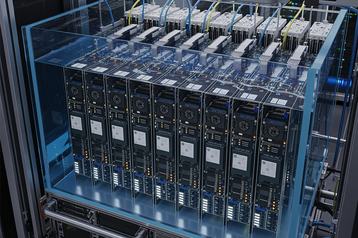
With energy consumption and operational intensity climbing, traditional cooling systems are under pressure. To maintain stable conditions and control costs, operators must now evolve – embracing smarter, more efficient methods that balance performance with sustainability.
Environmental pressure on data centers
It’s little wonder that data centers are under pressure to become more sustainable. As stated by PivIT, the industry emits approximately 330 million tons of CO2 annually, or around one percent of all energy-related emissions. It is also noted for its troublingly high consumption of water.
Reducing that footprint requires rethinking one of the most resource-intensive processes within any facility: cooling. Improving how data centers manage heat and water use is central to advancing both environmental and operational performance.
Why cooling efficiency matters in data centers
Cooling is essential in data centers, not only for operational efficiency and equipment preservation, but also for safety and security. The industry organization ASHRAE recommends that temperatures be maintained within the range of 18°C-27°C (64°F-81°F) at all times and advises that humidity levels should fall within the range of 40-60 percent, depending on the specific equipment and configuration.
Achieving this can be an energy-intensive task. With cooling accounting for up to 50 percent of the energy use of data centers, according to Forbes, finding the most efficient cooling methods is vital for operators to maximize both profitability and sustainability.
The shift to liquid cooling
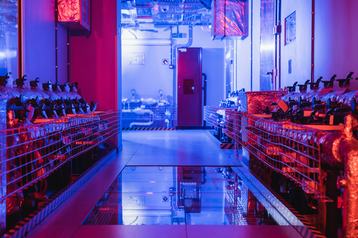


Currently, air cooling predominates the industry. The most common methods are mechanical cooling, typically through computer room air conditioners (CRAC), or evaporative cooling, where air is drawn through an air-handling unit and the heat transferred to a chilled liquid in the process.
These methods may be sufficient for low and medium-density applications, but larger centers featuring high-performance computing are increasingly using liquid-based systems, such as direct-to-chip cooling (where heat-generating server parts are in direct contact with dielectric fluids) or immersion cooling (where IT components are permanently submerged in fluid).
There is now clear evidence that switching to liquid cooling leads to efficiency gains for centers of most sizes, especially where higher rack densities and AI workloads are driving thermal demands.
Advancing toward smarter, sustainable cooling
The digital world is heating up. As computing power grows and sustainability standards tighten, data centers must find new ways to keep their systems cool without compromising efficiency or reliability.
By adopting advanced liquid cooling and incorporating intelligent flow, temperature and water quality monitoring technologies, operators can carefully manage the use of power and water resources and strike the right balance between performance, cost and environmental responsibility.
Smarter, more sustainable cooling isn’t just an operational upgrade, it’s an essential step toward building a resilient digital future.
Comments